

Quick Answer
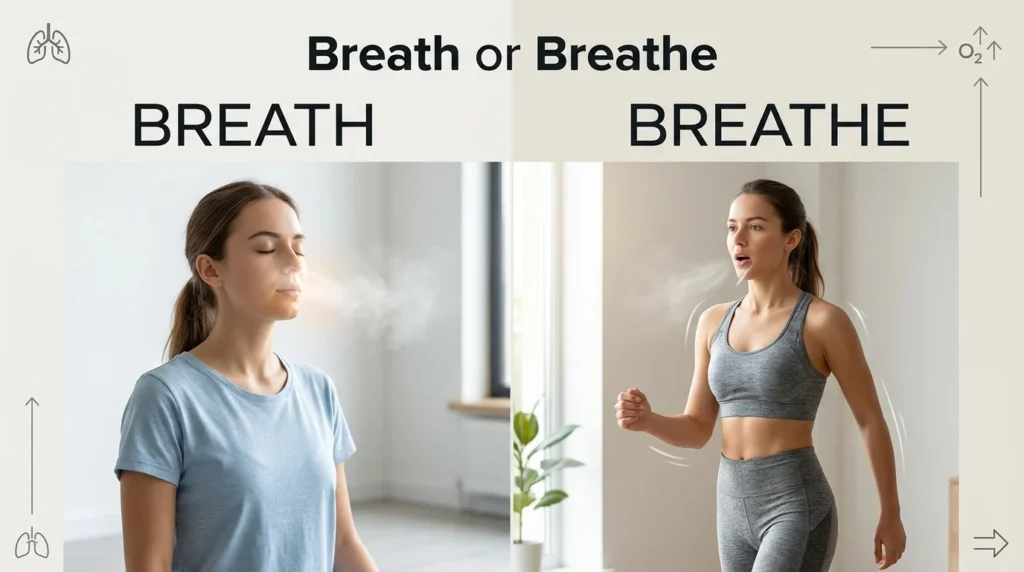
Breath is a noun that means the air you take in or let out. Breathe is a verb that means to take air into your lungs and release it.
For example: “Take a deep breath” and “Try to breathe slowly.”
Breath and breathe look almost the same, so it is easy to mix them up. However, they have different meanings and different roles in a sentence. One is a noun, while the other is a verb. The difference becomes clear once you focus on what the sentence is doing. If you are talking about the air itself, use breath. If you are talking about the action of taking air in and letting it out, use breathe. This small spelling difference matters in everyday conversation, school writing, professional emails, and online communication. In this guide, you will learn the difference between breath and breathe, how to pronounce them, when to use each word, and how to avoid common mistakes.
What Does Breath Mean?
Breath is a noun. It refers to the air that enters or leaves your lungs when you breathe.
It can describe one act of taking air in or letting it out.
Examples:
- Take a deep breath.
- She held her breath underwater.
- His breath was cold in the winter air.
- I could see my breath on the cold morning.
- He took a short breath before speaking.
Because breath is a noun, it often appears after words such as a, your, my, his, or her.
For example:
Take a deep breath.
Here, “breath” names the thing being taken.
What Does Breathe Mean?
Breathe is a verb. It describes the action of taking air into the lungs and releasing it.
Examples:
- Try to breathe slowly.
- It is hard to breathe in this room.
- Remember to breathe deeply.
- The baby is sleeping and breathing quietly.
- You should breathe normally during the exercise.
Since breathe is a verb, it tells us what someone or something does.
For example:
Try to breathe slowly.
Here, “breathe” describes an action.
Breath vs Breathe: The Main Difference
The easiest way to remember the difference is simple:
Breath = noun
Breathe = verb
Compare these sentences:
- Take a deep breath.
- Take a moment to breathe.
In the first sentence, breath is the thing you take.
In the second sentence, breathe is the action you perform.
Another useful comparison is:
- I took one breath.
- I began to breathe slowly.
The two words are closely related, but they cannot always replace each other.
How to Pronounce Breath and Breathe
Breath and breathe also have different vowel sounds.
Breath has a short vowel sound. The ending sound is also unvoiced.
Breathe has a long vowel sound, and the final sound is voiced.
This pronunciation difference can help you remember which word you need.
For many learners, the spelling is easier to remember when they connect the pronunciation to the meaning:
- Breath refers to the air.
- Breathe refers to the action.
When Should You Use Breath?
Use breath when you need a noun.
Common phrases include:
- a deep breath
- a quick breath
- a slow breath
- hold your breath
- catch your breath
- take a breath
- out of breath
- bad breath
- fresh breath
Examples:
I need to catch my breath.
She took a deep breath before the presentation.
He was out of breath after running.
In each example, breath names something rather than describing an action.
When Should You Use Breathe?
Use breathe when you need a verb.
Common examples include:
- breathe deeply
- breathe slowly
- breathe normally
- breathe through your nose
- breathe fresh air
- breathe in
- breathe out
Examples:
Breathe deeply and relax.
Try to breathe through your nose.
It is easier to breathe outside.
She stopped to breathe after climbing the stairs.
Here, breathe describes an action.
Breath and Breathe in Everyday Sentences
These words appear in many common sentences.
Consider these examples:
Take a breath and calm down.
Breathe slowly and stay relaxed.
He held his breath while swimming.
She could hardly breathe after the race.
I took a deep breath before answering.
Remember to breathe during the exercise.
Notice how the noun and verb work differently. This pattern makes the difference much easier to understand.
Common Phrases With Breath
Learning common phrases is a useful way to remember breath.
Take a Breath
This means to inhale and pause for a moment.
Take a breath before you respond.
Hold Your Breath
This means to stop breathing temporarily.
He held his breath underwater.
Catch Your Breath
This means to recover normal breathing after physical activity or excitement.
Give me a minute to catch my breath.
Out of Breath
This means breathing heavily after physical activity.
I was out of breath after running up the stairs.
Under Your Breath
This means speaking very quietly.
She said something under her breath.
These expressions all use the noun breath.
Common Phrases With Breathe
Breathe also appears in many useful expressions.
Breathe In
This means to take air into your lungs.
Breathe in slowly.
Breathe Out
This means to release air from your lungs.
Breathe out and relax.
Breathe Easily
This can mean to breathe without difficulty. It can also describe feeling relieved.
After hearing the good news, we could breathe easily again.
Breathe Life Into
This phrase means to make something more active, exciting, or successful.
The new design breathed life into the old website.
Because these expressions describe actions, breathe is the correct word.
Breath or Breathe in Professional Writing
The difference matters in professional writing too.
Consider these examples:
Take a breath before making the decision.
Employees should breathe slowly during the exercise.
The first sentence uses a noun. The second uses a verb.
In workplace writing, confusing these words can make a sentence look careless. The mistake is easy to avoid if you check whether the word describes an object or action.
For example:
Incorrect:
Please take a deep breathe.
Correct:
Please take a deep breath.
Incorrect:
Try to breath slowly.
Correct:
Try to breathe slowly.
Breath or Breathe in Text Messages
People often make spelling mistakes in text messages because they type quickly.
You may see:
I need to catch my breathe.
The correct version is:
I need to catch my breath.
You may also see:
Just breath and relax.
The correct version is:
Just breathe and relax.
Although texting is informal, using the correct word makes your message clearer.
Common Mistakes With Breath and Breathe
The most common mistake is using breathe where breath should appear.
Mistake One
Incorrect:
Take a deep breathe.
Correct:
Take a deep breath.
“Take” needs a noun here, so breath is correct.
Mistake Two
Incorrect:
I cannot breath properly.
Correct:
I cannot breathe properly.
“Cannot” is followed by a verb in this sentence, so breathe is correct.
Mistake Three
Incorrect:
He held his breathe.
Correct:
He held his breath.
The phrase is “hold your breath,” so use breath.
Mistake Four
Incorrect:
She started to breath faster.
Correct:
She started to breathe faster.
“Started to” is followed by a verb, so breathe is correct.
A Simple Trick to Remember the Difference
Here is an easy memory trick:
Breath is a thing. Breathe is an action.
You can also remember the extra e in breathe.
The extra letter helps make the word a verb.
Think of this pattern:
Breath → thing
Breathe → action
For example:
I took a breath.
You took a thing.
I began to breathe.
You performed an action.
This simple rule works in most everyday situations.
Breath vs Breathe Examples
Here are more examples to help you understand the difference.
| Sentence | Correct Word | Why |
|---|---|---|
| Take a deep ___ | Breath | Noun |
| Try to ___ slowly | Breathe | Verb |
| He held his ___ | Breath | Noun |
| She could not ___ | Breathe | Verb |
| I need to catch my ___ | Breath | Noun |
| ___ deeply and relax | Breathe | Verb |
| His ___ smelled fresh | Breath | Noun |
| We need to ___ slowly | Breathe | Verb |
The pattern becomes clear once you identify the part of speech.
Breath and Breathe Word Forms
These words belong to the same word family.
Breath is the noun.
Take a breath.
Breathe is the verb.
Breathe deeply.
Other related forms include:
Breathing is the present participle or gerund.
She is breathing normally.
Breathed is the past tense.
He breathed deeply before speaking.
Knowing these forms can help you avoid spelling mistakes.
Breath vs Breathe in Health and Fitness
These words are common in fitness and wellness conversations.
For example:
Take a deep breath before starting.
Remember to breathe during the exercise.
He was out of breath after the workout.
Breathe slowly between repetitions.
In fitness instructions, breathe often describes what you should do, while breath usually describes the air or a single act of breathing.
Breath vs Breathe in School Writing
Students often encounter these words in essays, stories, and assignments.
For example:
The runner stopped to catch his breath.
The teacher told the students to breathe slowly.
Using the correct word is important because the two words have different grammatical functions.
A good editing habit is to read the entire sentence and ask whether you need a noun or a verb.
Practice: Choose the Correct Word
Choose breath or breathe in each sentence.
- Take a deep ___.
- Try to ___ slowly.
- He held his ___.
- I could hardly ___ after running.
- She took a quick ___.
- Remember to ___ normally.
- I need to catch my ___.
- They stopped to ___.
Answers
- breath
- breathe
- breath
- breathe
- breath
- breathe
- breath
- breathe
The fastest way to get these right is to identify the grammar first.
Breath or Breathe: Which One Should You Use?
Use breath when the word acts as a noun.
Use breathe when the word acts as a verb.
If you can put a or your before the word, breath is often the right choice.
For example:
a breath
your breath
If the word follows to, you usually need the verb breathe.
For example:
to breathe
try to breathe
This is not a rule for every possible sentence, but it works well for common everyday usage.
Final Tips to Avoid the Mistake
Remember these four points:
- Breath is a noun.
- Breathe is a verb.
- Take a breath is correct.
- Try to breathe is correct.
When you are unsure, look at the words around the blank. If you need the name of the air or the act as a thing, choose breath. If you need an action, choose breathe.
FAQs
What is the difference between breath and breathe?
Breath is a noun that refers to the air you take in or release. Breathe is a verb that describes the action of taking air into your lungs and releasing it.
Is it correct to say take a deep breathe?
No. The correct phrase is take a deep breath because breath is a noun.
Is breathe a verb or a noun?
Breathe is a verb. It describes the action of taking air into your lungs and releasing it.
Is breath pronounced the same as breathe?
No. They have different vowel sounds and different final sounds. This pronunciation difference can help you tell them apart.
How can I remember breath vs breathe?
Remember this simple rule: breath is a thing, while breathe is an action. The extra letter in breathe can help you remember that it is the verb.
Conclusion
Breath and breathe are closely related words, but they have different jobs in a sentence. Breath is a noun, while breathe is a verb. Use breath in phrases such as “take a deep breath,” “hold your breath,” and “catch your breath.” Use breathe for actions such as “breathe slowly,” “breathe deeply,” and “breathe normally.” Once you learn the noun and verb difference, this common spelling problem becomes much easier. When in doubt, ask yourself one simple question: Am I talking about a thing or an action? If it is a thing, choose breath. If it is an action, choose breathe.