

Quick Answer
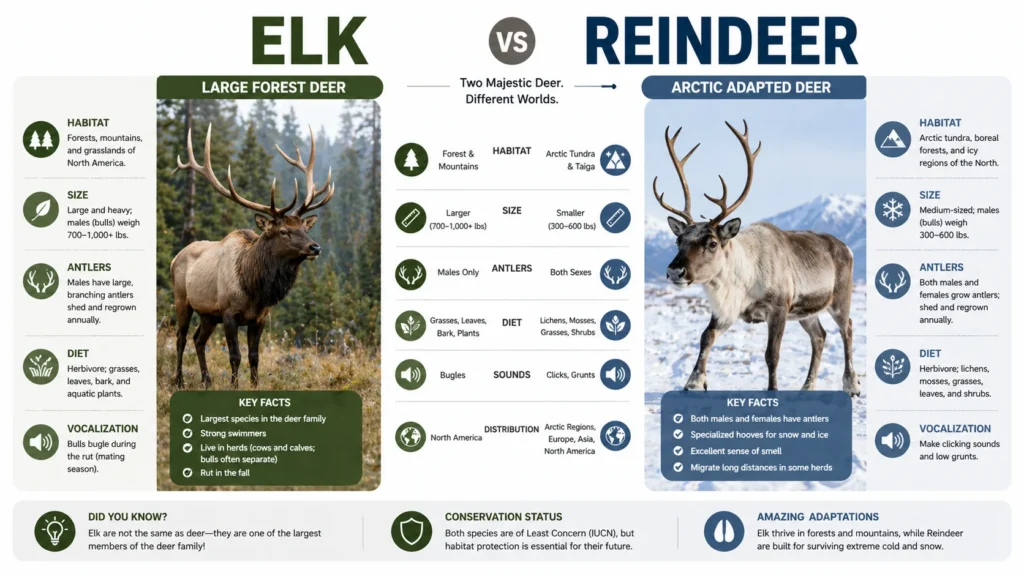
Elk and reindeer are large deer species, but they differ in habitat, behavior, and physical traits. Elk live mainly in North America and parts of Asia, while reindeer live in Arctic and sub Arctic regions and are also known as caribou. Elk are larger with massive antlers, whereas reindeer are smaller, and both males and females can grow antlers.
Many people confuse elk vs reindeer because both animals belong to the deer family and share some similar features. They both have antlers, strong bodies, and live in cold or forested regions. However, they are not the same animal. Reindeer, on the other hand, live in Arctic regions such as Northern Europe, Canada, and Russia.
Understanding elk vs reindeer is important for wildlife education, travel knowledge, and general awareness. These animals differ in habitat, diet, behavior, and even how humans interact with them.
This guide explains everything in simple language. You will learn about physical differences, habitat, diet, behavior, cultural roles, real life examples, and much more.
Quick Overview
Elk are large deer found in forests and mountains
Reindeer live in cold Arctic regions
Elk have bigger bodies and large antlers
Reindeer are smaller and adapted to snow
Both belong to the deer family but are different species
Key Difference Between Elk vs Reindeer


The main difference lies in habitat, size, and adaptation.
Elk live in forests and mountainous areas
Reindeer live in Arctic tundra and snowy regions
Elk are larger and stronger
Reindeer are smaller but better adapted to cold
Comparison Table
| Feature | Elk | Reindeer |
|---|---|---|
| Scientific group | Deer family | Deer family |
| Habitat | Forests and mountains | Arctic tundra |
| Size | Larger | Smaller |
| Antlers | Only males | Both males and females |
| Domestication | Not domesticated | Often domesticated |
| Climate | Moderate to cold | Extremely cold |
What Is an Elk
Elk are one of the largest members of the deer family. They are known for their strong bodies and large antlers.
Elk are commonly found in North America and parts of Asia. They live in forests, grasslands, and mountainous regions.
Key Features of Elk
- Large body size
- Thick brown fur
- Massive branching antlers in males
- Loud mating calls
Elk are strong animals and can travel long distances.
What Is a Reindeer
Reindeer are medium sized deer adapted to cold climates. They are also called caribou in North America.
They live in Arctic regions where temperatures are extremely low.
Key Features of Reindeer
- Smaller body compared to elk
- Thick fur for cold protection
- Both males and females grow antlers
- Strong hooves for walking on snow
Physical Differences Explained
Elk are taller and heavier than reindeer. Their antlers are large and wide.
Reindeer are shorter but have thicker fur. Their antlers are smaller but grow in Folks.
This makes reindeer unique among deer species.
Habitat and Climate Differences
Elk live in forests, mountains, and grasslands. They prefer moderate climates.
Reindeer live in Arctic tundra where temperatures are very low. They can survive in snow and ice conditions.
Diet Differences
Elk eat grass, leaves, and bark. Their diet changes with seasons.
Reindeer eat moss, lichens, and small plants found under snow.
Reindeer can dig through snow to find food.
Behavior and Lifestyle
Elk live in herds and migrate based on seasons. Males are known for loud calls during mating season.
Reindeer also live in herds but migrate long distances in Arctic regions. They are more social and travel in large groups.
Domestication and Human Use
Elk are wild animals and are not commonly domesticated.
Reindeer are domesticated in many cultures. People use them for transport, milk, and meat.
This is a major difference between elk vs reindeer.
Cultural Importance
Reindeer are famous in global culture. They are linked with winter traditions and stories.
Elk are symbols of wildlife and nature, especially in North America.
Real World Examples
1 Example One Wildlife Parks
Visitors see elk in national parks in America.
2 Example Two Arctic Life
Reindeer are used by local communities for transport.
3 Example Three Seasonal Migration
Reindeer travel long distances across snowy regions.
Advantages and Survival Traits
Elk Advantages
- Strong body
- Powerful antlers
- Adaptable to forests
Reindeer Advantages
- Cold resistant
- Snow walking ability
- Herd survival
Common Mistakes
People think elk and reindeer are the same
They are different species
People confuse reindeer with deer
Reindeer are a specific type of deer
And People think only male deer have antlers
Reindeer females also have antlers
Related Comparisons
Deer vs elk
Caribou vs reindeer
Moose vs elk
Beginner to Advanced Understanding
Beginner Level
Elk are bigger
Reindeer live in snow
Intermediate Level
Elk live in forests
Reindeer live in Arctic
Advanced Level
Adaptation, migration, and domestication define key differences
Regional and Global Usage
Elk are found in North America and Asia
Reindeer are found in Arctic regions of Europe and North America
Exercises With Answers
One Question
Which animal lives in Arctic regions
Answer Reindeer
Two Question
Which is larger
Answer Elk
Three Question
Which has antlers in Folks
Answer Reindeer
Four Question
Which is domesticated
Answer Reindeer
Five Question
Which lives in forests
Answer Elk
FAQs
Are elk and reindeer the same?
No, they are different species with different habitats and features.
Which is bigger elk or reindeer?
Elk are larger and heavier.
Do reindeer have antlers?
Yes, both males and females have antlers.
Where do elk live?
They live in forests and mountains.
Where do reindeer live?
They live in Arctic regions.
Are reindeer domesticated?
Yes, in many cultures they are domesticated.
What do elk eat?
Grass, leaves, and plants.
What do reindeer eat?
Moss and lichens.
Conclusion
Understanding elk vs reindeer helps you recognize two unique animals in the deer family. Elk are large, powerful animals that live in forests and mountains. Reindeer are smaller but highly adapted to Arctic environments.
They differ in size, habitat, diet, and human interaction.
By learning these differences, you can better understand wildlife and appreciate the diversity of animals in nature.