
Quick Answer
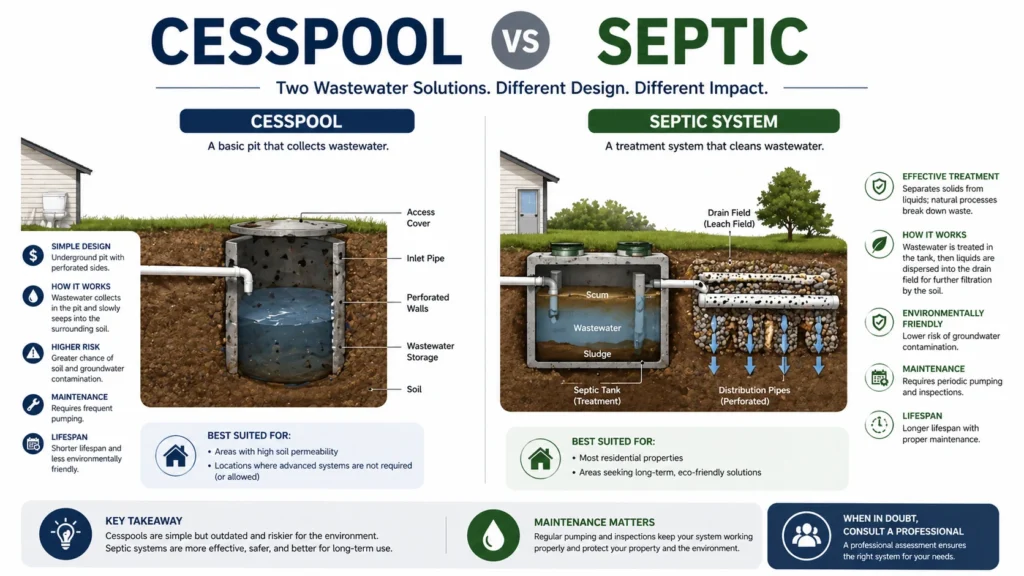
Cesspool and septic systems are both underground waste systems, but they work very differently. A cesspool is a simple pit that collects wastewater and lets it seep into the ground, while a septic system treats wastewater through a tank and drain field. Septic systems are safer, more efficient, and widely recommended, while cesspools are outdated and often restricted.
Many homeowners get confused about cesspool vs septic systems. Both handle wastewater in places without a public sewer system. However, they are not the same.
A cesspool is an older and simpler system. It collects waste in a pit and allows liquid to soak into the surrounding soil. On the other hand, a septic system is more advanced. It separates solids and liquids, treats wastewater, and safely releases it into a drain field.
Today, most experts recommend septic systems. They are safer for health and the environment. Cesspools, however, still exist in older homes and rural areas.
Understanding cesspool vs septic is important for homeowners, buyers, and property managers. It helps you make better decisions about installation, maintenance, and upgrades.
This complete guide explains everything in simple language. You will learn system design, working process, cost, advantages, disadvantages, environmental impact, real life examples, and more.
Quick Overview
Cesspool is a simple underground pit
Septic system is a multi stage treatment system
Cesspool stores and releases waste directly
Septic treats waste before releasing it
Septic is safer and modern
Cesspool is outdated
Key Difference Between Cesspool vs Septic


The main difference is how wastewater is handled.
Cesspool stores waste and lets it seep directly into the soil
Septic system treats waste before releasing it
This makes septic systems more efficient and environmentally safe.
Comparison Table
| Feature | Cesspool | Septic System |
|---|---|---|
| Design | Simple pit | Tank plus drain field |
| Treatment | No treatment | Yes treatment |
| Efficiency | Low | High |
| Environmental impact | Higher | Lower |
| Maintenance | Frequent pumping | Scheduled maintenance |
| Modern use | Rare | Common |
What Is a Cesspool
A cesspool is a basic underground hole lined with stone or concrete. It collects wastewater from a home.
Solid waste settles at the bottom. Liquid waste seeps into the surrounding soil through the walls.
How It Works
Wastewater flows into the pit
Solids stay at the bottom
Liquids leak into soil
This system has no proper treatment process.
What Is a Septic System
A septic system is a modern wastewater treatment system.
It has two main parts:
Septic tank
Drain field
How It Works
Wastewater enters the tank
Solids settle at the bottom
Oils float to the top
Liquid flows into the drain field
The soil naturally filters the water.
How Cesspool Works in Detail


Cesspools rely on simple storage and natural absorption.
Over time, solids build up. As a result, the system fills quickly. Therefore, frequent pumping is needed.
Because there is no filtration, harmful bacteria may reach groundwater.
How Septic System Works in Detail


Septic systems separate and treat waste before release.
The tank allows solids to settle. Then, partially treated water flows into the drain field. Finally, soil filters the water.
This process reduces pollution and protects water sources.
Main Differences Explained
The difference between cesspool vs septic is clear when you compare function.
Cesspool is storage only
Septic system treats wastewater
Cesspool may contaminate soil
Septic protects environment
And Cesspool requires frequent pumping
Septic needs periodic maintenance
Environmental Impact
Environmental safety is a major concern.
Cesspool
Higher risk of contamination
No proper filtration
Can pollute groundwater
Septic
Filters wastewater
Protects soil and water
Environmentally safer
Therefore, septic systems are preferred today.
Cost Comparison
Costs vary depending on location.
Cesspool
Lower installation cost
Higher long term maintenance
Septic
Higher installation cost
Lower long term maintenance
In the long run, septic systems are more cost effective.
Maintenance Requirements
Cesspool needs frequent pumping because waste builds up quickly.
Septic systems require regular inspection and occasional pumping, but they last longer.
Proper maintenance increases system life.
Lifespan Comparison
Cesspools usually have a shorter lifespan due to buildup and soil damage.
Septic systems can last many years if maintained properly.
Advantages and Disadvantages
Cesspool Advantages
Simple design
Lower initial cost
Cesspool Disadvantages
High pollution risk
Frequent maintenance
Short lifespan
Septic Advantages
Efficient treatment
Environment friendly
Long lifespan
Septic Disadvantages
Higher installation cost
Requires space
Real World Examples
1 Example One Rural Home
An old house uses a cesspool and faces frequent overflow issues.
2 Example Two Modern Home
A new home installs a septic system for safe wastewater treatment.
3 Example Three Property Upgrade
A homeowner replaces a cesspool with a septic system to meet regulations.
Common Mistakes
1 Mistake One Thinking Both Are the Same
Correction Septic systems treat waste, cesspools do not
2 Mistake Two Ignoring Maintenance
Correction Both systems need care
3 Mistake Three Choosing Low Cost Only
Correction Long term cost matters more
Related Comparisons
Septic vs Sewer system
Cesspool vs cesspit
Drain field vs soak pit
Beginner to Advanced Understanding
Beginner Level
Cesspool stores waste
Septic treats waste
Intermediate Level
Septic separates solids and liquids
Cesspool does not
Advanced Level
System design impacts environment, cost, and efficiency
Regional and Global Usage
Cesspools are mostly found in older properties.
Septic systems are common worldwide in rural areas without sewer access.
Many regions now restrict cesspools due to environmental concerns.
Exercises With Answers
One Question
Which system treats wastewater
Answer Septic
Two Question
Which system is outdated
Answer Cesspool
Three Question
Which system protects groundwater
Answer Septic
Four Question
Which needs frequent pumping
Answer Cesspool
Five Question
Which is more modern
Answer Septic
FAQs
Is a cesspool the same as a septic system?
No, cesspools store waste while septic systems treat it.
Which is better cesspool vs septic?
Septic is better for safety and environment.
Can a cesspool be upgraded?
Yes, it can be replaced with a septic system.
Which system lasts longer?
Septic systems usually last longer.
Are cesspools still legal?
Some areas restrict them due to pollution risks.
Do septic systems smell?
Properly maintained systems do not smell.
Which system costs more?
Septic costs more initially but saves money long term.
Is septic eco friendly?
Yes, it treats wastewater safely.
Conclusion
Understanding cesspool vs septic is important for homeowners and property buyers. A cesspool is a simple and outdated system that stores waste without treatment. A septic system is a modern solution that treats wastewater and protects the environment.
Although cesspools may have lower initial costs, they require frequent maintenance and pose environmental risks. Septic systems, on the other hand, offer long term efficiency, safety, and better performance.
For modern homes, septic systems are the recommended choice. They provide reliable wastewater management and reduce pollution risks. Choosing the right system depends on budget, location, and long term planning.