
Quick Answer:
In text messages, DW most commonly means “don’t worry.” It is used to reassure someone, calm a concern, or tell them that something is okay.
If someone sends you DW in a text message, they are usually saying “don’t worry.” It is a common casual abbreviation used in texting, social media chats, and online conversations. People often use it when they want to reassure someone or tell them not to stress about a problem. For example, “DW, I got it” means “Don’t worry, I got it.” The abbreviation is short, friendly, and informal. Understanding the context can help you recognize the intended tone and respond naturally.
Key Facts About DW
| Term | Meaning | Common Use |
|---|---|---|
| DW | Don’t Worry | Reassurance |
| Tone | Casual | Texting and chats |
| Main purpose | Comfort or reassurance | Informal conversations |
| Common with | Friends and family | Everyday messaging |
What Does DW Mean in Text?
DW usually stands for “don’t worry.” Someone may use it when they want you to stop worrying about something or feel more relaxed about a situation.
For example:
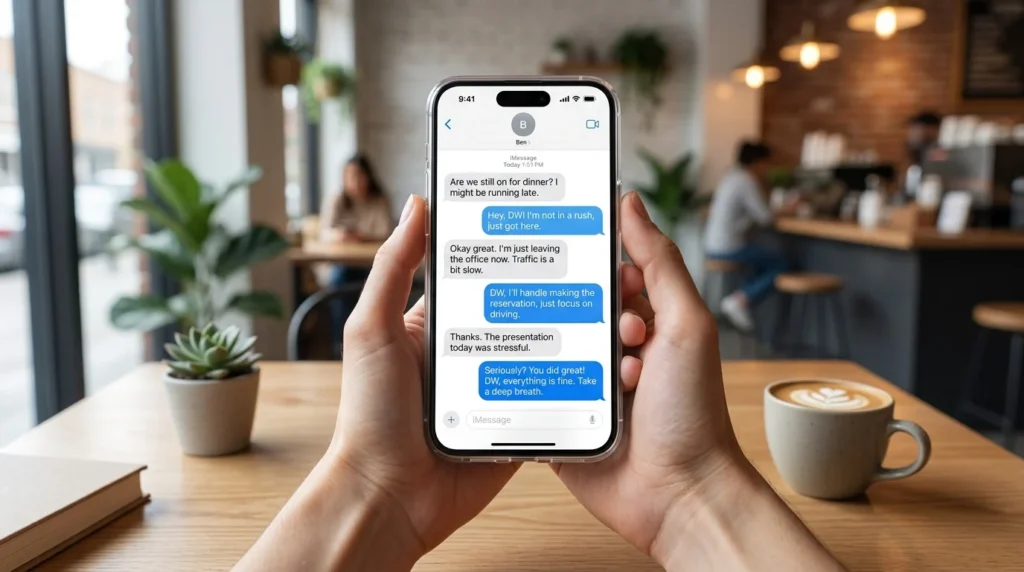
- “DW, I’ll handle it.”
- “DW about the meeting.”
- “DW, you’re not late.”
- “DW, everything is fine.”
In these examples, DW has a reassuring meaning.
Why Do People Use DW?
People use DW because it is faster and more casual than writing the full phrase “don’t worry.” It can also make a message feel friendly and relaxed.
Instead of writing:
“Don’t worry about it. Everything is okay.”
Someone might simply write:
“DW, everything is okay.”
The meaning stays clear while the message becomes shorter.
DW Meaning and Tone
The tone of DW is usually reassuring, but the exact feeling depends on the conversation.
For example:
“DW 😊” can sound warm and comforting.
“DW.” may sound more direct or brief.
The surrounding words, punctuation, and relationship between the people can affect how the message feels.
DW Examples in Text Messages
Here are some natural examples:
“Sorry I’m late.”
“DW, take your time.”
“I think I forgot to send the file.”
“DW, I already have it.”
“I’m worried I messed everything up.”
“DW, we’ll figure it out.”
In every example, DW means “don’t worry.”
DW vs No Worries
DW and “no worries” can communicate a similar idea, but they are used differently.
DW: “Don’t worry about the problem.”
No worries: “It’s okay” or “There is no problem.”
For example, if someone apologizes for being late, you might reply, “No worries.” If someone is concerned about being late, you might say, “DW, you’re still on time.”
DW vs IDK vs TBH
These abbreviations have different meanings:
| Abbreviation | Meaning | Common Purpose |
|---|---|---|
| DW | Don’t Worry | Reassurance |
| IDK | I Don’t Know | Uncertainty or lack of information |
| TBH | To Be Honest | Direct opinion or statement |
| IMO | In My Opinion | Personal opinion |
Knowing the full meaning makes these short forms easier to understand.
Is DW Formal or Informal?
DW is informal. It works well in text messages, social media conversations, gaming chats, and messages between friends.
It is usually better to write “don’t worry” in formal emails, professional documents, academic writing, or official communication.
How to Reply to DW
Your response depends on the situation. If someone says “DW, I can handle it,” you could reply:
- “Thanks!”
- “Okay, sounds good.”
- “I appreciate it.”
- “Got it.”
If someone uses DW to reassure you, a simple “Thanks” is often enough.
Common Mistake With DW
The main mistake is assuming that every abbreviation has only one possible meaning. DW most commonly means “don’t worry” in casual texting, but context can change the meaning of abbreviations.
If the conversation is unclear, look at the words around DW before deciding what the sender means.
When Should You Use DW?
Use DW when you want to reassure someone in a casual conversation.
Good examples include:
“DW, I’ll call you later.”
“DW about the mistake.”
“DW, I’ve got everything covered.”
For formal situations, write the complete phrase “don’t worry” instead.
FAQs
What does DW mean in texting?
DW usually means “don’t worry.” It is commonly used to reassure someone or tell them that a situation is okay.
What does DW mean from a girl or guy?
The meaning is generally the same regardless of who sends it. Context determines the tone and purpose of the message.
Is DW rude in a text?
Usually, no. DW is normally friendly and reassuring. However, a very short message such as “DW.” can sometimes sound more direct depending on the conversation.
What does DW mean on social media?
On social media, DW commonly means “don’t worry,” especially in comments, direct messages, and casual conversations.
Is DW appropriate for formal writing?
Usually not. DW is an informal abbreviation best suited to texting and casual online communication.
Conclusion
DW most commonly means “don’t worry” in text messages. People use it to reassure someone, reduce concern, or show that a problem is not serious.
Because DW is informal, it fits naturally into casual conversations with friends, family, and online contacts. In professional or formal writing, spelling out “don’t worry” is usually clearer and more appropriate.
See Also More :
- wtv meaning in text: The Correct Spelling, Meaning and Usage Explained
- Ion meaning in text: The Correct Spelling, Meaning and Usage Explained
- wya meaning in text: The Correct Spelling, Meaning and Usage Explained