
Many people compare veneers or implants when looking for ways to improve their smile. Although both treatments can create attractive results, they are designed for different dental problems.
A beautiful smile can boost confidence, improve social interactions, and even affect professional opportunities. However, damaged, stained, chipped, crooked, or missing teeth can make people feel uncomfortable about their appearance. This is where modern cosmetic and restorative dentistry offers solutions.
The confusion between veneers and implants happens because both treatments can transform a smile. However, they work in completely different ways. Veneers enhance the appearance of existing teeth, while implants replace missing teeth entirely.
Understanding veneers or implants is important before making a dental decision. Factors such as tooth health, cost, durability, maintenance, appearance, and treatment time all play a role. This comprehensive guide explains everything from beginner to advanced level so you can understand which option may be more suitable for your situation.
Quick Overview
Veneers improve the appearance of existing teeth.
Implants replace missing or severely damaged teeth.
Veneers are mainly cosmetic.
Implants are both cosmetic and functional.
Both treatments can create natural looking smiles.
Key Difference Between Veneers or Implants
The biggest difference is their purpose.
Veneers cover existing teeth.
Implants replace missing teeth.
A veneer cannot replace a missing tooth.
An implant does not simply cover a tooth.
Quick Comparison Table
| Feature | Veneers | Implants |
|---|---|---|
| Purpose | Cosmetic enhancement | Tooth replacement |
| Tooth Required | Yes | No |
| Surgery Needed | No | Yes |
| Treatment Time | Shorter | Longer |
| Cost | Lower | Higher |
| Lifespan | Long lasting | Very long lasting |
| Bone Support | Not needed | Required |
Understanding Veneers
Veneers are thin custom made shells that cover the front surface of teeth.
They are usually made from porcelain or composite resin.
Dentists bond them directly to the tooth surface.
Veneers improve:
- Tooth color
- Tooth shape
- Minor gaps
- Small chips
- Slight misalignment
People often choose veneers when they want a smile makeover without major dental procedures.
Understanding Dental Implants
Dental implants are artificial tooth roots placed into the jawbone.
After healing, a crown is attached to the implant.
The result looks and functions like a natural tooth.
Implants are commonly used for:
- Missing teeth
- Severely damaged teeth
- Failed teeth that cannot be repaired
- Long term tooth replacement
Unlike veneers, implants replace the entire tooth structure.
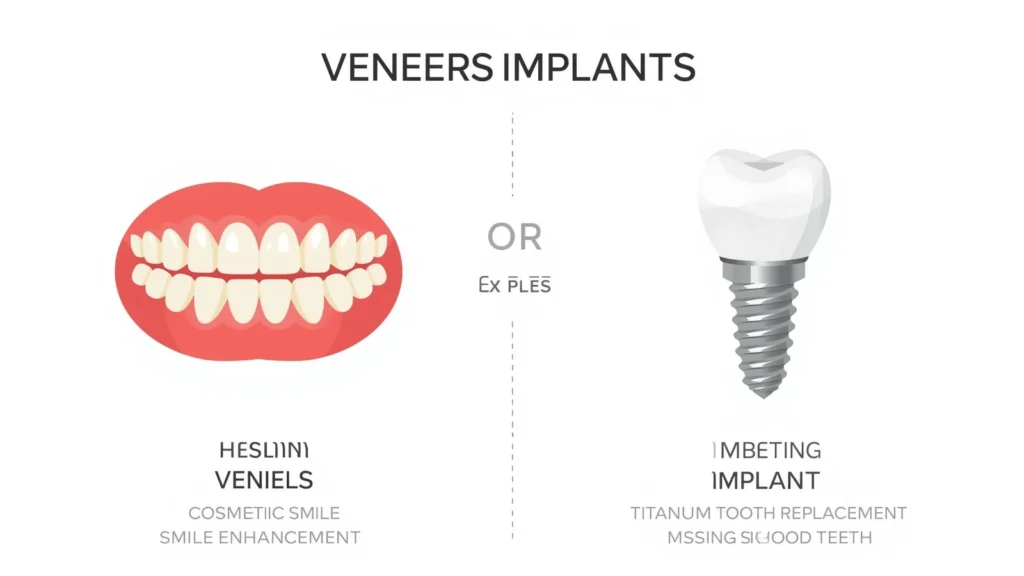
Veneers vs Implants Visual Comparison

5
This comparison highlights how veneers cover existing teeth while implants replace missing teeth completely.
How Veneers Work
The veneer process is relatively simple.
Consultation
The dentist examines your teeth.
Tooth Preparation
A small amount of enamel is removed.
Impression
A mold of the teeth is created.
Fabrication
Custom veneers are made.
Placement
The veneers are bonded permanently.
The process often takes only a few visits.
How Dental Implants Work
Implants involve several stages.
Examination
The dentist checks bone and gum health.
Implant Placement
The titanium implant is inserted into the jawbone.
Healing Period
Bone fuses with the implant.
Crown Placement
A custom crown is attached.
This process may take several months.
Who Is a Good Candidate for Veneers
Veneers work best for people with:
- Healthy teeth
- Healthy gums
- Tooth discoloration
- Minor chips
- Small gaps
- Mild cosmetic concerns
Veneers are not ideal for severely damaged or missing teeth.
Who Is a Good Candidate for Implants
Implants are suitable for people with:
- Missing teeth
- Good oral health
- Adequate jawbone
- Healthy gums
- Desire for permanent replacement
Many adults choose implants because they closely resemble natural teeth.
Benefits of Veneers
Improved Appearance
Veneers create a bright and attractive smile.
Fast Results
Treatment is usually completed quickly.
Natural Look
Modern porcelain veneers closely resemble real teeth.
Stain Resistance
Porcelain veneers resist staining better than natural enamel.
Minimal Recovery
No surgery means quicker recovery.
Benefits of Dental Implants
Permanent Solution
Implants can last decades.
Natural Function
Patients can eat and speak normally.
Bone Preservation
Implants help maintain jawbone structure.
Stability
Unlike dentures, implants do not move.
High Success Rate
Modern implant procedures have excellent outcomes.
Advantages and Disadvantages Comparison
Veneers Advantages
- Less invasive
- Faster treatment
- Lower cost
- Excellent cosmetic results
Veneers Disadvantages
- Cannot replace missing teeth
- Enamel removal required
- May need replacement later
Implants Advantages
- Replace missing teeth
- Extremely durable
- Preserve jawbone
- Function like natural teeth
Implants Disadvantages
- Higher cost
- Surgical procedure required
- Longer treatment time
Treatment Process Comparison


5
Understanding the treatment process helps patients prepare for both procedures.
Cost Comparison
Costs vary by country, dentist, and materials.
Veneers
Factors affecting cost:
- Material type
- Number of teeth
- Dentist expertise
Implants
Factors affecting cost:
- Implant system
- Bone grafting
- Crown materials
- Surgical complexity
In general, implants cost more than veneers.
Durability and Lifespan
Veneers
Porcelain veneers often last many years with proper care.
Implants
Dental implants can last decades and sometimes a lifetime.
Durability depends on oral hygiene and regular dental visits.
Appearance and Aesthetics
Many people choose veneers because of aesthetics.
Veneers create:
- Whiter smiles
- Better symmetry
- Improved tooth shape
Implants also provide excellent appearance but are primarily designed to replace missing teeth.
Both treatments can produce natural looking results.
Oral Health Impact
Veneers
Veneers mainly improve appearance.
Implants
Implants improve appearance and function.
Additionally, implants help prevent bone loss after tooth extraction.
Real World Examples
Example One
A patient has stained teeth that do not respond to whitening.
Veneers become the ideal solution.
Example Two
A patient loses a front tooth in an accident.
An implant replaces the missing tooth.
Example Three
A patient wants a complete smile makeover.
The dentist may recommend multiple veneers.
Example Four
A patient has a tooth that cannot be saved.
An implant provides a permanent replacement.
Common Mistakes When Choosing Veneers or Implants
Mistake One
Thinking veneers replace missing teeth.
Correction:
Only implants replace missing teeth.
Mistake Two
Choosing based only on cost.
Correction:
Long term benefits should also be considered.
Mistake Three
Ignoring oral health requirements.
Correction:
Healthy gums are important for both treatments.
Mistake Four
Expecting veneers to fix severe dental damage.
Correction:
Some cases require implants instead.
Related Dental Treatments
Crowns
Cover damaged teeth.
Bridges
Replace missing teeth using neighboring teeth.
Dentures
Removable tooth replacement option.
Teeth Whitening
Improves tooth color without veneers.
Orthodontics
Corrects alignment problems.
Functional Differences Between Veneers and Implants


5
Function is one of the most important differences.
Veneers enhance appearance.
Implants restore appearance and chewing function.
Regional and Global Usage
Veneers are extremely popular in cosmetic dentistry worldwide.
Implants are also growing rapidly because people want permanent solutions for missing teeth.
Countries known for cosmetic and restorative dentistry include:
- United States
- Canada
- United Kingdom
- Australia
- Germany
- Turkey
Dental tourism has increased demand for both procedures.
Beginner to Advanced Understanding
Beginner Level
Veneers cover teeth.
Implants replace teeth.
Intermediate Level
Veneers improve appearance.
Implants improve appearance and function.
Advanced Level
Treatment selection depends on bone health, tooth condition, aesthetics, function, budget, and long term goals.
Professional evaluation is necessary before choosing either option.
Exercises With Answers
Question One
Which treatment replaces missing teeth?
Answer: Implants
Question Two
Which treatment covers existing teeth?
Answer: Veneers
Question Three
Do veneers require surgery?
Answer: No
Question Four
Do implants require surgery?
Answer: Yes
Question Five
Which option generally costs more?
Answer: Implants
Question Six
Which treatment is primarily cosmetic?
Answer: Veneers
Question Seven
Can implants help preserve jawbone?
Answer: Yes
Question Eight
Can veneers replace a missing tooth?
Answer: No
Question Nine
Which treatment usually takes longer?
Answer: Implants
Question Ten
Which option works for stained teeth?
Answer: Veneers
FAQs
Are veneers better than implants?
Neither is universally better. The best choice depends on your dental condition.
Can veneers replace missing teeth?
No. Veneers require existing teeth.
Do implants look natural?
Yes. Modern implants closely resemble natural teeth.
How long do veneers last?
Many veneers last for years with proper care.
How long do implants last?
Implants can last decades and sometimes longer.
Are implants painful?
The procedure is performed with anesthesia, and discomfort is usually manageable.
Do veneers damage teeth?
A small amount of enamel is usually removed before placement.
Which is more expensive, veneers or implants?
Implants generally cost more.
Can smokers get veneers or implants?
They can, but smoking may affect long term success.
Should I choose veneers or implants for a missing tooth?
Implants are typically the preferred solution for missing teeth.
Conclusion
Understanding veneers or implants is essential before making a dental decision. Although both treatments improve smiles, they serve different purposes. Veneers are cosmetic restorations that cover existing teeth to improve color, shape, and appearance. Implants are restorative treatments that replace missing teeth with artificial roots and crowns.
People with healthy teeth who want cosmetic improvements often benefit from veneers. Meanwhile, individuals with missing or severely damaged teeth frequently achieve better long term results with implants. Factors such as oral health, budget, treatment goals, and professional recommendations should guide the decision.