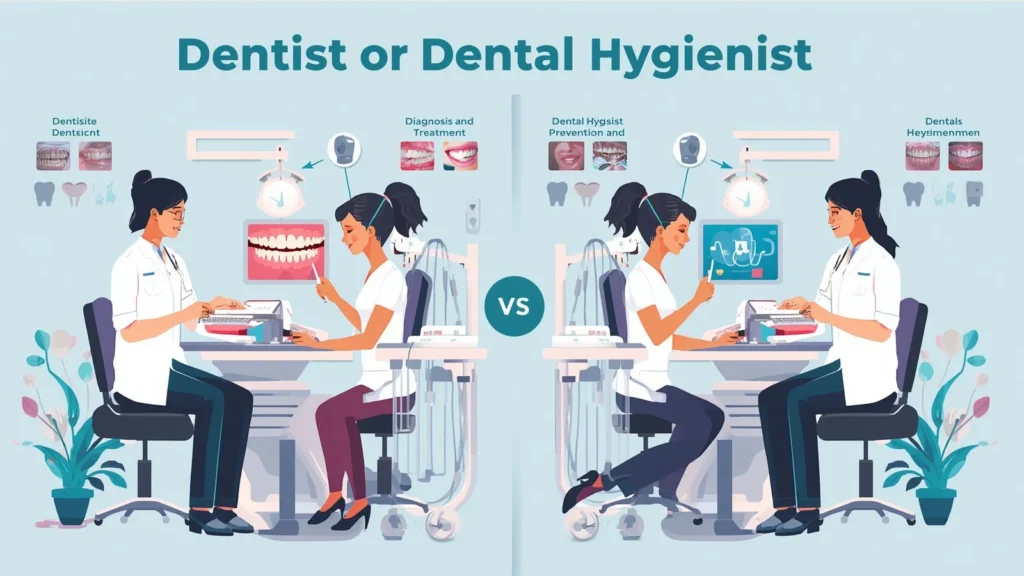

Many people wonder about the difference between dentist or dental hygienist when visiting a dental clinic. Since both professionals work closely with patients and help maintain oral health, their roles can seem similar at first glance. However, they have different levels of education, responsibilities, and authority.
A dentist is a licensed healthcare professional who diagnoses and treats diseases affecting teeth, gums, and the mouth. A dental hygienist, on the other hand, specializes in preventive dental care and patient education. Both professionals work together to keep patients healthy and prevent serious dental problems.
Understanding dentist or dental hygienist is useful for patients, students considering a dental career, and anyone interested in oral healthcare. Choosing the right professional can save time, improve treatment outcomes, and help maintain healthy teeth and gums.
This comprehensive guide explains dentist or dental hygienist in simple language. You will learn about their education, duties, salaries, advantages, real world examples, common misconceptions, and career opportunities.
Quick Overview
A dentist diagnoses and treats dental problems.
A dental hygienist focuses on preventive dental care.
Dentists perform procedures such as fillings and extractions.
Dental hygienists perform cleanings and educate patients.
Both play important roles in maintaining oral health.
Key Difference Between Dentist or Dental Hygienist
The main difference lies in responsibilities and authority.
Dentists diagnose conditions, create treatment plans, prescribe medications, and perform procedures.
Dental hygienists provide preventive care, perform cleanings, take dental images, and educate patients about oral hygiene.
Quick Comparison Table
| Feature | Dentist | Dental Hygienist |
|---|---|---|
| Main Role | Diagnosis and treatment | Prevention and education |
| Education | Dental degree | Dental hygiene degree |
| Prescribe medication | Yes | No |
| Perform surgery | Yes | No |
| Teeth cleaning | Sometimes | Yes |
| Fill cavities | Yes | No |
| Oral exams | Yes | Assists with screening |
| Treatment planning | Yes | No |
Understanding the Dental Team
Every successful dental clinic depends on teamwork.
Dentists and dental hygienists work together to provide complete patient care.
The hygienist often sees the patient first. After cleaning and assessment, the dentist evaluates findings and recommends treatment if necessary.
This collaboration improves efficiency and patient outcomes.
What Is a Dentist
A dentist is a licensed healthcare professional who specializes in diagnosing, preventing, and treating oral diseases.
Dentists are responsible for managing complex dental conditions and ensuring overall oral health.
Common Duties of a Dentist
- Diagnosing cavities
- Treating gum disease
- Performing fillings
- Extracting teeth
- Conducting root canal treatment
- Placing crowns
- Creating treatment plans
- Prescribing medication
Dentists have extensive training and are responsible for major treatment decisions.
What Is a Dental Hygienist
A dental hygienist is a licensed oral healthcare professional who focuses on preventive care.
Their primary goal is to help patients avoid dental disease before it develops into a serious problem.
Common Duties of a Dental Hygienist
- Cleaning teeth
- Removing plaque
- Removing tartar
- Taking dental images
- Screening for oral issues
- Teaching proper brushing techniques
- Educating patients about oral health
- Applying preventive treatments
Dental hygienists spend significant time interacting directly with patients.
Education Requirements
Education for Dentists
Becoming a dentist requires extensive education.
Typical steps include:
- Completing undergraduate studies
- Attending dental school
- Obtaining professional licensing
- Continuing professional education
Training generally takes many years.
Education for Dental Hygienists
Dental hygienists usually complete a dental hygiene program.
Requirements often include:
- Dental hygiene degree
- Clinical training
- Professional licensing
Education is generally shorter than dental school.
Career Path Comparison
Choosing between dentist or dental hygienist often depends on career goals.
Dentist Career Path
Advantages:
- Higher earning potential
- Ability to perform procedures
- Greater authority
- Broader treatment scope
Challenges:
- Longer education
- Higher educational costs
- Greater responsibility
Dental Hygienist Career Path
Advantages:
- Shorter education period
- Strong job demand
- Flexible schedules
- Focus on patient care
Challenges:
- Limited treatment authority
- Lower earning potential than dentists
Daily Responsibilities of a Dentist


6
A dentist’s day often includes:
- Examining patients
- Diagnosing oral conditions
- Performing procedures
- Reviewing dental images
- Discussing treatment plans
- Managing dental staff
Their work involves both technical skills and patient communication.
Daily Responsibilities of a Dental Hygienist


5
A dental hygienist spends much of the day helping patients maintain oral health.
Tasks include:
- Professional cleanings
- Plaque removal
- Oral screenings
- Patient education
- Preventive treatments
- Recording patient information
Their role focuses heavily on prevention.
Salary Comparison
Income varies depending on location, experience, and workplace.
Dentist Salary
Dentists generally earn higher salaries because of advanced education and responsibilities.
Factors influencing earnings:
- Experience
- Specialty
- Clinic ownership
- Geographic location
Dental Hygienist Salary
Dental hygienists also earn competitive salaries.
Factors influencing earnings:
- Experience
- Certifications
- Work schedule
- Region
Dentists typically earn more, but hygienists often enjoy excellent work life balance.
Advantages and Disadvantages
Advantages of Being a Dentist
- High earning potential
- Broad treatment authority
- Professional prestige
- Ability to own a clinic
Disadvantages of Being a Dentist
- Lengthy education
- Significant educational expenses
- High responsibility
Advantages of Being a Dental Hygienist
- Shorter education path
- Strong job demand
- Flexible schedules
- Direct patient interaction
Disadvantages of Being a Dental Hygienist
- Limited treatment authority
- Lower income than dentists
Real World Examples
Example One
A patient develops severe tooth pain.
The dentist diagnoses a cavity and performs treatment.
Example Two
A patient visits for a routine cleaning.
The dental hygienist removes plaque and educates the patient on proper brushing.
Example Three
During a cleaning appointment, the hygienist notices signs of gum disease.
The dentist evaluates the condition and recommends treatment.
These examples show how both professionals work together.
Common Mistakes About Dentist or Dental Hygienist
Mistake One
Thinking both jobs are identical.
Correction:
They have different responsibilities and education levels.
Mistake Two
Believing hygienists can perform all dental procedures.
Correction:
Certain procedures require a dentist.
Mistake Three
Assuming only dentists contribute to oral health.
Correction:
Dental hygienists play a critical preventive role.
Mistake Four
Thinking cleanings are unnecessary.
Correction:
Professional cleanings help prevent serious dental problems.
Related Dental Careers
Several professions are related to dentist or dental hygienist.
Dental Assistant
Supports dentists and hygienists during procedures.
Orthodontist
Specializes in correcting tooth alignment.
Oral Surgeon
Performs complex surgical procedures.
Periodontist
Specializes in gum health.
Prosthodontist
Focuses on tooth replacement and restoration.
Oral Health Prevention and Education


6
Prevention is one of the most important aspects of dentistry.
Good habits include:
- Brushing twice daily
- Flossing regularly
- Limiting sugary foods
- Visiting dental professionals regularly
- Following professional advice
Dental hygienists often lead patient education efforts.
Regional and Global Usage
Around the world, dentists and dental hygienists work together to improve oral health.
In many countries:
- Dentists manage treatment
- Hygienists focus on prevention
Healthcare systems may differ, but the basic distinction remains similar.
Beginner to Advanced Understanding
Beginner Level
Dentists treat dental problems.
Dental hygienists help prevent dental problems.
Intermediate Level
Dentists diagnose and perform procedures.
Dental hygienists clean teeth and educate patients.
Advanced Level
Modern dentistry depends on collaboration between dentists and hygienists to achieve optimal oral health outcomes.
Exercises With Answers
Question One
Who diagnoses cavities?
Answer: Dentist
Question Two
Who performs routine cleanings?
Answer: Dental hygienist
Question Three
Who creates treatment plans?
Answer: Dentist
Question Four
Who teaches oral hygiene techniques?
Answer: Dental hygienist
Question Five
Can a hygienist perform surgery?
Answer: No
Question Six
Who prescribes medication?
Answer: Dentist
Question Seven
Which role focuses on prevention?
Answer: Dental hygienist
Question Eight
Which profession requires dental school?
Answer: Dentist
FAQs
Is a dentist better than a dental hygienist?
Neither is better. They perform different but equally important roles.
Can a dental hygienist diagnose cavities?
A dentist provides the official diagnosis.
Who cleans teeth, dentist or dental hygienist?
Dental hygienists usually perform professional cleanings.
Can a dental hygienist remove plaque?
Yes, plaque and tartar removal are key responsibilities.
Who earns more, dentist or dental hygienist?
Dentists generally earn higher salaries.
Can a dental hygienist perform fillings?
No, fillings are typically performed by dentists.
Do dentists and hygienists work together?
Yes, teamwork is essential in dental care.
Which career requires more education?
Dentistry requires more extensive education.
Can a hygienist identify oral health issues?
Yes, hygienists often identify concerns and inform the dentist.
Should patients see both professionals?
Yes, both contribute to long term oral health.
Conclusion
Understanding dentist or dental hygienist helps patients and students appreciate the unique contributions of each profession. Dentists diagnose conditions, perform treatments, create treatment plans, and manage complex oral health issues. Dental hygienists focus on prevention, education, professional cleanings, and helping patients maintain healthy habits.
Both professionals are essential members of the dental team. While dentists handle diagnosis and treatment, hygienists play a crucial role in preventing disease and promoting oral health awareness. Together, they help patients achieve healthier teeth, stronger gums, and better overall well being.
For patients, regular visits to both professionals provide the best opportunity to prevent problems before they become serious. For students considering a career in dentistry, understanding these differences can help determine which path best aligns with their interests, goals, and lifestyle preferences.