
Every day, people make choices based on pain or pleasure. Some decisions are made to avoid discomfort, while others are made to gain happiness or satisfaction. Whether someone exercises, studies for exams, saves money, or changes habits, the motivation often comes from either avoiding pain or seeking pleasure.
The concept of pain or pleasure has been discussed by psychologists, philosophers, business leaders, and self improvement experts for centuries. It is one of the most important ideas in understanding human behavior. People naturally move away from things that cause pain and move toward things that provide pleasure.
However, the relationship is not always simple. Short term pleasure can sometimes create long term pain. Likewise, temporary pain can often lead to future pleasure and success. This is why understanding the balance between pain and pleasure is important for personal growth, mental health, productivity, and decision making.
This comprehensive guide explains pain or pleasure in simple language. You will learn definitions, psychological theories, real world examples, advantages and disadvantages, common mistakes, practical applications, exercises with answers, and frequently asked questions.
Quick Overview
Pain is an unpleasant physical or emotional experience.
Pleasure is a positive feeling of enjoyment or satisfaction.
People often make decisions to avoid pain or gain pleasure.
Both experiences strongly influence behavior, habits, relationships, and success.
Understanding Pain or Pleasure
Pain and pleasure are often viewed as opposite experiences.
Pain may involve:
- Physical discomfort
- Emotional suffering
- Stress
- Fear
- Loss
- Disappointment
Pleasure may involve:
- Happiness
- Enjoyment
- Comfort
- Achievement
- Success
- Satisfaction
Human beings naturally seek pleasure and avoid pain. This basic principle influences countless daily decisions.
Comparison Table
| Feature | Pain | Pleasure |
|---|---|---|
| Emotional Effect | Uncomfortable | Enjoyable |
| Motivation Type | Avoidance | Attraction |
| Physical Response | Stress reaction | Reward response |
| Examples | Injury, loss, failure | Success, rewards, happiness |
| Short Term Impact | Discomfort | Enjoyment |
| Long Term Impact | Can teach valuable lessons | Can improve well being |
What Is Pain
Pain is an unpleasant sensation or emotional experience that signals harm, discomfort, or difficulty.
Pain can be physical or emotional.
Physical Pain
Examples include:
- Broken bones
- Headaches
- Burns
- Illnesses
- Muscle soreness
Emotional Pain
Examples include:
- Heartbreak
- Rejection
- Failure
- Loneliness
- Grief
Pain often serves as a warning system that helps protect people from danger and encourages change.
What Is Pleasure
Pleasure is a positive feeling associated with enjoyment, satisfaction, and reward.
Pleasure can come from many sources.
Examples include:
- Spending time with loved ones
- Achieving goals
- Eating favorite foods
- Traveling
- Learning new skills
- Receiving recognition
Pleasure encourages behaviors that support survival, social connection, and personal fulfillment.
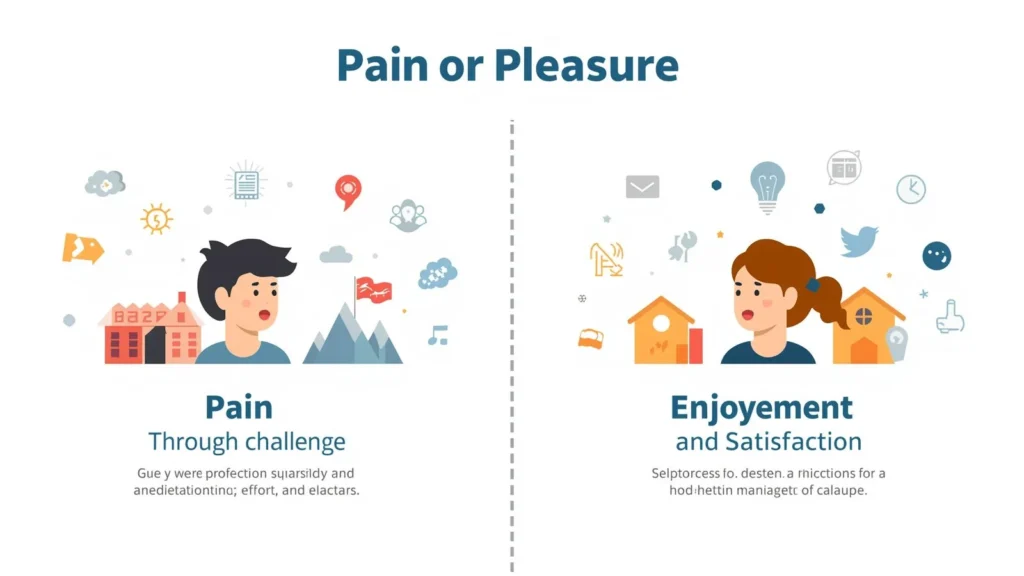
Visual Comparison of Pain or Pleasure


5
Pain and pleasure represent two major forces that shape human choices, emotions, and behaviors throughout life.
The Psychology Behind Pain or Pleasure
Psychologists have long studied how pain and pleasure influence decision making.
One important idea is that people are often more motivated to avoid pain than to gain pleasure.
For example:
- A person may exercise to avoid health problems.
- A student may study to avoid failing.
- An employee may work harder to avoid losing a job.
At the same time, pleasure also motivates behavior.
Examples include:
- Exercising to feel healthier.
- Studying to achieve success.
- Working to earn rewards.
Both forces operate together in everyday life.
How Pain Motivates People
Pain can be a powerful teacher.
Many people make important life changes after experiencing discomfort.
Examples include:
- Improving health after a medical diagnosis
- Saving money after financial hardship
- Learning from mistakes after failure
- Strengthening relationships after conflict
Pain often pushes people toward growth and improvement.
Benefits of Pain as Motivation
- Encourages change
- Builds resilience
- Teaches valuable lessons
- Develops discipline
How Pleasure Motivates People
Pleasure encourages positive action by providing rewards.
People often pursue goals because they anticipate enjoyable outcomes.
Examples include:
- Career advancement
- Financial success
- Personal achievements
- Social recognition
Pleasure helps maintain motivation over time.
Benefits of Pleasure as Motivation
- Increases happiness
- Encourages persistence
- Supports emotional well being
- Improves life satisfaction
Real World Examples of Pain or Pleasure
Example One Education
A student studies to avoid the pain of failure and gain the pleasure of success.
Example Two Fitness
A person exercises despite temporary discomfort because they want long term health benefits.
Example Three Business
An entrepreneur works hard to avoid financial difficulties and achieve financial rewards.
Example Four Relationships
People invest time in relationships to avoid loneliness and enjoy companionship.
Pain or Pleasure in Personal Development
Personal development often involves choosing short term pain for long term pleasure.
Examples include:
- Learning difficult skills
- Following a strict budget
- Exercising regularly
- Building healthy habits
The temporary discomfort eventually leads to significant rewards.
Second Visual Comparison Section


6
Many achievements require accepting temporary challenges to experience future satisfaction and success.
Pain or Pleasure in Decision Making
Most decisions involve weighing pain against pleasure.
Examples include:
| Situation | Pain | Pleasure |
|---|---|---|
| Exercise | Physical effort | Better health |
| Studying | Mental effort | Academic success |
| Saving money | Less spending | Financial security |
| Healthy eating | Giving up junk food | Improved wellness |
Understanding this balance can improve decision making.
Advantages of Pain
Although pain is unpleasant, it offers benefits.
Teaches Lessons
Pain often helps people learn from mistakes.
Builds Strength
Challenges can develop resilience.
Encourages Growth
Discomfort frequently leads to improvement.
Promotes Awareness
Pain signals problems that require attention.
Advantages of Pleasure
Pleasure also provides important benefits.
Enhances Well Being
Positive experiences improve quality of life.
Encourages Healthy Behaviors
Rewards reinforce beneficial actions.
Supports Relationships
Shared enjoyment strengthens connections.
Improves Motivation
People work harder when rewards are meaningful.
Disadvantages of Pain
Pain can become harmful when excessive.
Examples include:
- Chronic stress
- Anxiety
- Depression
- Physical suffering
Without proper management, pain may negatively affect health and performance.
Disadvantages of Pleasure
Pleasure can sometimes create problems.
Examples include:
- Overeating
- Addiction
- Procrastination
- Impulsive spending
Short term pleasure may produce long term consequences.
Common Mistakes About Pain or Pleasure
Mistake One
Believing all pain is bad.
Correction:
Some pain helps people learn and grow.
Mistake Two
Assuming all pleasure is beneficial.
Correction:
Certain pleasures may lead to harmful outcomes.
Mistake Three
Avoiding every difficult situation.
Correction:
Many valuable achievements require temporary discomfort.
Mistake Four
Focusing only on short term rewards.
Correction:
Long term success often requires patience and discipline.
Pain or Pleasure in Business and Marketing
Businesses frequently use pain and pleasure principles.
Pain Based Marketing
Highlights problems customers want to solve.
Examples:
- Security concerns
- Financial losses
- Health risks
Pleasure Based Marketing
Focuses on benefits customers desire.
Examples:
- Convenience
- Luxury
- Success
- Happiness
Many advertisements combine both approaches.
Pain or Pleasure in Health and Fitness
Health professionals often use both motivators.
Pain Motivation:
- Avoid disease
- Prevent health complications
Pleasure Motivation:
- Feel energetic
- Improve appearance
- Increase confidence
The combination is highly effective.
Third Visual Comparison Section


4
Health, fitness, and lifestyle decisions often involve balancing immediate discomfort against future rewards.
Related Concepts and Comparisons
Happiness vs Satisfaction
Happiness is often temporary, while satisfaction may be longer lasting.
Comfort vs Growth
Comfort feels pleasant, but growth often requires challenges.
Fear vs Reward
Fear relates to avoiding pain, while reward relates to pursuing pleasure.
Discipline vs Motivation
Discipline helps maintain progress when motivation changes.
Regional and Global Perspectives
Different cultures view pain and pleasure differently.
Some cultures emphasize discipline, sacrifice, and long term rewards.
Others focus more on enjoyment, balance, and quality of life.
However, the influence of pain and pleasure on behavior is universal across societies.
Beginner to Advanced Understanding
Beginner Level
Pain feels unpleasant.
Pleasure feels enjoyable.
Intermediate Level
People often make choices based on avoiding pain or gaining pleasure.
Advanced Level
Pain and pleasure influence motivation, psychology, habits, relationships, leadership, business, and personal development.
Understanding both forces improves decision making and self awareness.
Exercises With Answers
Question One
What is pain?
Answer: An unpleasant physical or emotional experience.
Question Two
What is pleasure?
Answer: A feeling of enjoyment or satisfaction.
Question Three
Which often motivates behavior?
Answer: Both pain and pleasure.
Question Four
Can pain lead to personal growth?
Answer: Yes.
Question Five
Can pleasure sometimes cause problems?
Answer: Yes.
Question Six
Why do students study?
Answer: To avoid failure and achieve success.
Question Seven
What motivates healthy habits?
Answer: Avoiding health problems and gaining wellness.
Question Eight
Can short term pain create long term benefits?
Answer: Yes.
Question Nine
Can short term pleasure create long term problems?
Answer: Yes.
Question Ten
Why is understanding pain or pleasure important?
Answer: It helps improve decisions and personal growth.
FAQs
What is the main difference between pain and pleasure?
Pain creates discomfort, while pleasure creates enjoyment and satisfaction.
Which motivates people more, pain or pleasure?
Research often suggests avoiding pain can be a stronger motivator, although both influence behavior.
Can pain be beneficial?
Yes. Pain can teach lessons, encourage growth, and improve resilience.
Can pleasure become harmful?
Yes. Excessive pursuit of pleasure can lead to unhealthy habits.
Why do people avoid pain?
Pain signals discomfort, danger, or loss.
Why do people seek pleasure?
Pleasure provides rewards, happiness, and satisfaction.
How does pain affect decision making?
People often change behavior to avoid future discomfort.
How does pleasure affect motivation?
Rewards encourage people to continue positive actions.
Is temporary pain necessary for success?
In many cases, yes. Learning, training, and improvement often require effort and discomfort.
How can I balance pain and pleasure in life?
Focus on long term goals, healthy habits, and meaningful rewards while managing unnecessary discomfort.
Conclusion
Understanding pain or pleasure is essential for understanding human behavior. Pain represents discomfort, challenge, and difficulty, while pleasure represents enjoyment, reward, and satisfaction. Both experiences influence decisions, habits, relationships, and personal growth.
Many successful people learn to accept short term pain in exchange for long term pleasure. Exercising, studying, saving money, and developing skills often require effort and sacrifice before rewards appear. At the same time, healthy forms of pleasure improve happiness, motivation, and overall well being