

Quick Answer
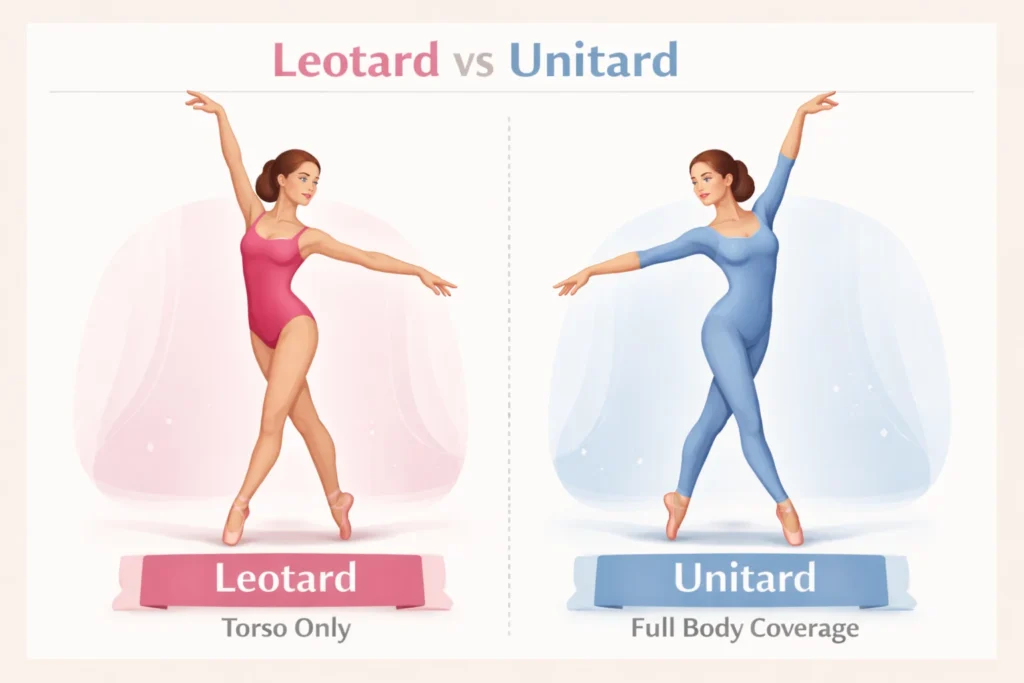
Leotard and unitard are both tight fitting garments used in dance, gymnastics, and performance. A leotard covers the torso but leaves the legs exposed, while a unitard covers the torso and extends down to cover the legs as well. The main difference is leg coverage and overall style.
Many people get confused about leotard vs unitard. At first glance, both outfits look similar. They are tight fitting. They are used in dance, gymnastics, and stage performances. However, they are not the same.
The key difference is simple. A leotard covers the upper body and stops at the hips. A unitard covers the entire body, including the legs. This small difference changes how they look, feel, and perform.
Understanding leotard vs unitard is important for dancers, gymnasts, performers, and even beginners. Choosing the right outfit can improve comfort, flexibility, and confidence. It also helps match the correct dress code for classes or performances.
In this guide, you will learn everything about leotard vs unitard in simple language. We will cover definitions, styles, uses, benefits, real world examples, mistakes, and expert insights.
Quick Overview
Leotard covers torso only
Unitard covers torso and legs
Leotard is more common in ballet
Unitard is common in modern dance and performances
Both allow flexibility and movement
Key Difference Between Leotard vs Unitard


6
The main difference is leg coverage and overall design.
Leotard leaves legs uncovered
Unitard covers full legs
Comparison Table
| Feature | Leotard | Unitard |
|---|---|---|
| Coverage | Torso only | Full body including legs |
| Use | Ballet gymnastics | Dance performance theater |
| Style | Short and simple | Full body sleek |
| Comfort | Lightweight | Warm and supportive |
| Flexibility | High | Very high |
What Is a Leotard
A leotard is a one piece garment that covers the torso. It does not cover the legs. It is commonly used in ballet, gymnastics, and fitness.
Leotards come in different styles such as sleeveless, short sleeve, and long sleeve. They allow freedom of movement and help instructors see body posture clearly.
Common Uses
- Ballet classes
- Gymnastics training
- Yoga and fitness
- Dance rehearsals
What Is a Unitard
A unitard is a full body garment that covers both the torso and legs. It looks like a combination of a leotard and leggings.
Unitards are often used in stage performances and modern dance. They provide full coverage and a smooth appearance.
Common Uses
- Contemporary dance
- Theater performances
- Acrobatics
- Costume design
Main Differences Explained
The difference between leotard vs unitard is simple but important.
Leotard is shorter and lighter
Unitard is longer and covers more
Leotard shows leg movement clearly
Unitard provides a sleek full body look
And leotard is ideal for training
Unitard is ideal for performance
Types of Leotards
Leotards come in many styles.
Sleeveless leotard
Short sleeve leotard
Long sleeve leotard
Backless leotard
Each type offers different comfort and style.
Types of Unitards
Unitards also come in different designs.
Full length unitard
Short leg unitard
Sleeveless unitard
Long sleeve unitard
These variations help performers choose the right outfit.
Advantages and Disadvantages
Leotard Advantages
Lightweight
Comfortable
Easy to wear
Better for practice
Leotard Disadvantages
Less coverage
Not suitable for cold environments
Unitard Advantages
Full body coverage
Stylish for performance
Keeps body warm
Unitard Disadvantages
Can feel tight
May be warmer than needed
Real World Examples
1 Example : Ballet Class
A dancer wears a leotard to practice movements and posture.
2 Example : Stage Performance
A performer wears a unitard for a clean and modern look.
3 Example : Gymnastics
Athletes wear leotards for flexibility and movement visibility.
Common Mistakes
1 Mistake: Thinking They Are the Same
Correction They differ in leg coverage
2 Mistake: Choosing Wrong Outfit
Correction Use leotard for training and unitard for performance
3 Mistake: Ignoring Comfort
Correction Choose based on activity and weather
Related Comparisons
Leotard vs Bodysuit
Both are similar but used in different contexts
Unitard vs Catsuit
Both cover full body but differ in material and use
Dancewear Basics
Includes leotards, unitards, tights, and costumes
Beginner to Advanced Understanding
Beginner Level
Leotard covers torso
Unitard covers full body
Intermediate Level
Leotard is used in training
Unitard is used in performance
Advanced Level
Choice depends on movement style, performance needs, and comfort
Regional and Practical Usage
Leotards are used worldwide in dance schools.
Unitards are more common in professional performances.
Fashion trends also influence their use in different regions.
Exercises With Answers
1 Question
Which covers legs
Answer Unitard
2 Question
Which is used in ballet
Answer Leotard
3 Question
Which gives full body coverage
Answer Unitard
4 Question
Which is lighter
Answer Leotard
5 Question
Which is better for performance
Answer Unitard
FAQs
What is the main difference between leotard vs unitard?
Leotard covers torso, unitard covers full body including legs.
Which is better for beginners?
Leotard is easier and more common for beginners.
Can a unitard be used for ballet?
It can be used, but leotard is preferred.
Are unitards comfortable?
Yes, they provide full support and flexibility.
Do gymnasts wear unitards?
They mostly wear leotards.
Which is warmer?
Unitard because it covers more body.
Are both flexible?
Yes, both allow full movement.
Conclusion
Understanding leotard vs unitard helps you choose the right outfit for your activity. A leotard is simple, lightweight, and ideal for training. A unitard provides full coverage and is perfect for performances.
Both garments support flexibility and movement, but they serve different purposes. Choosing the right one depends on your needs, comfort, and style.
By knowing these differences, dancers and performers can improve both performance and confidence.