

Quick Answer
Hives and shingles are two different skin conditions with different causes and symptoms. Hives are raised, itchy welts caused by allergic reactions, while shingles is a painful rash caused by a viral infection. Hives usually come and go quickly, but shingles can last longer and may cause nerve pain.
Many people feel confused when comparing hives vs shingles. Both conditions affect the skin. Both can cause redness and discomfort. However, they are very different in cause, appearance, and severity.
Hives often appear suddenly as itchy bumps on the skin. They usually happen because of allergies. On the other hand, shingles is caused by a virus. It leads to a painful rash that often appears on one side of the body.
Understanding hives vs shingles is important for proper care. If you mistake one for the other, you may delay treatment. That can lead to more discomfort or complications.
In this guide, you will learn the clear difference between hives and shingles. We will explain symptoms, causes, treatment, real life examples, and prevention in simple language.
Quick Overview
Hives are caused by allergic reactions
Shingles is caused by a viral infection
Hives are itchy and raised
Shingles is painful and blister like
And hives appear anywhere on the body
Shingles usually appears on one side
Key Difference Between Hives vs Shingles


6
The main difference is the cause and feeling.
Hives are itchy and related to allergies.
Shingles is painful and caused by a virus.
Comparison Table
| Feature | Hives | Shingles |
|---|---|---|
| Cause | Allergy | Virus |
| Appearance | Raised welts | Blisters |
| Sensation | Itching | Pain and burning |
| Duration | Short term | Longer lasting |
| Contagious | No | Yes |
What Are Hives
Hives are also called urticaria. They appear as red, raised, itchy bumps on the skin.
They can appear suddenly and may disappear within hours or days. Sometimes, they move from one area to another.
Causes of Hives
- Food allergies
- Medications
- Insect bites
- Stress
- Temperature changes
What Is Shingles
Shingles is a viral infection caused by the same virus that causes chickenpox.
After a person recovers from chickenpox, the virus stays in the body. Later, it can reactivate as shingles.
Causes of Shingles
- Reactivation of virus
- Weak immune system
- Stress
- Aging
Symptoms of Hives vs Shingles
Hives Symptoms
- Red or skin colored welts
- Intense itching
- Swelling
- Changing shape and size
Shingles Symptoms
- Pain or burning sensation
- Red rash
- Fluid filled blisters
- Fever and fatigue
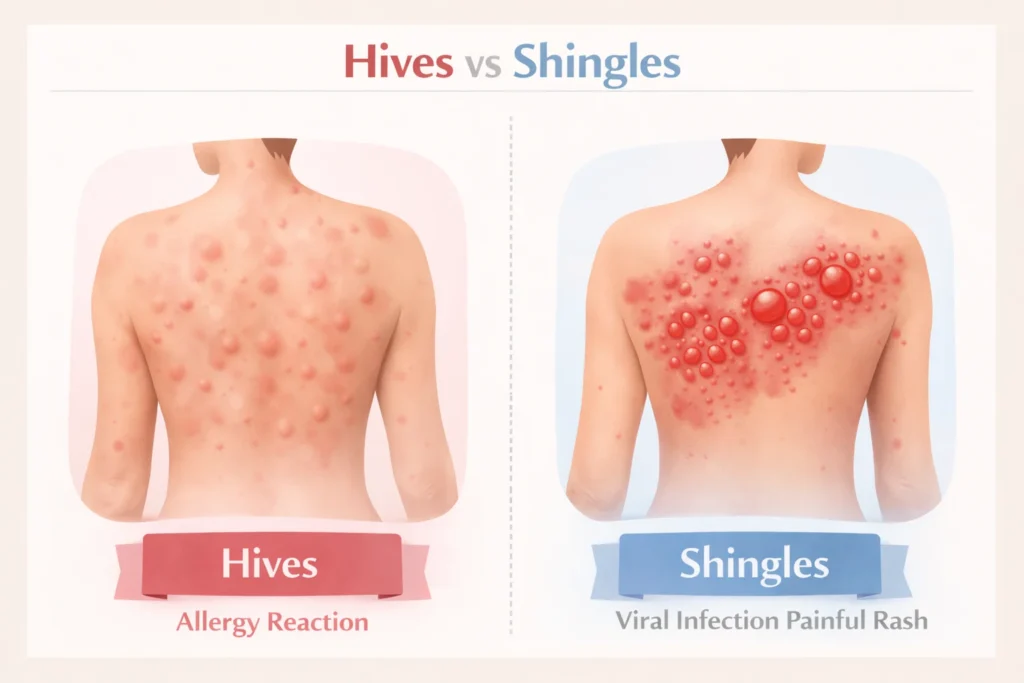
Visual Difference Between Hives and Shingles


5
Hives look like raised itchy patches.
Shingles looks like clusters of blisters on one side.
Causes Explained in Detail
Hives occur when the body releases histamine. This happens during allergic reactions.
Shingles occurs when a virus becomes active again in the body. It affects nerves and skin.
Treatment of Hives vs Shingles
Hives Treatment
- Antihistamines
- Avoid allergens
- Cool compress
- Stress control
Shingles Treatment
- Antiviral medication
- Pain relief medicines
- Rest and hydration
Early treatment is important for shingles to reduce complications.
Complications
Hives usually do not cause serious problems. However, severe allergic reactions can be dangerous.
Shingles can cause long term nerve pain if not treated early.
Real World Examples
Example One
A person eats food and suddenly develops itchy bumps. This is likely hives.
Example Two
An older adult develops painful blisters on one side of the body. This is shingles.
Example Three
Stress triggers both conditions differently in different people.
Advantages of Early Diagnosis
- Faster recovery
- Less discomfort
- Reduced complications
- Better treatment outcome
Common Mistakes
1 Mistake Thinking Both Are the Same
Correction They have different causes
2 Mistake lgnoring Pain in Shingles
Correction Pain is a key sign of shingles
3 Mistake Not Treating Early
Correction Early treatment is important
Related Comparisons
Hives vs eczema
Shingles vs chickenpox
Allergy vs infection
Beginner to Advanced Understanding
Beginner Level
Hives itch
Shingles hurts
Intermediate Level
Hives are allergic
Shingles is viral
Advanced Level
Proper diagnosis requires understanding immune response and viral activity
Regional and Global Usage
Hives are common worldwide due to allergies.
Shingles is more common in older adults and people with weak immunity.
Exercises With Answers
1 Question
Which condition is caused by allergy
Answer Hives
2 Question
Which condition is caused by virus
Answer Shingles
3 Question
Which is more painful
Answer Shingles
4 Question
Which is more itchy
Answer Hives
5 Question
Which can cause nerve pain
Answer Shingles
FAQs
Is hives vs shingles the same?
No, they are completely different conditions.
Which is more serious hives or shingles?
Shingles is usually more serious due to nerve pain.
Can hives turn into shingles?
No, they are not related.
Is shingles contagious?
Yes, it can spread the virus.
Can stress cause hives vs shingles?
Yes, stress can trigger both differently.
How long do hives last?
Usually a few hours to days.
How long does shingles last?
It may last several weeks.
Do both cause rash?
Yes, but they look different.
Conclusion
Understanding hives vs shingles is important for proper health care. Hives are caused by allergies and appear as itchy welts. Shingles is caused by a virus and appears as painful blisters.
Although both affect the skin, their causes, symptoms, and treatments are very different. Hives are usually mild and short term. Shingles can be more serious and may lead to complications.
Early diagnosis and treatment can make a big difference. If you experience severe pain or unusual rash, it is important to seek medical advice.