

Quick Answer
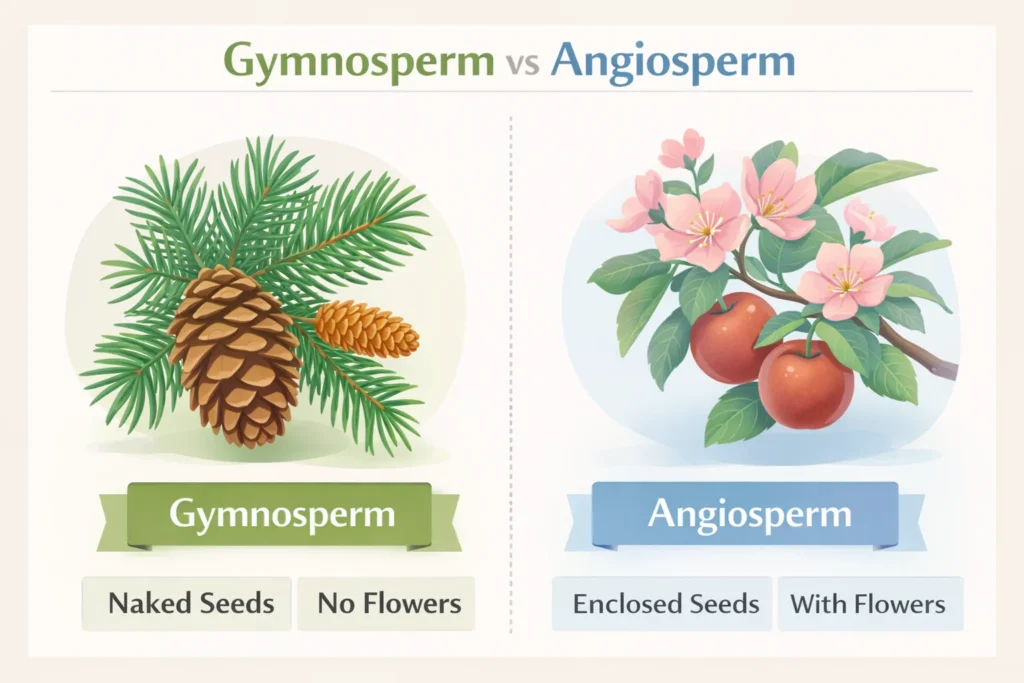
Gymnosperms and angiosperms are two major groups of plants. Gymnosperms produce naked seeds without flowers, while angiosperms produce seeds inside fruits and have flowers. The main difference is that gymnosperms do not form flowers or fruits, whereas angiosperms do.
Plants are an important part of life on Earth. They provide oxygen, food, and shelter. However, not all plants are the same. Scientists divide plants into different groups based on their structure and reproduction.
Two major groups are gymnosperms and angiosperms. Many students feel confused when learning gymnosperm vs angiosperm. The names sound complex, and the differences are not always clear at first.
Gymnosperms include plants like pine and fir trees. These plants do not produce flowers. Instead, they produce seeds in cones. On the other hand, angiosperms include flowering plants like roses, mango trees, and wheat. These plants produce flowers and fruits.
Understanding gymnosperm vs angiosperm is important in biology, agriculture, and environmental studies. It helps explain how plants grow, reproduce, and adapt.
This guide explains everything in simple language. You will learn definitions, structure, reproduction, examples, differences, advantages, real world uses, mistakes, and exercises.
Quick Overview
Gymnosperms produce naked seeds without fruit
Angiosperms produce seeds inside fruits
Gymnosperms do not have flowers
Angiosperms have flowers
And gymnosperms are mostly trees
Angiosperms include trees, shrubs, and herbs
Key Difference Between Gymnosperm vs Angiosperm


The main difference is seed protection and reproduction.
Gymnosperms have exposed seeds
Angiosperms have seeds enclosed in fruits
Gymnosperms reproduce using cones
Angiosperms reproduce using flowers
Comparison Table
| Feature | Gymnosperm | Angiosperm |
|---|---|---|
| Seeds | Naked | Enclosed in fruit |
| Flowers | Absent | Present |
| Reproductive structure | Cones | Flowers |
| Examples | Pine, fir | Rose, mango |
| Pollination | Wind | Wind or animals |
What Is a Gymnosperm
Gymnosperms are plants that produce seeds without enclosing them in fruit. The word gymnosperm means naked seed.
These plants usually produce cones instead of flowers. Seeds develop on the surface of cone scales.
Examples of Gymnosperms
- Pine trees
- Fir trees
- Spruce
- Cycads
Key Features
- No flowers
- No fruits
- Mostly evergreen trees
- Seeds exposed
What Is an Angiosperm
Angiosperms are flowering plants that produce seeds inside fruits. The word angiosperm means enclosed seed.
Flowers help in reproduction. After fertilization, the ovary develops into fruit that protects the seeds.
Examples of Angiosperms
- Rose
- Mango
- Wheat
- Sunflower
Key Features
- Flowers present
- Fruits present
- Seeds enclosed
- Wide variety of plants
Structural Differences
Gymnosperms and angiosperms differ in structure.
Gymnosperms have simple leaves and woody stems.
Angiosperms have diverse leaf shapes and softer tissues.
Angiosperms also have specialized structures like petals and ovaries.
Reproduction Differences


Gymnosperms reproduce using cones. Pollen travels by wind to fertilize seeds.
Angiosperms reproduce using flowers. Pollination can occur through insects, wind, or animals. After fertilization, fruits develop.
Importance in Nature
Both groups play important roles.
Gymnosperms
- Provide timber and wood
- Produce oxygen
- Grow in cold regions
Angiosperms
- Provide food crops
- Support ecosystems
- Offer medicinal plants
Advantages and Disadvantages
Gymnosperm Advantages
- Survive in harsh climates
- Long lifespan
- Strong wood
Gymnosperm Disadvantages
- Slow growth
- Limited reproduction methods
Angiosperm Advantages
- Fast reproduction
- Wide variety
- Produce fruits and food
Angiosperm Disadvantages
- Some require specific conditions
- More dependent on pollinators
Real World Examples
1 Example: Forest Trees
Pine forests are gymnosperms that survive cold climates.
2 Example: Food Crops
Wheat and rice are angiosperms that feed the world.
3 Example: Garden Plants
Flowers like roses are angiosperms used for decoration.
Common Mistakes
1 Mistake: Thinking All Plants Have Flowers
Correction Gymnosperms do not produce flowers
2 Mistake: Confusing Seeds
Correction Gymnosperms have naked seeds, angiosperms have enclosed seeds
3 Mistake: Ignoring Cones
Correction Cones are reproductive structures of gymnosperms
Related Comparisons
Monocot vs dicot
Flowering vs non flowering plants
Seed plants vs non seed plants
Beginner to Advanced Understanding
Beginner Level
Gymnosperms have no flowers
Angiosperms have flowers
Intermediate Level
Gymnosperms produce naked seeds
Angiosperms produce seeds in fruits
Advanced Level
Reproductive strategies differ based on pollination, fertilization, and seed protection mechanisms
Regional and Global Usage
Gymnosperms grow mostly in cold and temperate regions.
Angiosperms grow worldwide in different climates.
They are essential for ecosystems and agriculture.
Exercises With Answers
1 Question
Which plant group has flowers
Answer Angiosperm
2 Question
Which has naked seeds
Answer Gymnosperm
3 Question
Which produces fruits
Answer Angiosperm
4 Question
Which uses cones
Answer Gymnosperm
5 Question
Which group includes wheat
Answer Angiosperm
FAQs
What is the main difference between gymnosperm vs angiosperm?
Gymnosperms have naked seeds, while angiosperms have seeds inside fruits.
Do gymnosperms have flowers?
No, they produce cones instead.
Are angiosperms more advanced than gymnosperms?
They are more diverse and have complex reproduction.
Which plants produce fruits?
Angiosperms produce fruits.
Where do gymnosperms grow?
Mostly in cold and dry regions.
Why are angiosperms important?
They provide food, oxygen, and resources.
Can gymnosperms produce food?
Not commonly like angiosperms.
Which group is more common?
Angiosperms are more widespread.
Conclusion
Understanding gymnosperm vs angiosperm helps explain plant diversity and reproduction. Gymnosperms produce naked seeds and do not form flowers or fruits. Angiosperms produce flowers and fruits that protect seeds.
Both groups are essential for life. Gymnosperms provide wood and survive harsh conditions. Angiosperms provide food, flowers, and a wide range of plant types.
Learning these differences helps in biology studies, agriculture, and environmental awareness