
Many people become confused when choosing between Ms or Mrs. At first glance, the two titles look similar and are often used in the same situations. However, they have different meanings and can communicate different information about a person’s marital status.
In the past, titles were commonly used to identify whether a woman was married or unmarried. Today, social norms have changed, and many women prefer titles that do not focus on marital status. As a result, Ms has become increasingly popular in workplaces, schools, businesses, and official documents.
Understanding the difference between Ms or Mrs is important because titles are often the first part of a formal introduction. Using the correct title shows respect, professionalism, and attention to detail. Whether you are writing an email, completing a form, addressing a letter, or speaking in a professional setting, knowing when to use Ms and when to use Mrs can help you communicate effectively.
This guide explains everything you need to know about Ms or Mrs, including definitions, history, grammar rules, etiquette, examples, common mistakes, real world usage, exercises, and frequently asked questions.
Quick Overview
Ms can be used for any adult woman regardless of marital status.
Mrs is traditionally used for a married woman.
Ms is widely used in professional settings.
Mrs specifically indicates marriage.
Both titles are grammatically correct when used appropriately.
Definition of Ms
Ms is a title used before a woman’s name without indicating whether she is married or unmarried.
Examples:
- Ms Sarah Johnson
- Ms Emily Carter
- Ms Rachel Smith
The title became popular because it allows women to be addressed respectfully without revealing marital status.
When to Use Ms
Use Ms when:
- Marital status is unknown
- Marital status is irrelevant
- A woman prefers the title
- Professional communication is involved
Today, many organizations use Ms as the default title.
Definition of Mrs
Mrs is a traditional title used before the name of a married woman.
Examples:
- Mrs Jennifer Wilson
- Mrs Amanda Brown
- Mrs Olivia Taylor
Historically, Mrs indicated that a woman was married.
When to Use Mrs
Use Mrs when:
- The woman is married
- She personally prefers the title
- Formal correspondence specifically requests it
Many married women continue to use Mrs because of tradition and personal preference.
Key Difference Between Ms or Mrs
The primary difference involves marital status.
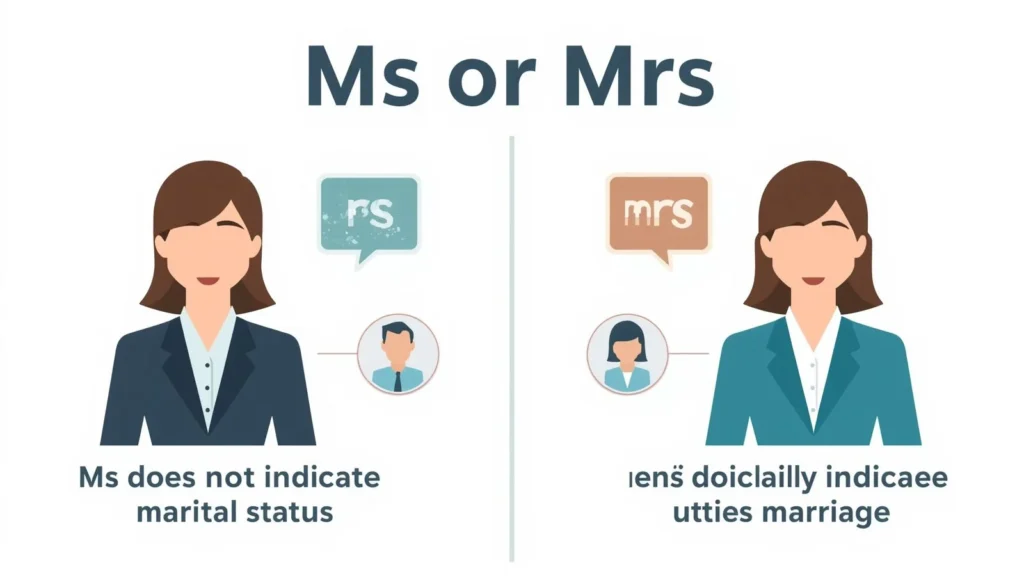
Ms does not indicate whether a woman is married.
Mrs specifically indicates that a woman is married.
Quick Comparison Table
| Feature | Ms | Mrs |
|---|---|---|
| Indicates Marriage | No | Yes |
| Professional Usage | Very Common | Common |
| Marital Status Required | No | Yes |
| Modern Workplace Usage | High | Moderate |
| Formal Correspondence | Yes | Yes |
| Personal Preference Based | Yes | Yes |
Visual Comparison of Ms or Mrs


5
This comparison shows that Ms focuses on respect without revealing marital status, while Mrs traditionally identifies a married woman.
History of Ms and Mrs
Understanding the history of these titles helps explain why both are still used today.
Origin of Mrs
Mrs developed from the word mistress many centuries ago.
Historically, it was used for women who managed households and later became associated with married women.
Origin of Ms
Ms gained popularity during the twentieth century.
Many people felt women should have a title similar to Mr, which does not indicate marital status.
As a result, Ms became a widely accepted alternative.
Today, Ms is recognized internationally.
Why Many Women Prefer Ms
Many women choose Ms because it provides privacy and equality.
Reasons include:
- Marital status remains private
- Professional identity is emphasized
- Simplicity in communication
- Consistency across personal and business interactions
In many workplaces, Ms is now the standard option.
When Mrs Is the Better Choice
Although Ms is increasingly common, Mrs remains important.
Many married women prefer Mrs because:
- It reflects marital status
- It follows family tradition
- It matches personal identity
- It is preferred in social settings
Respecting personal preference is always important.
Professional Usage of Ms or Mrs
In professional environments, Ms is generally considered the safest choice.
Examples include:
- Business emails
- Job applications
- Corporate documents
- Academic communication
- Customer correspondence
Using Ms avoids assumptions about marital status.
Educational Settings
Teachers, students, and school administrators often use both titles.
Examples:
- Ms Parker teaches mathematics.
- Mrs Thompson teaches history.
Schools typically respect the title preferred by each teacher.
Real World Example One
A company sends a business proposal to Sarah Williams.
The company does not know her marital status.
Correct title:
- Ms Sarah Williams
This approach is professional and respectful.
Real World Example Two
Jennifer Brown specifically identifies herself as Mrs Jennifer Brown.
When writing to her, the correct title is:
- Mrs Jennifer Brown
Using her preferred title demonstrates courtesy.
Real World Example Three
A university sends admission letters.
Because marital status is irrelevant, many institutions use Ms as the default title.
Second Visual Comparison Section

4
Professional communication often favors Ms because it avoids assumptions and maintains neutrality.
Advantages and Disadvantages of Using Ms
Advantages
- Does not reveal marital status
- Widely accepted professionally
- Inclusive and modern
- Reduces assumptions
Disadvantages
- Some people may prefer traditional titles
- Not everyone is familiar with modern etiquette
Advantages and Disadvantages of Using Mrs
Advantages
- Recognizes marriage
- Traditional and familiar
- Preferred by many married women
Disadvantages
- Requires knowledge of marital status
- May create incorrect assumptions
Common Mistakes When Using Ms or Mrs
Mistake One
Assuming every adult woman prefers Mrs.
Correction:
Many women prefer Ms.
Mistake Two
Using Mrs without knowing marital status.
Correction:
Use Ms when uncertain.
Mistake Three
Ignoring personal preference.
Correction:
Always use the title a person prefers.
Mistake Four
Thinking Ms means unmarried.
Correction:
Ms can be used regardless of marital status.
Related Titles and Comparisons
Understanding related titles helps clarify the difference.
Miss
Traditionally used for an unmarried woman.
Ms
Used regardless of marital status.
Mrs
Traditionally used for a married woman.
Mr
Used for men regardless of marital status.
Quick Comparison Table
| Title | Gender | Marital Status Indicated |
|---|---|---|
| Mr | Male | No |
| Miss | Female | Usually Yes |
| Ms | Female | No |
| Mrs | Female | Yes |
Ms or Mrs in Different Countries
Usage varies around the world.
United States
Ms is extremely common in professional settings.
United Kingdom
Both Ms and Mrs are widely used.
Canada
Professional organizations frequently prefer Ms.
Australia
Ms has become increasingly popular.
Despite regional differences, both titles remain acceptable.
Etiquette Rules for Choosing Ms or Mrs
Rule One
Use the person’s preferred title whenever possible.
Rule Two
Use Ms if marital status is unknown.
Rule Three
Use Mrs when a married woman specifically prefers it.
Rule Four
Avoid assumptions.
Rule Five
Be consistent throughout communication.
Beginner to Advanced Understanding
Beginner Level
Ms does not indicate marriage.
Mrs indicates marriage.
Intermediate Level
Ms is often preferred in workplaces and formal communication.
Mrs is used by many married women who prefer traditional titles.
Advanced Level
Professional etiquette generally recommends Ms when marital status is unknown, while respecting individual preference remains the highest priority.
Social and Cultural Changes
Over the years, society has changed significantly.
Many organizations now focus on professional identity rather than marital status.
Because of this shift, Ms has become more common in:
- Government forms
- Universities
- Businesses
- Professional associations
However, Mrs continues to hold cultural and personal significance for many women.
Third Visual Comparison Section


4
Modern communication often emphasizes personal preference and respectful title usage.
Regional and Global Usage
Both Ms and Mrs are recognized internationally.
Global businesses frequently use Ms because it works regardless of marital status.
International organizations often choose Ms as the default option for consistency and inclusiveness.
Exercises With Answers
Question One
Which title does not indicate marital status?
Answer: Ms
Question Two
Which title traditionally indicates a married woman?
Answer: Mrs
Question Three
Which title is safest when marital status is unknown?
Answer: Ms
Question Four
Can a married woman use Ms?
Answer: Yes
Question Five
Should personal preference be respected?
Answer: Yes
Question Six
Which title is common in professional communication?
Answer: Ms
Question Seven
Does Mrs indicate marriage?
Answer: Yes
Question Eight
Can both titles be correct?
Answer: Yes
FAQs
Is Ms or Mrs more professional?
Ms is generally considered the safest and most professional option when marital status is unknown.
Can a married woman use Ms?
Yes. Many married women prefer Ms.
When should I use Mrs?
Use Mrs when a married woman prefers that title.
Does Ms mean unmarried?
No. Ms does not indicate marital status.
Is Mrs outdated?
No. Many women still prefer and proudly use Mrs.
Which title should I use in a business email?
Ms is usually recommended unless another preference is known.
Can I ask someone which title they prefer?
Yes. Asking respectfully is often appreciated.
Why has Ms become so popular?
It provides neutrality and does not focus on marital status.
Do official forms use Ms?
Many modern forms include Ms as a standard option.
Which title should students use for teachers?
Use the title preferred by the teacher.
Conclusion
Understanding Ms or Mrs is important for respectful and professional communication. While both titles are correct, they serve different purposes. Ms does not indicate marital status and can be used for any adult woman. Mrs traditionally identifies a married woman and remains an important title for many people.
In modern workplaces, universities, businesses, and organizations, Ms is often the preferred choice because it avoids assumptions and emphasizes professional identity. However, personal preference should always come first. If someone prefers Mrs, that choice should be respected.
A simple rule can help you remember the difference. Use Ms when marital status is unknown or irrelevant. Use Mrs when a married woman specifically prefers that title. By following this approach, you can communicate with confidence, professionalism, and respect in every situation.