

Quick Answer
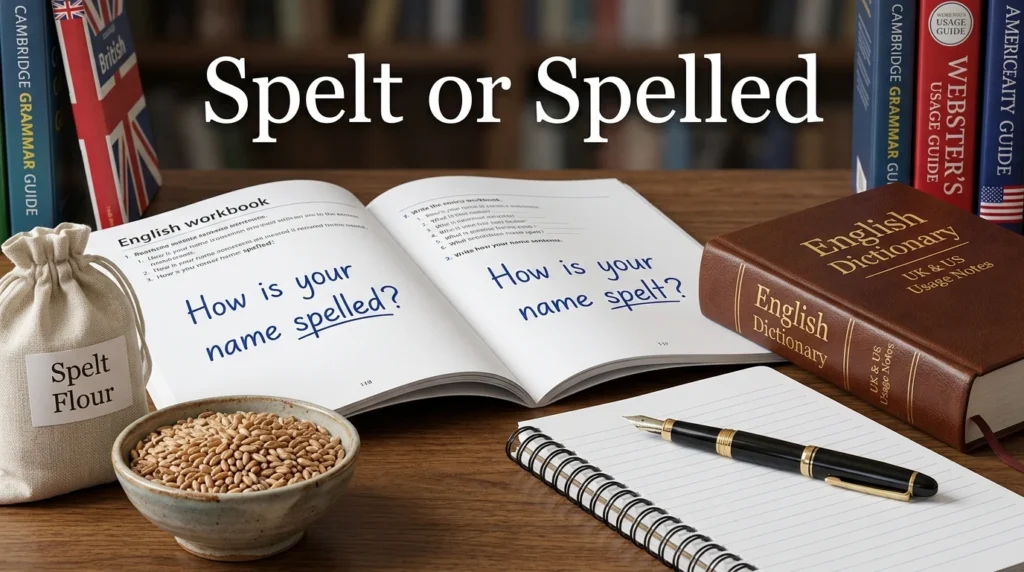
Spelt and spelled are both correct forms of the verb spell. Spelled is widely used in American English, while spelt is especially common in British English.
The words spelt and spelled often create confusion because they describe the same action but look quite different. If you want to tell someone how a word is written, you can use either form depending on the style of English you follow.
For example, you might write, “Her name was spelled correctly,” or “Her name was spelt correctly.” Both sentences have the same basic meaning.
The main difference is regional usage. Spelled is the more familiar choice in American English, while spelt is strongly associated with British English. However, spelt has another meaning as the name of a type of grain, so context matters.
What Does Spelled Mean?
Spelled is the past tense and past participle of spell.
When used as a verb, it means that someone formed a word using the correct letters or gave the letters of a word in the correct order.
For example:
- She spelled my name correctly.
- I spelled the word incorrectly.
- He spelled the address for me.
- The teacher spelled the difficult word aloud.
- You spelled that word perfectly.
The form spelled is especially common in American English.
What Does Spelt Mean?
Spelt can also be the past tense and past participle of spell.
For example:
- She spelt my name correctly.
- I spelt the word incorrectly.
- He spelt the address for me.
- The teacher spelt the word aloud.
In this use, spelt has the same meaning as spelled.
However, spelt has a second meaning. It can also refer to a type of ancient grain related to wheat. That meaning is completely different from the verb form.
So, the sentence gives you the clue:
She spelt the word correctly.
Here, spelt comes from spell.
But:
The bread contains spelt flour.
Here, spelt refers to the grain.
Spelt or Spelled: What Is the Difference?
The basic difference is spelling preference.
| Word | Meaning as a verb | Common usage |
|---|---|---|
| Spelled | Formed a word with the correct letters | Very common in American English |
| Spelt | Formed a word with the correct letters | Common in British English |
There is no difference in meaning when spelt and spelled are used as past forms of spell.
For example:
I spelled your name correctly.
and
I spelt your name correctly.
Both mean that the person wrote or gave the letters of the name in the correct order.
Cambridge lists spelled and spelt as past forms of spell, with spelt identified as a British form.
Is Spelt or Spelled Correct?
Both are correct.
This is not a case where one word is correct and the other is a spelling mistake.
The choice depends mainly on the variety of English being used.
If your writing follows American English, spelled is usually the safer and more natural choice.
If your writing follows British English, spelt is perfectly natural.
For example:
How is your last name spelled?
and:
How is your last name spelt?
Both questions are grammatically correct.
When Should You Use Spelled?
Use spelled when you want the form that is widely used in American English.
Examples include:
- How is your name spelled?
- She spelled the word correctly.
- He spelled my last name wrong.
- The child’s name was spelled incorrectly.
- I spelled the address for the receptionist.
- She spelled out the instructions.
This form is also common in international writing, especially when the writer is following American spelling conventions.
When Should You Use Spelt?
Use spelt when following British English conventions.
Examples:
- How is your name spelt?
- She spelt the word correctly.
- He spelt my last name wrong.
- The child’s name was spelt incorrectly.
- I spelt the address for the receptionist.
- She spelt out the instructions.
The meaning does not change.
The important point is that spelt is a legitimate past form of spell, not an error.
Spelled in Everyday English
Spelled appears frequently in everyday situations.
You might need to spell someone’s name when making a reservation. You might spell an email address over the phone. A teacher might ask a student to spell a difficult word.
Here are some natural examples:
How is your last name spelled?
Can you tell me how that street is spelled?
I spelled the word correctly this time.
She spelled her email address slowly.
He spelled the name for me.
In each sentence, spelled tells us that the letters were given or written in a particular order.
Spelt in Everyday English
The same situations can use spelt.
For example:
How is your last name spelt?
Can you tell me how that street is spelt?
I spelt the word correctly this time.
She spelt her email address slowly.
He spelt the name for me.
These sentences are natural in varieties of English where spelt is commonly used.
The meaning remains unchanged.
Spelled or Spelt in Questions
One of the most common places you will see this difference is in questions.
For example:
How is your name spelled?
Or:
How is your name spelt?
Both ask the same thing.
You are asking which letters should be used to write the person’s name.
Other examples include:
- How is that word spelled?
- How is the street name spelled?
- How is your last name spelled?
- How is the company name spelled?
With the other form:
- How is that word spelt?
- How is the street name spelt?
- How is your last name spelt?
- How is the company name spelt?
Spelled or Spelt in School
Both forms can appear in school writing, depending on the English variety being taught.
For example:
The student spelled all ten words correctly.
Or:
The student spelt all ten words correctly.
A teacher may also ask:
How do you spell this word?
The present form spell stays the same. The regional difference becomes noticeable mainly in the past and past participle forms.
The important forms are:
- spell
- spelled
- spelt
- spelling
Spelled or Spelt in Professional Writing
Both forms can be used in professional communication.
For example:
Your name has been spelled incorrectly on the document.
Or:
Your name has been spelt incorrectly on the document.
If you are writing for a business, school, publication, or organization, consistency matters.
If the rest of your writing follows American spelling, spelled will usually fit naturally.
If the writing follows British spelling, spelt may be the better fit.
Spelled or Spelt in Formal Writing
Neither form is automatically more formal.
Consider these two sentences:
The patient’s surname was spelled incorrectly.
The patient’s surname was spelt incorrectly.
The difference is not one of formality. It is mainly a difference in spelling convention.
Both can appear in serious and professional writing.
Therefore, do not choose spelt simply because you think it sounds more formal. Choose it because it matches the variety of English you are using.
Spelt Has Another Meaning
There is one detail that makes spelt slightly more interesting.
The word spelt can also be a noun referring to a type of grain.
For example:
The recipe uses spelt flour.
Here, spelt has nothing to do with spelling words.
It refers to a grain.
This means you should use context to understand the word.
Compare:
She spelt my name correctly.
Here, spelt is a verb.
The bakery sells spelt bread.
Here, spelt is a noun.
Cambridge lists both meanings separately.
Spelt Flour and Spelt Grain
When spelt refers to the grain, it is normally connected with food.
You might see:
- spelt flour
- spelt bread
- spelt pasta
- whole spelt
- spelt grain
For example:
The bakery makes bread with spelt flour.
This meaning is unrelated to the verb spell.
That is why a sentence such as “The word was spelt correctly” and “The recipe contains spelt flour” should be understood differently.
Common Mistakes With Spelt and Spelled
One common mistake is thinking that spelt is always incorrect.
It is not.
Another mistake is assuming that spelled must be wrong because someone normally uses spelt.
That is also incorrect.
A third mistake is confusing the verb spelt with the grain spelt.
For example:
She spelt her name.
Here, the word relates to spelling.
But:
She bought spelt flour.
Here, it relates to food.
The surrounding words usually make the meaning clear.
Is Spelt American English?
Spelt can be understood in American English, but spelled is generally the more familiar choice for the past form of spell in American usage.
For example, most American readers would naturally recognize:
How is your name spelled?
The form spelt is more strongly associated with British English in this verb use.
That does not make it wrong. It simply means that regional preference matters.
Is Spelled British English?
Yes, spelled can be used in British English as well.
English spelling is not always divided into strict rules where one form belongs exclusively to one country.
However, spelt is a well-established British form of the past tense and past participle of spell.
So both forms can be encountered, although their frequency differs by region.
Spelled or Spelt for Names
When asking someone how to write their name, both forms work.
American style:
How is your name spelled?
British style:
How is your name spelt?
You can also say:
Could you spell your name for me?
The present form spell works naturally in both varieties.
This is useful when speaking on the phone, completing forms, making reservations, or checking official documents.
Spelled or Spelt for Words
When discussing vocabulary, both forms are possible.
For example:
I spelled the word incorrectly.
Or:
I spelt the word incorrectly.
You can also use the present form:
How do you spell this word?
That question is completely natural regardless of whether you later choose spelled or spelt.
Spelled or Spelt With Out
The phrase spell out means to say or write something using each letter, or to explain something clearly.
The past forms can be:
She spelled out the name.
or:
She spelt out the name.
You might also see:
He spelled out the instructions clearly.
or:
He spelt out the instructions clearly.
Again, both forms follow the same regional pattern.
Spelled vs Spelt: Simple Examples
Here are some direct comparisons:
American-style example:
She spelled my name correctly.
British-style example:
She spelt my name correctly.
American-style example:
I spelled the address for him.
British-style example:
I spelt the address for him.
American-style example:
The word was spelled incorrectly.
British-style example:
The word was spelt incorrectly.
The meaning stays the same in every pair.
Spelling Rules and Regional Differences
English contains many words that have different accepted spellings in different varieties.
The difference between spelled and spelt is one example.
The important lesson is that a different regional form is not automatically a mistake.
Writers often choose a spelling system and keep it consistent across their work.
For example, if a document uses one set of regional spelling conventions, it is usually better not to switch randomly between forms.
How to Remember Spelt or Spelled
A simple way to remember the difference is:
Spelled = common American choice
Spelt = common British choice
Then remember that both come from:
spell
So:
spell → spelled
and:
spell → spelt
If you see spelt in a sentence about food, check whether it means the grain instead.
That small distinction will prevent most confusion.
Practice Questions
Choose the form that fits the spelling style.
1. How is your last name ______?
Answer: spelled or spelt
Both are correct.
2. She ______ the word incorrectly.
Answer: spelled or spelt
Both are correct.
3. The teacher asked him how the name was ______.
Answer: spelled or spelt
Both are correct.
4. The recipe uses ______ flour.
Answer: spelt
Here, spelt refers to the grain.
5. He ______ out the address for me.
Answer: spelled or spelt
Both are correct.
Common Sentences With Spelled
Here are useful sentences using spelled:
- How is your name spelled?
- I spelled the word correctly.
- She spelled my last name wrong.
- He spelled the address for me.
- The teacher spelled the word aloud.
- The name was spelled incorrectly.
- She spelled out the instructions.
- I finally spelled the difficult word correctly.
Common Sentences With Spelt
Here are the same types of sentences with spelt:
- How is your name spelt?
- I spelt the word correctly.
- She spelt my last name wrong.
- He spelt the address for me.
- The teacher spelt the word aloud.
- The name was spelt incorrectly.
- She spelt out the instructions.
- I finally spelt the difficult word correctly.
These examples show why the two forms are easy to compare. The sentence structure stays the same while the past form changes.
Quick Comparison of Spelt and Spelled
| Feature | Spelled | Spelt |
|---|---|---|
| Comes from | Spell | Spell |
| Past tense | Yes | Yes |
| Past participle | Yes | Yes |
| Meaning as a verb | Formed words with letters | Formed words with letters |
| Common regional association | American English | British English |
| Can refer to grain | No | Yes |
The main point is simple: spelled and spelt can both describe the past action of spelling a word.
Which One Should You Use?
If you want the most familiar form for American readers, spelled is usually the straightforward choice.
If your writing follows British English conventions, spelt is a natural choice.
Neither form needs to be treated as an error simply because it differs from the other.
The best habit is to choose one regional style and use it consistently.
For example, if you write:
The name was spelled correctly.
Keep using spelled when similar situations appear.
If you write:
The name was spelt correctly.
Continue with spelt if you are following that style.
Final Tips
Remember these points:
- Spelled is correct.
- Spelt is also correct.
- Both can be past forms of spell.
- Spelled is especially common in American English.
- Spelt is especially common in British English.
- Both mean that a word was formed or given with its letters in the correct order.
- Spelt can also mean a type of grain.
- Context tells you which meaning of spelt is intended.
- Spell is the present form.
- Choose one spelling style and stay consistent.
FAQs
Is spelt or spelled correct?
Both are correct when used as past forms of spell. Spelled is more common in American English, while spelt is strongly associated with British English.
Is spelt British and spelled American?
That is a useful general rule, although the real usage is not completely exclusive. Spelt is commonly associated with British English, while spelled is widely used in American English.
Can I use spelt in American English?
Yes, people will generally understand it. However, spelled is the more familiar choice for American readers when referring to the past form of spell.
Does spelt have another meaning?
Yes. Spelt can also be the name of a grain related to wheat. For example, “spelt flour” refers to flour made from that grain.
Is “How is your name spelt?” correct?
Yes. “How is your name spelt?” is grammatically correct. “How is your name spelled?” is also correct. The choice mainly depends on the spelling variety you are following.
Conclusion
Spelt or spelled is not a simple case of one word being right and the other being wrong. Both are accepted past forms of the verb spell.
The main difference comes from regional usage. Spelled is widely used in American English, while spelt is especially common in British English. Both can be used in sentences such as “She spelled my name correctly” and “She spelt my name correctly.”
There is one extra detail worth remembering: spelt can also refer to a type of grain. Context makes the meaning clear. Once you remember these two uses and the regional difference, choosing between spelt and spelled becomes much easier.