

Quick Answer
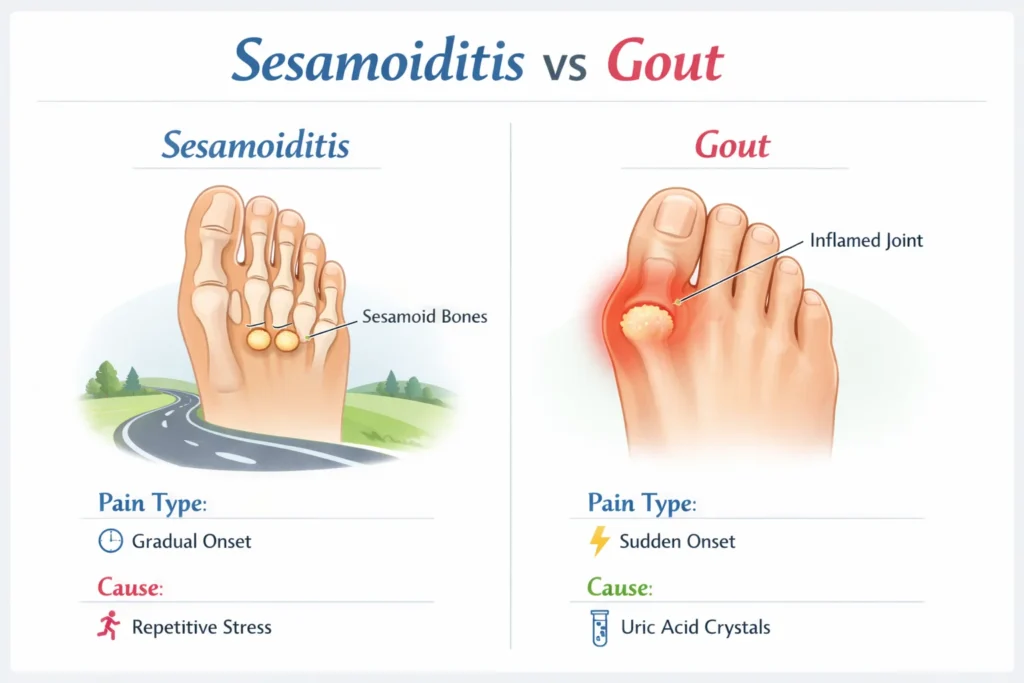
Sesamoiditis and gout both cause foot pain, especially near the big toe, but they are very different conditions. Sesamoiditis is a repetitive stress injury that inflames small bones under the big toe, while gout is a type of arthritis caused by uric acid crystal buildup in the joint.
The causes, symptoms, and treatments are different, so correct diagnosis is important.
Foot pain near the big toe can be confusing. Many people search for sesamoiditis or gout when they feel pain in this area. Both conditions can cause discomfort, swelling, and difficulty walking. However, they are not the same.
Sesamoiditis usually happens because of repeated pressure on the foot. It often affects athletes, runners, and dancers. On the other hand, gout happens due to a buildup of uric acid in the body. This leads to sudden and intense pain in the joints.
Because both conditions affect the same area, people often mistake one for the other. This confusion can delay proper treatment. Therefore, understanding the difference between sesamoiditis or gout is very important.
In this detailed guide, you will learn everything about sesamoiditis or gout. We will cover causes, symptoms, diagnosis, treatment, prevention, real life examples, common mistakes, and expert insights in simple language.
Quick Overview
Sesamoiditis is a stress related injury in small foot bones.
Gout is a metabolic condition caused by uric acid buildup.
Sesamoiditis develops slowly over time.
Gout causes sudden and severe pain.
Both affect the big toe area but have different causes.
Key Difference Between Sesamoiditis or Gout


4
The main difference lies in the cause and type of pain.
Sesamoiditis is caused by repeated stress on the foot bones.
Gout is caused by uric acid crystals forming in the joint.
Sesamoiditis pain develops gradually.
Gout pain appears suddenly and intensely.
Comparison Table
| Feature | Sesamoiditis | Gout |
|---|---|---|
| Cause | Repetitive stress | Uric acid buildup |
| Pain type | Gradual | Sudden and severe |
| Swelling | Mild | Severe |
| Redness | Rare | Common |
| Common group | Athletes | Adults with high uric acid |
| Treatment | Rest and support | Medication and diet |
What Is Sesamoiditis
Sesamoiditis is inflammation of the sesamoid bones. These are two small bones located under the big toe joint. They help in movement and weight distribution.
When too much pressure is placed on these bones, they become irritated. This leads to pain and discomfort.
Causes of Sesamoiditis
- Running and jumping
- Wearing high heels
- Repeated stress on the foot
- Sports activities
Symptoms of Sesamoiditis
- Dull pain under the big toe
- Pain increases with movement
- Mild swelling
- Difficulty walking
What Is Gout
Gout is a type of arthritis caused by excess uric acid in the body. This uric acid forms crystals in joints, especially in the big toe.
Causes of Gout
- High uric acid levels
- Diet rich in red meat and seafood
- Alcohol consumption
- Genetic factors
Symptoms of Gout
- Sudden severe pain
- Redness and swelling
- Warm feeling in the joint
- Pain often starts at night
Understanding the Pain Difference
One key way to understand sesamoiditis or gout is by looking at pain behavior.
Sesamoiditis pain is slow and builds over time. It worsens with activity.
Gout pain is sudden and intense. It may wake a person at night.
This difference helps doctors identify the condition.
How the Foot Anatomy Is Affected
The sesamoid bones are located under the big toe joint. They act like pulleys to help movement.
In sesamoiditis, these bones become inflamed due to stress.
In gout, the joint itself becomes inflamed due to crystal buildup.
Risk Factors
Risk Factors for Sesamoiditis
- Athletes and runners
- Dancers
- People wearing high heels
- Foot structure issues
And Risk Factors for Gout
- High uric acid levels
- Obesity
- Poor diet
- Family history
Diagnosis Methods
Doctors use different methods to diagnose sesamoiditis or gout.
For Sesamoiditis
- Physical examination
- X rays
- MRI if needed
For Gout
- Blood test for uric acid
- Joint fluid test
- Imaging tests
Correct diagnosis is important for proper treatment.
Treatment for Sesamoiditis
- Rest and reduce activity
- Ice therapy
- Proper footwear
- Orthotic pads
- Pain relief medication
Most cases improve with conservative treatment.
Treatment for Gout
- Anti inflammatory medication
- Uric acid lowering drugs
- Dietary changes
- Hydration
Gout requires medical management to prevent future attacks.
Lifestyle and Prevention
Preventing Sesamoiditis
- Wear comfortable shoes
- Avoid excessive pressure
- Take rest during activities
Preventing Gout
- Eat healthy diet
- Reduce alcohol intake
- Maintain healthy weight
- Drink plenty of water
Real World Examples
1 Example One Athlete Pain
A runner develops pain under the big toe after training. Diagnosis shows sesamoiditis.
2 Example Two Sudden Night Pain
A person wakes up with severe toe pain and swelling. Doctor confirms gout.
3 Example Three Misdiagnosis
Someone treats foot pain as injury, but later finds it is gout due to uric acid.
Advantages of Early Understanding
- Helps quick diagnosis
- Prevents complications
- Improves recovery time
- Reduces pain and discomfort
Common Mistakes
1 Mistake One Thinking Both Are the Same
Correction They have completely different causes
2 Mistake Two Ignoring Sudden Pain
Correction Sudden pain may indicate gout
3 Mistake Three Continuing Activity
Correction Rest is important for sesamoiditis
Related Comparisons
Gout vs Arthritis
Gout is a type of arthritis
Foot Injury vs Joint Disease
Sesamoiditis is injury, gout is disease
Inflammation vs Crystal Deposition
Different underlying causes
Beginner to Advanced Understanding
Beginner Level
Sesamoiditis is stress injury
Gout is uric acid disease
Intermediate Level
Sesamoiditis causes gradual pain
Gout causes sudden pain
Advanced Level
Biological processes differ completely between mechanical stress and metabolic imbalance
Regional and Global Usage
Sesamoiditis is common among athletes worldwide.
Gout is more common in adults with lifestyle related risks.
Both conditions are seen globally.
Exercises With Answers
One Question
Which condition causes sudden pain
Answer Gout
Two Question
Which is caused by stress injury
Answer Sesamoiditis
Three Question
Which involves uric acid
Answer Gout
Four Question
Which affects athletes more
Answer Sesamoiditis
Five Question
Which requires diet control
Answer Gout
FAQs
Is sesamoiditis the same as gout?
No, sesamoiditis is a stress injury while gout is caused by uric acid buildup.
How can I tell sesamoiditis or gout?
Gradual pain suggests sesamoiditis, while sudden severe pain suggests gout.
Can both conditions happen together?
It is rare but possible.
Is gout more serious than sesamoiditis?
Gout can cause long term joint damage if untreated.
Can sesamoiditis heal on its own?
Yes, with rest and proper care.
Does gout require lifelong treatment?
Often yes, to control uric acid levels.
What foods trigger gout?
Red meat, seafood, and alcohol.
Can shoes cause sesamoiditis?
Yes, tight or high heel shoes can increase risk.
Conclusion
Understanding sesamoiditis or gout is important for proper diagnosis and treatment. Both conditions affect the big toe area, but their causes are completely different. Sesamoiditis results from repeated stress on small bones, while gout occurs due to uric acid crystal buildup.
Recognizing the type of pain is key. Gradual pain often points to sesamoiditis, while sudden intense pain suggests gout. Early diagnosis helps prevent complications and improves recovery.
By learning these differences, individuals can take the right steps for treatment and prevention. Always consult a healthcare professional for accurate diagnosis and care.