
Quick Answer
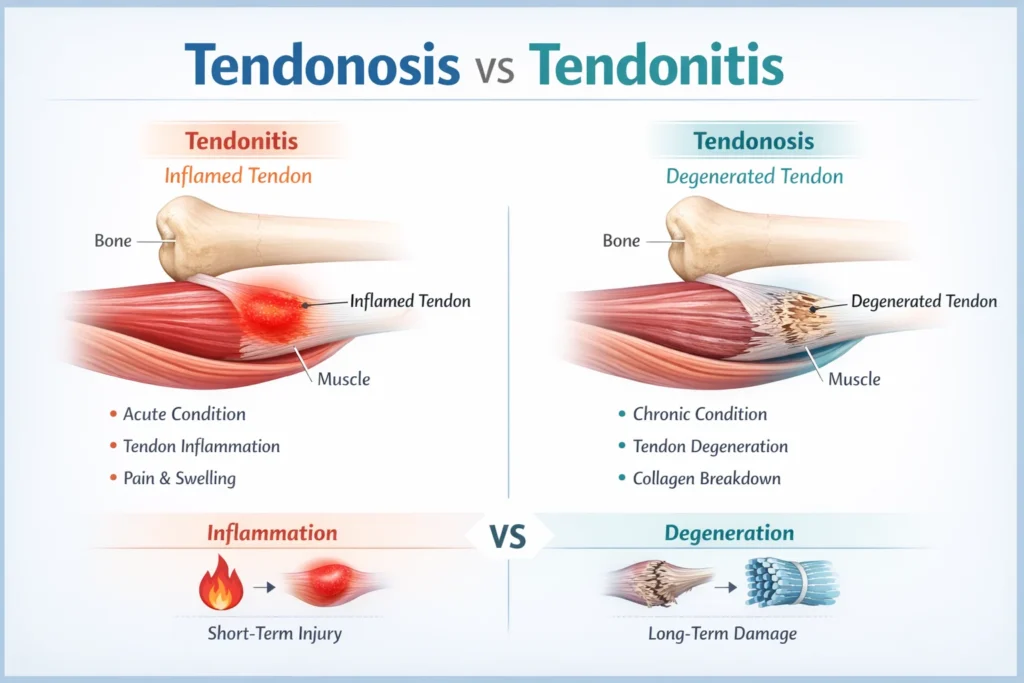
Tendonosis and tendonitis are two different tendon conditions. Tendonitis is a short term injury caused by inflammation, while tendonosis is a long term condition caused by tendon degeneration without inflammation. In simple terms, tendonitis is acute and inflammatory, while tendonosis is chronic and degenerative.
Many people feel pain in joints like the shoulder, elbow, knee, or heel. Often, they hear terms like tendonitis or tendonosis. Because the names sound similar, people think they mean the same thing. However, they are quite different.
Understanding tendonosis vs tendonitis is very important for proper treatment. If you treat a chronic condition like an acute injury, recovery can become slow or even worse. Therefore, knowing the difference helps in choosing the right care, exercises, and recovery plan.
Tendons are strong tissues that connect muscles to bones. They help the body move. When these tendons become damaged, pain and stiffness occur. However, the type of damage matters. Tendonitis involves inflammation. Tendonosis involves long term wear and tear.
In this guide, you will learn everything about tendonosis vs tendonitis in simple language. We will cover causes, symptoms, diagnosis, treatment, recovery time, exercises, and expert advice.
Quick Overview
Tendonitis is an acute condition with inflammation
Tendonosis is a chronic condition with degeneration
Tendonitis heals faster
Tendonosis takes longer to recover
Both affect tendons but require different treatments
Key Difference Between Tendonosis vs Tendonitis


The main difference is inflammation versus degeneration.
Tendonitis involves swelling and inflammation
Tendonosis involves breakdown of tendon fibers
Comparison Table
| Feature | Tendonitis | Tendonosis |
|---|---|---|
| Type | Acute | Chronic |
| Cause | Inflammation | Degeneration |
| Pain | Sudden | Long lasting |
| Healing time | Short | Long |
| Treatment | Rest and anti inflammatory care | Strengthening and therapy |
What Is Tendonitis
Tendonitis is a condition where a tendon becomes inflamed. It usually happens due to sudden injury or overuse.
For example, playing sports without proper warm up can cause tendonitis. The affected area becomes painful, swollen, and tender.
Common Causes of Tendonitis
- Sudden physical activity
- Repetitive motion
- Poor posture
- Sports injuries
Symptoms of Tendonitis
- Sharp pain
- Swelling
- Warm feeling in the area
- Limited movement
Tendonitis is usually short term and improves with rest.
What Is Tendonosis
Tendonosis is a chronic condition. It happens when a tendon breaks down over time due to repeated stress.
Unlike tendonitis, tendonosis does not involve inflammation. Instead, the tendon fibers become weak and damaged.
Common Causes of Tendonosis
- Long term overuse
- Aging
- Poor healing of previous injuries
- Repeated strain
Symptoms of Tendonosis
- Dull pain
- Stiffness
- Weakness
- Reduced flexibility
Tendonosis develops slowly and lasts longer.
Main Differences Explained
The difference between tendonosis vs tendonitis is very important.
Tendonitis happens suddenly and includes inflammation.
Tendonosis develops slowly and involves tissue damage.
Tendonitis heals quickly with rest.
Tendonosis needs long term rehabilitation.
Therefore, treatment methods are different.
Causes and Risk Factors
Several factors increase the risk of both conditions.
Risk Factors
- Repetitive movements
- Poor technique in sports
- Lack of rest
- Aging
- Weak muscles
Athletes and workers who repeat the same motion are at higher risk.
Diagnosis Methods
Doctors use physical exams and imaging tests.
Common Diagnosis Tools
- Physical examination
- Ultrasound
- MRI scan
These tests help identify inflammation or degeneration.
Treatment for Tendonitis
Treatment focuses on reducing inflammation.
Common Treatments
- Rest
- Ice therapy
- Pain relief medicine
- Light stretching
Most people recover within a few weeks.
Treatment for Tendonosis


6
Treatment focuses on rebuilding the tendon.
Common Treatments
- Physical therapy
- Strength exercises
- Eccentric training
- Lifestyle changes
Recovery takes longer but leads to stronger tendons.
Recovery Time Comparison
Tendonitis heals faster, often within weeks.
Tendonosis may take months because the tendon needs rebuilding.
Therefore, early diagnosis is very important.
Real World Examples
Example One Athlete Injury
A runner develops sudden knee pain after intense training. This is likely tendonitis.
Example Two Office Worker
A person typing daily develops long term wrist pain. This may be tendonosis.
Example Three Gym Training
Improper lifting technique causes repeated stress leading to tendonosis.
Common Mistakes
1 Mistake One Treating Tendonosis Like Tendonitis
Correction Chronic damage needs strengthening, not just rest
2 Mistake Two Ignoring Pain
Correction Early treatment prevents worsening
3 Mistake Three Overusing Painkillers
Correction Address root cause instead of masking pain
Related Comparisons
Sprain vs strain
Tendon vs ligament
Acute vs chronic injury
Beginner to Advanced Understanding
Beginner Level
Tendonitis is inflammation
Tendonosis is degeneration
Intermediate Level
Tendonitis is short term
Tendonosis is long term
Advanced Level
Cellular changes and collagen breakdown define tendonosis
Exercises With Answers
1 Question
Which condition involves inflammation
Answer Tendonitis
2 Question
Which is chronic
Answer Tendonosis
3 Question
Which heals faster
Answer Tendonitis
4 Question
Which needs strengthening exercises
Answer Tendonosis
5 Question
Which causes sudden pain
Answer Tendonitis
FAQs
Is tendonosis worse than tendonitis?
Yes, tendonosis is chronic and takes longer to heal.
Can tendonitis turn into tendonosis?
Yes, untreated tendonitis can develop into tendonosis.
Which condition is more painful?
Both can be painful, but tendonosis lasts longer.
Do both require rest?
Yes, but tendonosis also needs strengthening.
How long does recovery take?
Tendonitis weeks, tendonosis months.
Can exercise help tendonosis?
Yes, controlled exercises improve healing.
Is inflammation present in tendonosis?
No, it mainly involves tissue degeneration.
Conclusion
Understanding tendonosis vs tendonitis is essential for proper treatment and recovery. Tendonitis is an acute condition with inflammation that heals quickly with rest and care. Tendonosis is a chronic condition that involves tendon damage and requires long term rehabilitation.
Both conditions affect movement and cause pain, but their treatment approaches are different. Early diagnosis helps prevent complications and speeds up recovery.
If you feel ongoing tendon pain, it is important to seek proper guidance. With the right treatment plan, both conditions can be managed effectively.