
Quick Answer
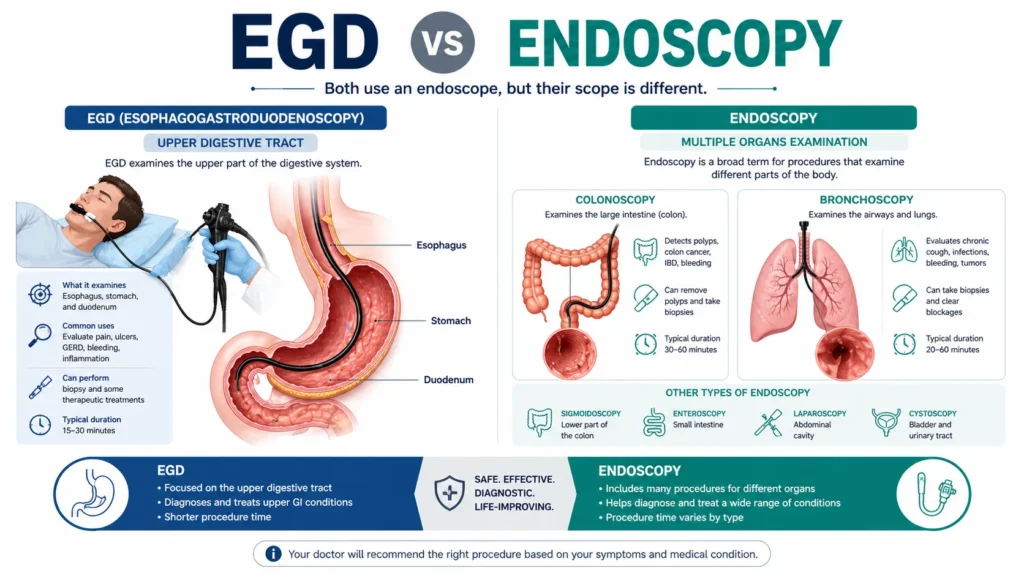
EGD and endoscopy are closely related medical terms, but they are not exactly the same. EGD is a specific type of endoscopy that examines the upper digestive tract, including the esophagus, stomach, and first part of the small intestine. Endoscopy is a broader term that includes many procedures used to look inside different parts of the body using a flexible camera.
Many patients feel confused when they hear the terms EGD and endoscopy. Doctors often use these words during medical visits, especially when discussing digestive problems. Because the terms sound similar, people assume they mean the same thing. However, there is an important difference.
Endoscopy is a general term. It refers to any procedure that uses a thin tube with a camera to look inside the body. EGD, on the other hand, is a specific type of endoscopy. It focuses only on the upper digestive system.
Understanding EGD vs endoscopy is important for patients, students, and caregivers. It helps you know what to expect during a medical test. It also helps you ask better questions and feel more confident before a procedure.
In this detailed guide, you will learn everything about EGD vs endoscopy. We will cover definitions, procedures, uses, preparation, risks, benefits, real life examples, and more in simple language.
Quick Overview
EGD is a type of endoscopy
Endoscopy is a general medical procedure
EGD examines upper digestive tract
Endoscopy can examine many body parts
Key Difference Between EGD vs Endoscopy


4
The main difference is scope and purpose.
EGD focuses only on the upper digestive system
Endoscopy includes many procedures for different organs
Comparison Table
| Feature | EGD | Endoscopy |
|---|---|---|
| Type | Specific procedure | General term |
| Area examined | Upper digestive tract | Multiple body areas |
| Scope | Limited | Broad |
| Examples | Upper GI endoscopy | Colonoscopy, bronchoscopy |
| Purpose | Diagnose stomach issues | Diagnose various conditions |
What Is Endoscopy
Endoscopy is a medical procedure that allows doctors to see inside the body without surgery. It uses a thin flexible tube with a camera called an endoscope.
Doctors use endoscopy to examine organs, take tissue samples, and sometimes perform treatments.
Types of Endoscopy
- Upper endoscopy
- Colonoscopy
- Bronchoscopy
- Cystoscopy
Each type focuses on a different part of the body.
What Is EGD
EGD stands for esophagogastroduodenoscopy. It is a type of upper endoscopy.
This procedure examines:
- Esophagus
- Stomach
- Duodenum
Doctors use EGD to diagnose digestive problems like ulcers, acid reflux, and inflammation.
How EGD Works


During EGD, the doctor inserts a flexible tube through the mouth. The camera sends images to a screen.
The procedure usually takes a short time and is often done with sedation for comfort.
How Endoscopy Works


Endoscopy works in a similar way, but the insertion point depends on the organ being examined.
For example:
- Mouth for upper GI
- Rectum for colonoscopy
- Nose for bronchoscopy
Main Differences Explained
EGD is a type of endoscopy
Endoscopy includes many procedures
EGD focuses on digestion
Endoscopy covers many organs
It is more specific
Endoscopy is more general
EGD vs Endoscopy
Uses of EGD
- Diagnose acid reflux
- Detect ulcers
- Check stomach pain
- Identify bleeding
Uses of Endoscopy
- Examine lungs
- Check colon health
- Inspect bladder
- Diagnose internal conditions
Preparation for EGD vs Endoscopy
Preparation depends on the type of procedure.
EGD Preparation
- Fasting for several hours
- Avoid certain medications
- Follow doctor instructions
Endoscopy Preparation
- May include fasting
- Bowel preparation for colonoscopy
- Medication adjustments
Risks and Safety
Both procedures are generally safe.
EGD Risks
- Mild throat discomfort
- Rare bleeding
- Very low complication rate
Endoscopy Risks
- Depends on type
- Minor discomfort
- Rare complications
Doctors monitor patients closely to ensure safety.
Advantages and Disadvantages
Advantages of EGD
- Quick diagnosis
- Minimally invasive
- Direct view of upper digestive tract
Disadvantages
- Limited to upper GI
- Requires preparation
Advantages of Endoscopy
- Versatile
- Can diagnose many conditions
- Used in different organs
Disadvantages
- May require different preparations
- Some procedures take longer
Real World Examples
1 Example
A patient with acid reflux undergoes EGD to check the esophagus.
2 Example
A patient with colon issues undergoes colonoscopy, which is a type of endoscopy.
3 Example
Doctors use endoscopy to detect internal bleeding in emergency cases.
Common Mistakes
1 Mistake One Thinking EGD and Endoscopy Are the Same
Correction EGD is one type of endoscopy
2 Mistake Two Ignoring Preparation Instructions
Correction Proper preparation is important
3 Mistake Three Fear of Procedure
Correction These procedures are safe and routine
Related Comparisons
Colonoscopy vs Endoscopy
Colonoscopy is a type of endoscopy
Gastroscopy vs EGD
Both refer to upper digestive examination
Imaging vs Endoscopy
Endoscopy provides direct view inside the body
Beginner to Advanced Understanding
Beginner Level
EGD checks upper digestive system
Endoscopy checks many body parts
Intermediate Level
EGD is specific
Endoscopy is general
Advanced Level
Medical diagnosis depends on selecting the right type of endoscopy for accurate results
Regional and Global Usage
Endoscopy is used worldwide in hospitals.
EGD is common in diagnosing digestive diseases globally.
Advanced healthcare systems use endoscopy for early detection and treatment.
Exercises With Answers
One Question
What does EGD examine
Answer Upper digestive tract
Two Question
Is EGD a type of endoscopy
Answer Yes
Three Question
Can endoscopy examine lungs
Answer Yes
Four Question
Which is broader
Answer Endoscopy
Five Question
Which is specific
Answer EGD
FAQs
Is EGD the same as endoscopy?
No, EGD is a specific type of endoscopy.
What does EGD stand for?
It stands for esophagogastroduodenoscopy.
Is endoscopy painful?
It is usually not painful due to sedation.
Why do doctors recommend EGD?
To diagnose upper digestive problems.
Can endoscopy detect cancer?
Yes, it helps detect abnormal growth.
How long does EGD take?
Usually a short procedure.
Do I need fasting before EGD?
Yes, fasting is required.
Is endoscopy safe?
Yes, it is generally safe.
Conclusion
Understanding EGD vs endoscopy helps patients feel more confident about medical procedures. EGD is a specific type of endoscopy that examines the upper digestive tract, while endoscopy is a broad term that includes many procedures for different organs.
Both procedures are important tools in modern medicine. They allow doctors to diagnose problems quickly and accurately without major surgery. Although they may sound similar, their scope and purpose are different.
By learning these differences, you can better understand your health, follow medical advice, and make informed decisions.