

Quick Answer:
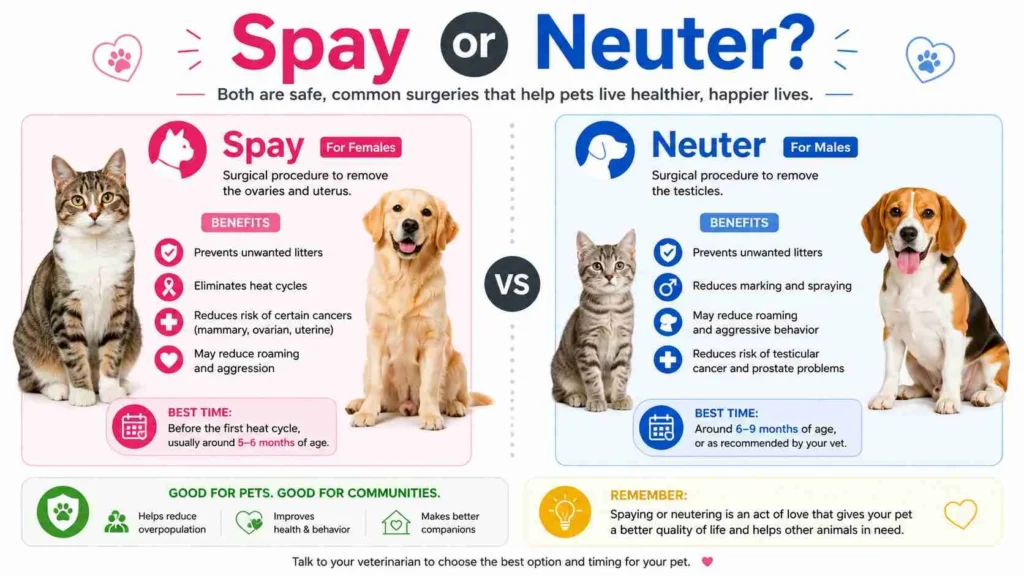
Spay and neuter are surgical procedures that prevent pets from reproducing. Spay refers to surgery for female animals, while neuter usually refers to surgery for male animals. Both procedures help control pet population, improve animal health, and reduce unwanted behaviors.
Many pet owners ask whether they should choose spay or neuter for their animals. These procedures are common in veterinary care, yet many people still feel confused about the difference between them.
Spaying is performed on female pets, while neutering is usually done on male pets. Both surgeries stop reproduction and offer important health and behavioral benefits. Veterinarians around the world recommend these procedures for dogs, cats, and other pets.
Understanding spay or neuter is important because it affects pet health, population control, behavior, and long term care costs. For example, spayed pets often have lower risk of certain cancers, while neutered pets may become calmer and less aggressive.
Many shelters and rescue organizations also encourage spaying and neutering to reduce the number of homeless animals. Without these procedures, unwanted litters can increase rapidly.
This guide explains everything about spay or neuter in simple language. You will learn the differences, procedures, recovery process, benefits, myths, real world examples, costs, and professional veterinary advice.
Quick Overview
Spay is surgery for female pets
Neuter is surgery for male pets
Both prevent reproduction
Both improve long term pet health
Spaying removes female reproductive organs
Neutering removes male reproductive organs
Key Difference Between Spay or Neuter


The main difference between spay or neuter is the sex of the animal receiving the surgery.
Spaying is done for female pets such as dogs and cats.
Neutering is usually performed on male pets.
Both procedures stop reproduction, but the surgery itself is different.
What Is Spaying
Spaying is a surgical procedure performed on female animals. During the surgery, veterinarians remove the ovaries and usually the uterus.
After spaying, the female animal cannot become pregnant.
Main Goals of Spaying
- Prevent pregnancy
- Reduce risk of disease
- Improve behavior
- Control pet population
Veterinarians often recommend spaying before the first heat cycle for maximum health benefits.
What Is Neutering
Neutering is a surgical procedure performed on male animals. During the operation, veterinarians remove the testicles.
After neutering, the male animal can no longer reproduce.
Main Goals of Neutering
- Prevent breeding
- Reduce aggression
- Decrease roaming behavior
- Improve long term health
Neutered pets often become calmer and easier to manage.
Visual Comparison of Spay and Neuter Procedures


These illustrations show the basic difference between spaying female animals and neutering male animals.
Why Veterinarians Recommend Spay or Neuter
Veterinarians strongly support spay or neuter procedures because they improve animal welfare.
Health Benefits
- Lower cancer risk
- Reduced infections
- Better reproductive health
Behavioral Benefits
- Less aggression
- Reduced spraying and marking
- Less roaming behavior
Population Control
Millions of homeless pets enter shelters every year. Spaying and neutering help reduce unwanted litters.
Health Benefits of Spaying Female Pets
Spaying provides several important health advantages.
Lower Risk of Uterine Infection
Female pets can develop serious infections in the uterus. Spaying removes this risk.
Reduced Cancer Risk
Spaying lowers the chance of mammary tumors and reproductive cancers.
No Heat Cycles
Spayed pets no longer experience heat cycles, bleeding, or mating behavior.
Health Benefits of Neutering Male Pets
Neutering also offers major health benefits.
Lower Testicular Cancer Risk
Removing the testicles eliminates the possibility of testicular cancer.
Reduced Prostate Problems
Neutered male pets have lower risk of prostate disease.
Better Behavior
Many male pets become calmer after neutering.
Comparison Table
| Feature | Spay | Neuter |
|---|---|---|
| Animal sex | Female | Male |
| Organs removed | Ovaries and uterus | Testicles |
| Prevents pregnancy | Yes | Yes |
| Common pets | Dogs and cats | Dogs and cats |
| Behavioral impact | Reduces heat cycles | Reduces aggression |
Recovery After Spay or Neuter


Recovery usually takes one to two weeks.
Recovery Tips
- Keep pets calm
- Prevent licking of stitches
- Follow veterinary instructions
- Provide clean resting area
Most pets recover quickly with proper care.
Cost of Spay or Neuter
The cost depends on location, pet size, and veterinary clinic.
Factors Affecting Cost
- Animal size
- Age
- Clinic type
- Additional medications
Animal shelters sometimes offer low cost programs.
Real World Examples
Example One Shelter Adoption
A family adopts a neutered dog from a rescue shelter.
Example Two Preventive Health Care
A veterinarian recommends spaying a young female cat before her first heat cycle.
Example Three Behavioral Improvement
A male dog stops roaming after neutering.
Common Myths About Spay or Neuter
Myth One Pets Become Lazy
Some owners believe pets become lazy after surgery.
Correction
Healthy diet and exercise keep pets active.
Myth Two Female Pets Need One Pregnancy
This is false. Veterinarians do not recommend unnecessary breeding.
Myth Three Surgery Changes Personality
Spay or neuter may reduce unwanted behaviors, but pets still keep their unique personalities.
Advantages and Disadvantages
Advantages
- Prevents unwanted litters
- Improves health
- Reduces aggressive behavior
- Helps animal shelters
Disadvantages
- Requires surgery
- Recovery period needed
- Small risk of complications
Overall, benefits usually outweigh risks.
Common Mistakes Pet Owners Make
Mistake One Waiting Too Long
Some owners delay surgery unnecessarily.
Mistake Two Ignoring Recovery Instructions
Pets need proper rest after surgery.
Mistake Three Believing Internet Myths
Always follow professional veterinary advice.
Related Comparisons
Spay vs Heat Cycle
Spaying prevents heat cycles completely.
Neuter vs Training
Neutering helps behavior but does not replace training.
Adoption vs Breeding
Spaying and neutering support responsible pet ownership.
Beginner to Advanced Understanding
Beginner Level
Spay is for females
Neuter is for males
Intermediate Level
Both procedures improve health and stop reproduction.
Advanced Level
Veterinary studies show spaying and neutering can reduce disease risk and improve community animal welfare.
Regional and Global Usage
Many countries encourage spay or neuter programs to reduce stray animals.
Animal welfare organizations often provide educational campaigns and low cost clinics.
In some regions, laws require shelters to spay or neuter adopted pets.
Emotional Impact on Pet Owners
Some owners feel nervous before surgery. However, these procedures are routine and commonly performed by veterinarians.
Most pets return to normal behavior within days.
Understanding the benefits often helps owners feel more confident.
Professional Veterinary Insights
Veterinarians consider spay or neuter an important part of preventive care.
According to animal welfare experts, population control reduces suffering among homeless animals and improves public health.
Early spaying and neutering can also lower long term medical costs.
Exercises With Answers
Question One
Which procedure is for female pets
Answer Spay
Question Two
Which procedure is for male pets
Answer Neuter
Question Three
Do these surgeries prevent reproduction
Answer Yes
Question Four
Can neutering reduce roaming behavior
Answer Yes
Question Five
Does spaying remove ovaries
Answer Yes
FAQs
What is the difference between spay or neuter?
Spaying is surgery for females, while neutering is surgery for males.
Is spay or neuter safe for pets?
Yes, veterinarians perform these procedures safely every day.
At what age should pets be spayed or neutered?
The best age depends on species and breed, so consult a veterinarian.
Will my pet gain weight after surgery?
Pets may gain weight without exercise and balanced diet.
Does neutering stop aggression completely?
It may reduce aggression, but training is still important.
Can female pets still go into heat after spaying?
No, spaying stops heat cycles.
How long does recovery take?
Most pets recover within one to two weeks.
Why do shelters encourage spay or neuter?
It helps reduce homeless pet populations.
Is the surgery painful?
Veterinarians use anesthesia and pain management to keep pets comfortable.
Can older pets still be spayed or neutered?
Yes, but veterinarians evaluate health condition first.
Conclusion
Understanding spay or neuter helps pet owners make responsible decisions for animal health and welfare. Spaying is performed on female pets, while neutering is done for male pets. Both procedures prevent reproduction and offer many health and behavioral benefits.
These surgeries reduce the risk of disease, help control unwanted behaviors, and support efforts to reduce homeless pet populations. Although recovery takes a short time, most pets return to normal life quickly.
Veterinarians around the world recommend spay or neuter as part of responsible pet care. By learning the differences and benefits, owners can provide safer, healthier, and happier lives for their animals.