
Quick Answer
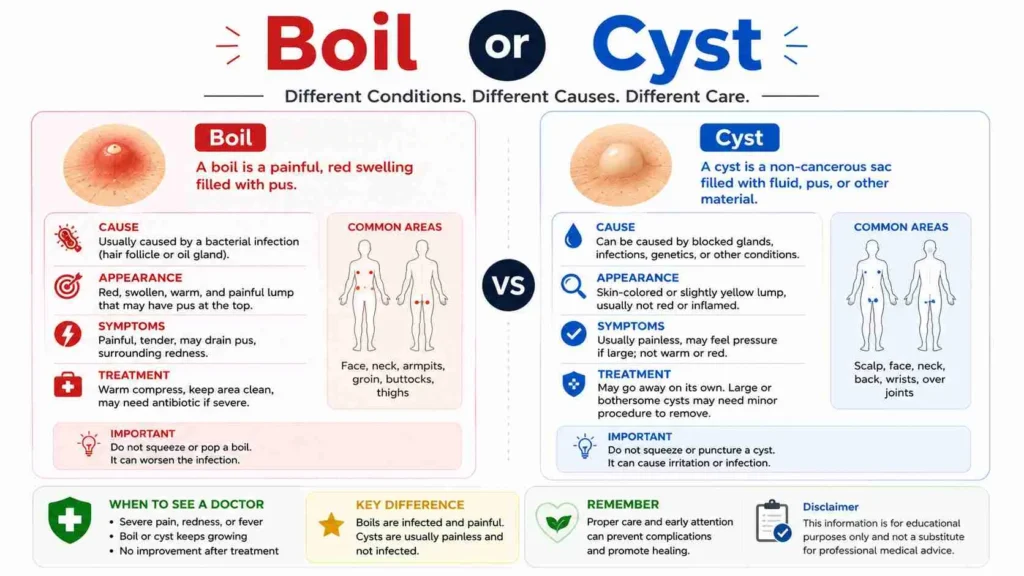
A boil and a cyst are both skin lumps, but they are different conditions. A boil is a painful skin infection filled with pus, while a cyst is usually a slow growing sac filled with fluid, oil, or other material. Boils are often red and tender, whereas cysts are usually less painful unless infected.
Many people get confused when they notice a lump under the skin. Some think it is a boil, while others believe it is a cyst. Although both conditions can look similar, they are quite different.
A boil is usually caused by a bacterial infection. It becomes red, swollen, and painful. In contrast, a cyst develops slowly and often feels soft or firm under the skin. Most cysts are harmless, but some can become infected and painful.
Understanding boil or cyst differences is important because treatment methods are not the same. A boil may need drainage and antibiotics, while a cyst may only require monitoring or minor medical treatment.
These skin conditions can appear on the face, neck, back, armpits, thighs, or other body areas. Therefore, knowing the symptoms and warning signs helps people seek proper treatment early.
This complete guide explains boil or cyst in simple language. You will learn about causes, symptoms, treatment, prevention, common mistakes, real world examples, and much more.
Quick Overview
A boil is a skin infection filled with pus.
A cyst is a sac filled with fluid or material.
Boils are usually painful and red.
Cysts often grow slowly and may not hurt.
Both appear as lumps under the skin but require different treatments.
Key Difference Between Boil or Cyst


The main difference lies in the cause and appearance.
A boil forms because of bacterial infection.
A cyst forms due to blocked glands or trapped material.
Boils are painful and inflamed.
Cysts are often painless unless infected.
What Is a Boil
A boil is a painful lump caused by bacterial infection. It usually starts in a hair follicle or oil gland.
Over time, the area becomes swollen, red, and filled with pus. The skin around the boil may feel warm and tender.
Common Areas for Boils
- Face
- Neck
- Armpits
- Thighs
- Buttocks
Boils can grow larger if not treated properly.
What Is a Cyst
A cyst is a closed sac under the skin. It may contain fluid, oil, dead skin cells, or other material.
Unlike boils, cysts usually develop slowly. Many cysts remain painless and harmless for years.
Common Areas for Cysts
- Scalp
- Back
- Chest
- Neck
- Face
Some cysts become infected and swollen.
How Boils Develop


Boils usually begin when bacteria enter a hair follicle. The immune system fights the infection, which causes pus buildup.
As pressure increases, the boil becomes painful and swollen.
Poor hygiene, sweating, and friction can increase risk.
How Cysts Develop


Cysts often develop when glands become blocked. Dead skin cells or oil collect inside the sac.
Unlike boils, cysts are not usually caused by infection at first.
However, infected cysts can become red and painful.
Comparison Table
| Feature | Boil | Cyst |
|---|---|---|
| Cause | Bacterial infection | Blocked gland or sac |
| Pain | Usually painful | Often painless |
| Growth speed | Fast | Slow |
| Contents | Pus | Fluid or oil |
| Redness | Common | Less common |
| Warmth | Often warm | Usually normal |
Symptoms of Boil or Cyst
Boil Symptoms
- Red swollen lump
- Pain and tenderness
- Pus formation
- Warm skin around area
- Possible fever in severe cases
Cyst Symptoms
- Round lump under skin
- Slow growth
- Soft or firm texture
- Usually painless
- May become infected later
Causes of Boil or Cyst
Causes of Boils
- Bacterial infection
- Poor hygiene
- Sweating
- Skin friction
- Weak immune system
Causes of Cysts
- Blocked oil glands
- Skin injury
- Genetic conditions
- Trapped dead skin cells
Risk Factors
Some people are more likely to develop boils or cysts.
Boil Risk Factors
- Diabetes
- Obesity
- Poor hygiene
- Skin irritation
Cyst Risk Factors
- Oily skin
- Acne history
- Skin damage
- Family history
Diagnosis Methods
Doctors often diagnose boils or cysts through physical examination.
In some cases, they may:
- Check for infection
- Drain fluid for testing
- Use imaging tests for deep cysts
Proper diagnosis is important because treatment differs.
Treatment for Boils
Home Care
- Warm compress
- Keep area clean
- Avoid squeezing
Medical Treatment
- Drainage by doctor
- Antibiotics for infection
- Pain relief medicine
Large boils may need professional treatment.
Treatment for Cysts
Simple Monitoring
Small painless cysts may not require treatment.
Medical Treatment
- Surgical removal
- Drainage
- Steroid injection
Doctors may remove cysts if they grow large or painful.
Can a Cyst Turn Into a Boil
Sometimes a cyst becomes infected. When this happens, it may look similar to a boil.
However, the original causes are still different.
An infected cyst often requires medical care.
Real World Examples
Example One
A teenager develops a painful red lump under the arm. Doctors diagnose a boil caused by infection.
Example Two
An adult notices a slow growing lump on the back. Doctors confirm it is a harmless cyst.
Example Three
A cyst becomes infected and starts swelling, causing pain similar to a boil.
Advantages and Disadvantages of Early Treatment
Advantages
- Faster healing
- Lower infection risk
- Reduced pain
- Prevents complications
Disadvantages of Ignoring Symptoms
- Infection spread
- Increased swelling
- Scarring
- Severe pain
Common Mistakes
Mistake One Thinking Every Lump Is a Boil
Correction Some lumps are cysts or other conditions
Mistake Two Squeezing the Lump
Correction This can spread infection and worsen swelling
Mistake Three Ignoring Redness and Pain
Correction Severe symptoms may need medical attention
Mistake Four Using Home Remedies Only
Correction Some cases require professional treatment
Related Comparisons
Boil vs Pimple
Boils are deeper and more painful than pimples
Cyst vs Tumor
Most cysts are harmless sacs, while tumors may involve abnormal tissue growth
Abscess vs Boil
A boil is a type of skin abscess caused by infection
Beginner to Advanced Understanding
Beginner Level
Boils are infected painful lumps
Cysts are slow growing sacs
Intermediate Level
Boils usually contain pus, while cysts contain oil or fluid.
Advanced Level
Chronic or recurring boils may indicate underlying health problems such as diabetes or immune disorders.
Prevention Tips
Preventing Boils
- Wash skin regularly
- Avoid sharing towels
- Wear clean clothing
- Treat cuts quickly
Preventing Cysts
- Manage acne properly
- Avoid skin trauma
- Maintain healthy skin hygiene
Regional and Global Usage
Boils and cysts occur worldwide. However, hot climates and poor hygiene conditions may increase boil infections.
Healthcare access also affects early diagnosis and treatment.
Exercises With Answers
Question One
Which condition is usually caused by bacteria
Answer Boil
Question Two
Which condition grows slowly
Answer Cyst
Question Three
Which is more painful
Answer Boil
Question Four
Can cysts become infected
Answer Yes
Question Five
Should you squeeze a boil or cyst
Answer No
FAQs
Is a boil the same as a cyst?
No, a boil is an infection, while a cyst is a sac filled with material.
Which is more painful boil or cyst?
Boils are usually more painful because of infection and inflammation.
Can a cyst go away naturally?
Some small cysts disappear without treatment.
Do boils always need antibiotics?
No, small boils may heal with warm compresses.
Can stress cause boils or cysts?
Stress may weaken immunity and worsen skin problems.
Should I pop a boil or cyst?
No, squeezing can spread infection and increase damage.
How do doctors remove cysts?
Doctors may drain or surgically remove them.
Can boils spread to other people?
Yes, bacterial infections can spread through contact.
Are cysts dangerous?
Most cysts are harmless, but some need medical care.
When should I see a doctor?
Seek medical help if pain, swelling, fever, or infection worsens.
Conclusion
Understanding boil or cyst differences helps people recognize skin problems early and choose proper treatment. A boil is a painful bacterial infection filled with pus, while a cyst is a slow growing sac filled with fluid or oil.
Although both conditions may appear as lumps under the skin, their causes, symptoms, and treatments are different. Boils often require infection control, while cysts may only need monitoring unless they become infected.
Good hygiene, early care, and avoiding squeezing the lump can prevent complications. If symptoms become severe, medical advice is important.
Learning the difference between boil or cyst improves skin health awareness and helps people make better healthcare decisions.