
Quick Answer
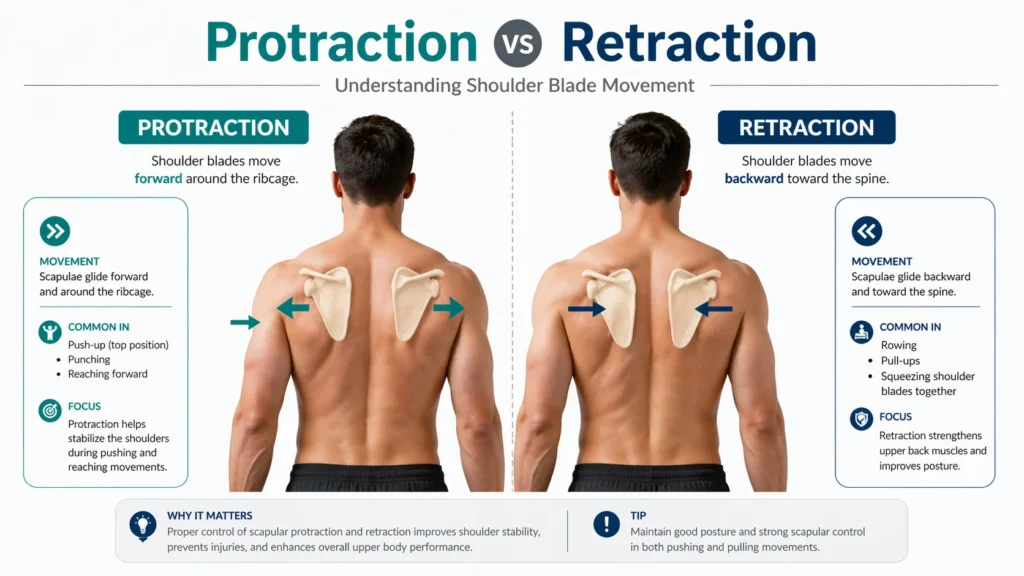
Protraction and retraction are opposite types of body movement. Protraction means moving a body part forward, while retraction means pulling it backward. These movements commonly occur in areas like the shoulders, jaw, and scapula.
Many students, gym beginners, and even patients get confused about protraction vs retraction. The terms sound technical, but the idea is simple. These movements describe how parts of your body move forward or backward.
For example, when you push your shoulders forward, that is protraction. When you pull them back, that is retraction. These movements play a big role in posture, exercise, and daily activities.
Understanding protraction vs retraction helps in fitness training, physical therapy, and injury prevention. It also improves posture and muscle balance.
In this guide, you will learn everything in simple language. We will cover definitions, muscles involved, real life examples, exercises, mistakes, and professional tips.
Quick Overview
Protraction means moving forward
Retraction means moving backward
Protraction pushes body parts away
Retraction pulls them back
Both are opposite movements
Key Difference Between Protraction vs Retraction


The main difference is direction.
Protraction moves a body part forward
Retraction moves it backward
These movements are opposite and work together to maintain balance.
Comparison Table
| Feature | Protraction | Retraction |
|---|---|---|
| Movement direction | Forward | Backward |
| Function | Push away | Pull back |
| Common areas | Shoulders jaw | Shoulders jaw |
| Role | Expansion | Stability |
Definition of Protraction
Protraction is a movement that moves a body part forward. It is commonly seen in the shoulders and jaw.
When you round your shoulders forward, you are doing protraction. This movement often happens during activities like typing, pushing, or reaching forward.
Definition of Retraction
Retraction is the opposite movement. It pulls a body part backward toward the body.
When you squeeze your shoulder blades together, you are doing retraction. This movement is important for good posture and strength.
Main Differences Explained
The key difference between protraction vs retraction is direction and function.
Protraction moves forward and is often linked with pushing actions.
Retraction moves backward and is linked with pulling actions.
Both movements are important for balance. Without retraction, too much protraction can lead to poor posture.
Muscles Involved in Protraction and Retraction
Different muscles control these movements.
Muscles for Protraction
- Serratus anterior
- Pectoralis minor
Muscles for Retraction
- Rhomboids
- Trapezius
These muscles work together to control shoulder movement and posture.
Real World Examples
1 Example One Sitting Posture
When you sit with rounded shoulders, you are in protraction.
2 Example Two Gym Exercise
During rowing exercises, you pull shoulders back into retraction.
3 Example Three Jaw Movement
Moving your jaw forward is protraction, and pulling it back is retraction.
Exercises for Protraction and Retraction


Protraction Exercises
- Scapular push ups
- Punching movements
Retraction Exercises
- Rows
- Band pull aparts
- Shoulder blade squeezes
These exercises help maintain muscle balance.
Importance in Posture
Posture depends on balance between protraction and retraction.
Too much protraction leads to rounded shoulders.
Strong retraction helps keep the chest open and posture straight.
Therefore, both movements must stay balanced.
Common Mistakes
1 Mistake One Ignoring Retraction
Many people focus on pushing movements and forget pulling exercises.
Correction
Balance both movements
2 Mistake Two Poor Posture
Sitting with rounded shoulders all day
Correction
Practice retraction exercises
3 Mistake Three Confusing Terms
Thinking both mean the same
Correction
They are opposite movements
Related Comparisons
Flexion vs Extension
Flexion bends a joint, extension straightens it
Abduction vs Adduction
Abduction moves away, adduction moves toward
Elevation vs Depression
Elevation lifts, depression lowers
Beginner to Advanced Understanding
Beginner Level
Protraction is forward
Retraction is backward
Intermediate Level
Protraction uses pushing muscles
Retraction uses pulling muscles
Advanced Level
Muscle imbalance between these movements can cause injury and posture problems
Regional and Practical Usage
These terms are used worldwide in fitness, anatomy, and physical therapy.
Trainers, doctors, and therapists use them to explain movement and treatment.
Exercises With Answers
One Question
Which movement goes forward
Answer Protraction
Two Question
Which movement pulls back
Answer Retraction
Three Question
Which helps posture
Answer Retraction
Four Question
Which muscles control retraction
Answer Rhomboids and trapezius
Five Question
Which movement is common in pushing
Answer Protraction
FAQs
What is protraction vs retraction?
They are opposite movements where one moves forward and the other backward.
Where do these movements occur?
They occur in shoulders, jaw, and scapula.
Why is retraction important?
It helps improve posture and prevent injury.
Can poor posture be caused by protraction?
Yes, excessive protraction leads to rounded shoulders.
Are these terms used in gym training?
Yes, trainers use them for proper form.
Which is stronger protraction or retraction?
It depends on muscle strength and training.
How can I improve retraction?
By doing pulling exercises like rows.
Conclusion
Understanding protraction vs retraction is important for movement, posture, and fitness. Protraction moves body parts forward, while retraction pulls them backward.
Both movements are essential for balance. Too much protraction can lead to poor posture, while strong retraction helps maintain alignment.
By practicing the right exercises and maintaining balance, you can improve posture, prevent injuries, and build strength.