
Quick Answer
Hemorrhoids and fissures are two common conditions that affect the anal area, but they are not the same. A hemorrhoid is a swollen vein in or around the anus, while an anal fissure is a small tear in the lining of the anus. Hemorrhoids often cause itching, swelling, and painless bleeding, whereas fissures usually cause sharp pain during bowel movements and bleeding.
Many people experience pain, discomfort, or bleeding during bowel movements and immediately wonder whether they have a hemorrhoid or fissure. Because both conditions affect the anal area and share some similar symptoms, people often confuse them.
Understanding the difference between hemorrhoid or fissure is important because the causes, symptoms, and treatment methods can be different. While both conditions are common and usually not life threatening, they can significantly affect daily life and comfort.
A hemorrhoid develops when veins around the rectum or anus become swollen. In contrast, a fissure develops when the delicate skin lining the anus tears. Although both may cause bleeding, the type of pain and the location of discomfort often help distinguish one from the other.
This guide explains hemorrhoid or fissure in simple language. You will learn about symptoms, causes, diagnosis, treatments, prevention methods, real life examples, and much more.
Quick Overview
A hemorrhoid is a swollen vein.
A fissure is a tear in the anal lining.
Hemorrhoids often cause itching and swelling.
Fissures usually cause sharp pain during bowel movements.
Both conditions can cause bleeding.
Key Difference Between Hemorrhoid or Fissure
| Feature | Hemorrhoid | Fissure |
|---|---|---|
| Definition | Swollen vein | Tear in anal lining |
| Main symptom | Itching and swelling | Sharp pain |
| Bleeding | Common | Common |
| Pain level | Mild to moderate | Often severe |
| Cause | Pressure on veins | Trauma from hard stool |
| Appearance | Lump or swelling | Small cut or tear |
What Is a Hemorrhoid
A hemorrhoid is an enlarged or swollen vein in the lower rectum or around the anus.
Hemorrhoids can develop because of increased pressure in the rectal area. This pressure often comes from constipation, prolonged sitting, pregnancy, obesity, or straining during bowel movements.
Types of Hemorrhoids
Internal hemorrhoids develop inside the rectum.
External hemorrhoids develop under the skin around the anus.
Prolapsed hemorrhoids extend outside the anus.
Thrombosed hemorrhoids contain a blood clot and may cause severe pain.
What Is an Anal Fissure
An anal fissure is a small tear in the thin tissue that lines the anus.
Fissures often occur when a person passes a large or hard stool. The tear can cause significant pain and bleeding.
Unlike hemorrhoids, fissures are not swollen veins. They are actual tears in the tissue.
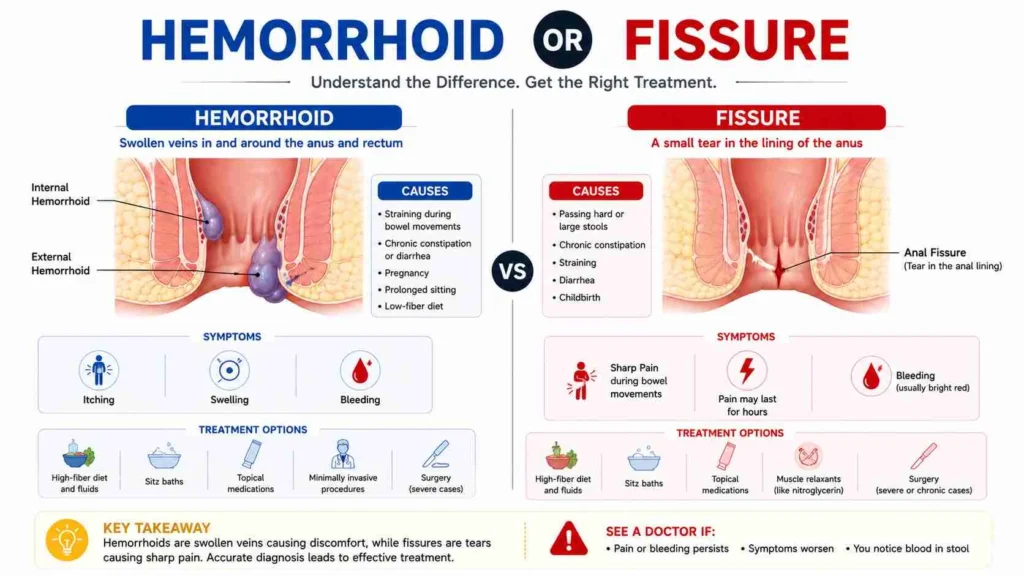
Visual Difference Between Hemorrhoid and Fissure


A hemorrhoid appears as a swollen vein or lump.
A fissure appears as a small cut or tear in the anal tissue.
This anatomical difference explains why symptoms often feel different.
Symptoms of Hemorrhoid or Fissure
Hemorrhoid Symptoms
- Itching around the anus
- Swelling
- Bright red bleeding
- Discomfort while sitting
- Lump near the anus
Fissure Symptoms
- Sharp pain during bowel movements
- Burning sensation
- Bright red blood on toilet paper
- Pain lasting hours after bowel movements
- Visible tear near the anus
Symptom Comparison Table
| Symptom | Hemorrhoid | Fissure |
|---|---|---|
| Itching | Common | Less common |
| Swelling | Common | Rare |
| Sharp pain | Sometimes | Very common |
| Lump | Common | Rare |
| Tear visible | No | Yes |
Common Causes of Hemorrhoid or Fissure
Causes of Hemorrhoids
- Chronic constipation
- Straining during bowel movements
- Pregnancy
- Obesity
- Sitting for long periods
Causes of Fissures
- Passing hard stool
- Chronic constipation
- Severe diarrhea
- Childbirth
- Trauma to anal tissue
How Doctors Diagnose Hemorrhoid or Fissure
Doctors often diagnose these conditions through physical examination.
Medical history is important because symptom patterns help identify the problem.
In some cases, doctors may perform additional tests to rule out other digestive conditions.
Real World Examples
Example One
A person notices itching and a small lump near the anus but experiences little pain.
This is more likely a hemorrhoid.
Example Two
A person experiences intense pain every time they have a bowel movement and notices bright red blood.
This is more likely an anal fissure.
Example Three
A pregnant woman develops swelling around the anal area due to increased pressure.
This often indicates hemorrhoids.
Treatment Options for Hemorrhoids
Lifestyle Changes
- Increase fiber intake
- Drink more water
- Exercise regularly
- Avoid prolonged sitting
Home Remedies
- Warm sitz baths
- Over the counter creams
- Cold compresses
Medical Treatments
- Rubber band ligation
- Sclerotherapy
- Surgical removal
Treatment Options for Anal Fissures
Lifestyle Changes
- High fiber diet
- Increased fluid intake
- Regular bowel habits
Home Care
- Warm baths
- Stool softeners
- Topical medications
Advanced Treatments
- Prescription ointments
- Botox injections
- Surgical procedures
Second Visual Comparison


The image above highlights how symptoms and treatments differ between hemorrhoids and fissures.
Complications of Untreated Conditions
Hemorrhoid Complications
- Blood clots
- Persistent bleeding
- Severe discomfort
Fissure Complications
- Chronic fissure formation
- Infection risk
- Muscle spasms
Early treatment helps prevent these problems.
Prevention Tips
Preventing hemorrhoids and fissures often involves similar healthy habits.
- Eat more fiber
- Stay hydrated
- Avoid straining
- Exercise regularly
- Respond quickly to bowel urges
These habits support digestive health and reduce pressure on anal tissues.
Advantages of Understanding the Difference
- Faster diagnosis
- Better treatment choices
- Reduced anxiety
- Improved recovery
- Better communication with healthcare providers
Common Mistakes
Mistake One
Assuming all anal bleeding comes from hemorrhoids.
Correction: Fissures can also cause bleeding.
Mistake Two
Ignoring severe pain.
Correction: Severe pain is often associated with fissures.
Mistake Three
Using hemorrhoid treatments for every condition.
Correction: Fissures may require different treatments.
Related Comparisons
Hemorrhoid vs Rectal Prolapse
Rectal prolapse involves tissue protrusion, while hemorrhoids involve swollen veins.
Fissure vs Fistula
A fissure is a tear, while a fistula is an abnormal tunnel between tissues.
Internal vs External Hemorrhoids
Internal hemorrhoids occur inside the rectum, while external hemorrhoids develop around the anus.
Third Medical Illustration


Understanding the anatomy makes it easier to recognize symptoms and seek proper treatment.
Beginner to Advanced Understanding
Beginner Level
Hemorrhoids are swollen veins.
Fissures are tears.
Intermediate Level
Both can cause bleeding, but fissures usually cause more pain.
Advanced Level
Doctors evaluate symptom patterns, anatomy, and physical findings to distinguish between the two conditions.
Regional and Global Usage
Hemorrhoids and fissures affect millions of people worldwide.
Modern diets low in fiber contribute to both conditions.
Healthcare providers globally recommend lifestyle changes as the first line of treatment.
Exercises With Answers
Question One
What is a hemorrhoid?
Answer: A swollen vein in the rectum or anus.
Question Two
What is a fissure?
Answer: A small tear in the anal lining.
Question Three
Which condition usually causes sharp pain during bowel movements?
Answer: Anal fissure.
Question Four
Which condition commonly causes itching?
Answer: Hemorrhoid.
Question Five
Can both conditions cause bleeding?
Answer: Yes.
Frequently Asked Questions
Can hemorrhoids and fissures occur together?
Yes, some people can develop both conditions at the same time.
Which is more painful, hemorrhoid or fissure?
Fissures are usually more painful.
Do hemorrhoids heal on their own?
Many mild hemorrhoids improve with lifestyle changes.
Can fissures heal naturally?
Yes, many acute fissures heal with proper care.
What foods help prevent hemorrhoids and fissures?
High fiber foods such as fruits, vegetables, and whole grains help prevent both conditions.
When should I see a doctor?
Seek medical attention if symptoms persist or bleeding increases.
Can dehydration worsen these conditions?
Yes, dehydration can contribute to hard stools and constipation.
Does exercise help?
Yes, regular exercise supports healthy bowel function.
Are hemorrhoids dangerous?
Most are not dangerous, but severe cases may require treatment.
Can children develop fissures?
Yes, children can develop fissures, especially during constipation.
Conclusion
Understanding hemorrhoid or fissure is important because these conditions may seem similar but have different causes and symptoms. A hemorrhoid is a swollen vein that often causes itching, swelling, and mild discomfort. A fissure is a tear in the anal lining that usually causes sharp pain during bowel movements.
Recognizing the difference helps people choose the right treatment and seek medical care when necessary. Healthy habits such as eating more fiber, drinking enough water, exercising regularly, and avoiding straining can reduce the risk of both conditions.
If symptoms persist, worsen, or cause significant discomfort, consulting a healthcare professional is the best step. Early diagnosis and treatment can improve comfort, speed recovery, and prevent complications.