
Quick Answer
Corn and wart are common skin conditions that often look similar, but they have different causes. A corn develops because of repeated pressure or friction on the skin, while a wart develops due to a viral infection caused by the human papillomavirus. Knowing the difference between a corn or wart helps you choose the correct treatment and avoid unnecessary discomfort.
Many people notice a small, rough bump on their foot or hand and immediately wonder it is a corn or wart. Since both conditions can appear similar, confusion is very common. However, understanding the difference is important because each condition requires a different approach to treatment.
A corn develops when the skin thickens to protect itself from constant pressure or friction. For example, tight shoes, repeated walking, or foot deformities can lead to corns. A wart, on the other hand, is caused by a viral infection. The virus enters through tiny cuts or breaks in the skin and causes a raised growth.
Because corns and warts may appear on the feet and can sometimes cause pain, many people mistakenly treat one condition as the other. This can delay healing and make symptoms worse.
This complete guide explains corn or wart differences in simple language. You will learn about symptoms, causes, diagnosis, treatment options, prevention strategies, real life examples, common mistakes, and expert insights that can help you identify and manage these skin conditions effectively.
Quick Overview
A corn is a thickened area of skin caused by pressure or friction.
A wart is a skin growth caused by a viral infection.
Corns are not contagious.
Warts can spread from person to person.
Corns usually develop on pressure points.
Warts can develop almost anywhere on the body.
Key Difference Between Corn or Wart
| Feature | Corn | Wart |
|---|---|---|
| Cause | Pressure and friction | Human papillomavirus |
| Contagious | No | Yes |
| Pain | Painful when pressed directly | Painful when squeezed from sides |
| Appearance | Thick hard skin | Rough growth with black dots |
| Location | Feet and toes | Feet, hands, fingers, knees |
| Treatment | Reduce pressure | Remove virus infected tissue |
Understanding What a Corn Is
A corn is a thick, hardened layer of skin that forms as a protective response. The body creates extra skin when an area experiences repeated pressure or rubbing.
Corns most commonly appear on:
- Toes
- Soles of the feet
- Sides of the feet
- Areas affected by tight footwear
Types of Corns
Hard Corns
Hard corns are small, dense areas of thick skin. They often appear on the tops of toes or pressure points.
Soft Corns
Soft corns develop between the toes where moisture keeps the skin soft.
Seed Corns
Seed corns are tiny corns that usually develop on the sole of the foot.
Understanding What a Wart Is
A wart is a noncancerous skin growth caused by the human papillomavirus, often called HPV.
The virus enters through small cuts in the skin. Once inside, it causes rapid growth of skin cells, leading to the formation of a wart.
Common Types of Warts
Common Warts
Usually appear on fingers, hands, and around nails.
Plantar Warts
Develop on the soles of the feet.
Flat Warts
Small and smooth warts that often appear in groups.
Filiform Warts
Long, narrow warts often found on the face or neck.
Causes of Corn or Wart
Understanding the cause helps identify you have a corn or wart.
Causes of Corns
- Tight shoes
- High heels
- Foot deformities
- Repeated walking or running
- Improper footwear
- Lack of socks
Causes of Warts
- Human papillomavirus infection
- Walking barefoot in public areas
- Skin cuts and abrasions
- Weak immune system
- Direct contact with infected skin
Visual Signs of Corn or Wart
Signs of a Corn
- Thickened skin
- Hard center
- Smooth surface
- Yellowish appearance
- Located on pressure points
Signs of a Wart
- Rough texture
- Small black dots
- Raised growth
- Interrupted skin lines
- May appear in clusters
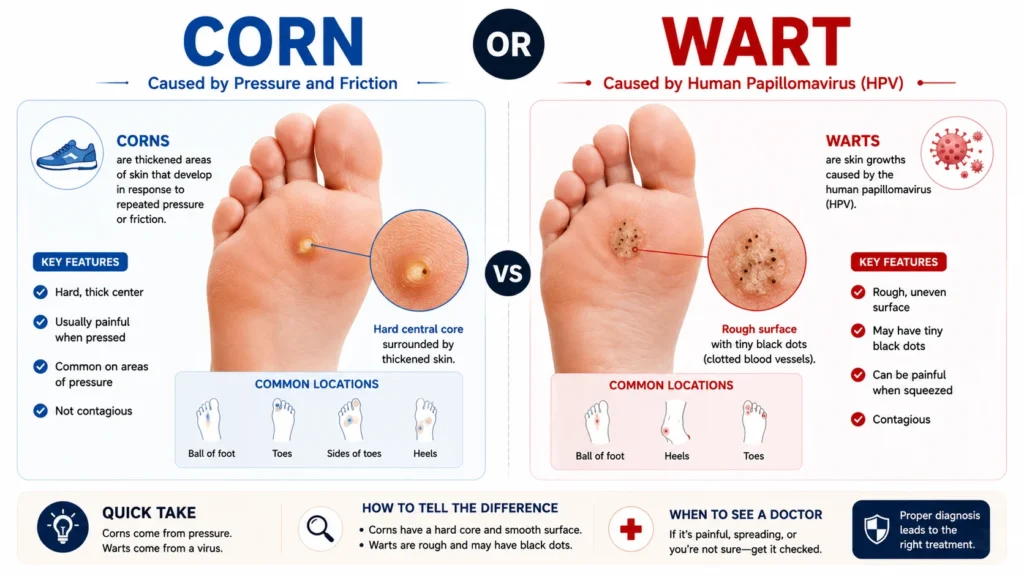
Corn vs Wart Comparison Image

4
A close comparison often shows that corns have a hard central core, while warts usually contain tiny black dots that represent small blood vessels.
Symptoms of Corn or Wart
Corn Symptoms
- Localized pain
- Thick skin
- Tenderness
- Discomfort while walking
- Hard center
Wart Symptoms
- Rough skin growth
- Black dots
- Pain when squeezed
- Multiple growths
- Itching in some cases
How Doctors Diagnose Corn or Wart
Doctors usually diagnose corns and warts through physical examination.
Corn Diagnosis
The doctor checks:
- Pressure points
- Footwear habits
- Skin thickness
- Foot structure
Wart Diagnosis
The doctor may examine:
- Surface texture
- Presence of black dots
- Skin pattern disruption
- Growth characteristics
In rare cases, a skin biopsy may be performed.
Treatment Options for Corns
Reduce Pressure
Removing the source of pressure is the most effective treatment.
Wear Proper Footwear
Shoes should fit comfortably and provide adequate support.
Use Protective Pads
Corn pads can reduce friction and pressure.
Moisturize Skin
Regular moisturizing helps soften thickened skin.
Professional Removal
A healthcare professional can safely trim thick skin.
Wart Treatment Comparison Image


4
Various treatments can remove warts, depending on size and location.
Treatment Options for Warts
Salicylic Acid
This gradually removes infected skin layers.
Cryotherapy
Liquid nitrogen freezes the wart.
Laser Treatment
Doctors may use laser therapy for stubborn warts.
Minor Surgery
Some warts require surgical removal.
Immune Therapy
Special treatments stimulate the immune system to fight the virus.
Risk Factors for Corn or Wart
Corn Risk Factors
- Wearing tight shoes
- Foot deformities
- Long periods of standing
- Athletic activities
Wart Risk Factors
- Public swimming pools
- Locker rooms
- Weak immunity
- Skin injuries
Real World Examples
Example One
A runner develops a painful thick spot on the toe due to tight shoes. The diagnosis is a corn.
Example Two
A teenager notices a rough growth with black dots on the sole of the foot. The diagnosis is a plantar wart.
Example Three
An office worker wears narrow shoes every day and develops corns on both little toes.
Example Four
A swimmer walks barefoot in communal showers and later develops a wart.
Common Mistakes When Identifying Corn or Wart
Mistake One
Assuming every foot bump is a wart.
Correction: Many bumps are actually corns caused by pressure.
Mistake Two
Treating a corn with wart medication.
Correction: Corns require pressure relief, not antiviral treatment.
Mistake Three
Ignoring persistent growths.
Correction: Always seek medical advice if a lesion changes rapidly.
Mistake Four
Sharing personal foot care tools.
Correction: Warts can spread through contaminated tools.
Corn or Wart Prevention Tips
Preventing Corns
- Wear properly fitted shoes
- Use cushioned insoles
- Keep feet moisturized
- Avoid excessive friction
Preventing Warts
- Wear footwear in public showers
- Avoid touching existing warts
- Keep skin healthy
- Do not share towels or footwear
Related Comparisons
Corn vs Callus
A callus covers a larger area and usually causes less pain than a corn.
Wart vs Skin Tag
A wart results from a virus, while a skin tag is a harmless skin growth.
Plantar Wart vs Corn
Plantar warts interrupt normal skin lines, while corns preserve them.
Beginner to Advanced Understanding
Beginner Level
A corn develops from pressure.
A wart develops from a virus.
Intermediate Level
Corns are protective skin responses, while warts involve viral infection and skin cell growth.
Advanced Level
Medical diagnosis may involve examination of skin patterns, vascular structures, and response to pressure testing to distinguish between corns and warts accurately.
Foot Health and Long Term Impact


4
Proper foot care reduces the risk of both corns and warts. Regular inspection and appropriate footwear play a major role in prevention.
Advantages and Disadvantages of Early Treatment
Advantages
- Faster healing
- Less pain
- Reduced risk of complications
- Better mobility
Disadvantages of Delayed Treatment
- Increased discomfort
- Larger lesions
- Possible infection
- Greater treatment costs
Exercises With Answers
Question One
What causes a corn?
Answer: Repeated pressure or friction.
Question Two
What causes a wart?
Answer: Human papillomavirus infection.
Question Three
Are corns contagious?
Answer: No.
Question Four
Can warts spread to other people?
Answer: Yes.
Question Five
Which condition often contains black dots?
Answer: A wart.
FAQs
Can a corn turn into a wart?
No. A corn and a wart have different causes and do not transform into each other.
How do I know if I have a corn or wart?
A corn usually has a hard center, while a wart often has black dots and a rough surface.
Are plantar warts painful?
Yes. Plantar warts can be painful when walking or standing.
Can I remove a corn at home?
Many mild corns improve with proper footwear and pressure relief.
Do warts go away on their own?
Some warts disappear naturally as the immune system fights the virus.
Can children get corns?
Yes, although they are more common in adults.
Are warts dangerous?
Most warts are harmless, but persistent growths should be evaluated by a doctor.
Can tight shoes cause warts?
No. Tight shoes cause corns, not warts.
What is the fastest wart treatment?
Cryotherapy often provides quick results for many patients.
When should I see a doctor for a corn or wart?
Seek medical advice if the growth becomes painful, changes appearance, or does not improve.
Conclusion
Understanding the difference between a corn or wart is essential for proper treatment and prevention. Although both conditions may appear similar, they develop for very different reasons. Corns form because of repeated pressure and friction, while warts develop due to a viral infection caused by human papillomavirus.
Recognizing the signs can help you choose the right treatment. Corns often improve when pressure is removed and footwear is adjusted. Warts require treatments that target the virus and infected skin cells.
Early diagnosis prevents unnecessary discomfort and reduces the risk of complications. If you are unsure you have a corn or wart, consult a healthcare professional for an accurate evaluation. With proper care and prevention strategies, most people can successfully manage both conditions and maintain healthy skin.