

Quick Answer
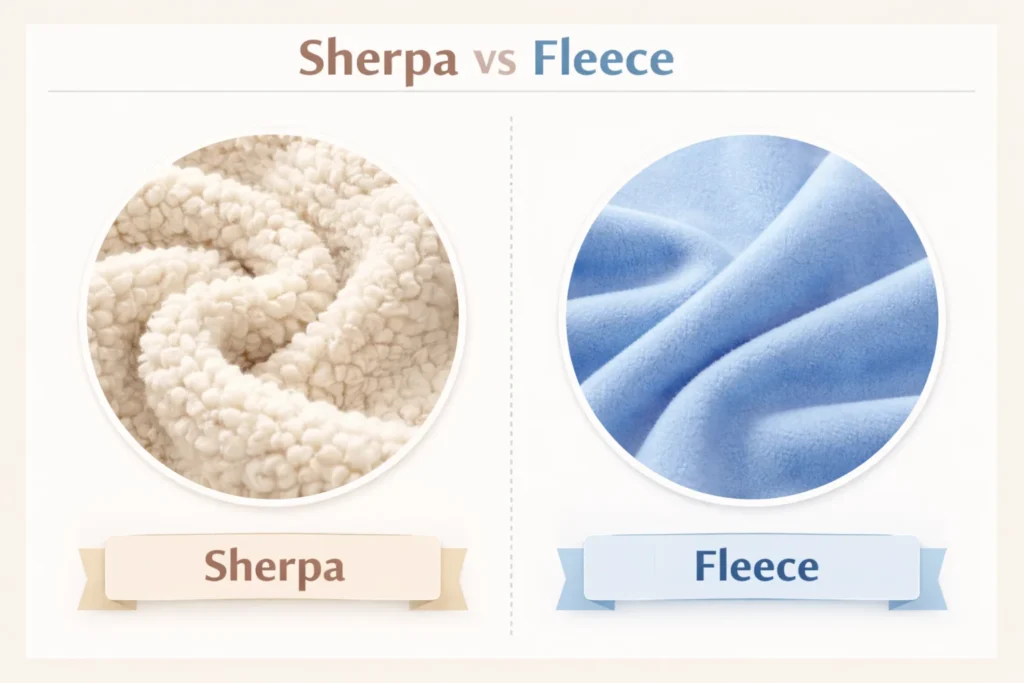
Sherpa and fleece are both soft, warm fabrics used in winter clothing and blankets. Sherpa has a fluffy, wool like texture that feels like sheep wool, while fleece is smooth, lightweight, and made from synthetic fibers. Sherpa feels thicker and cozier, while fleece is more breathable and easier to wear daily.
Many people get confused when choosing between sherpa vs fleece. Both fabrics feel soft and warm. Both are popular in jackets, hoodies, and blankets. However, they are not the same.
Sherpa looks like real sheep wool. It feels fluffy and thick. Fleece, on the other hand, feels smooth and lightweight. Because of these differences, each fabric works better in different situations.
For example, if you want something very warm for cold weather, sherpa might be the better choice. However, if you want something light and breathable for daily wear, fleece is often more comfortable.
Understanding sherpa vs fleece helps you make the right buying decision. ou are shopping for winter clothes, blankets, or outdoor gear, knowing the difference saves money and improves comfort.
In this guide, you will learn everything in simple language. We will cover materials, warmth, comfort, durability, uses, real life examples, mistakes, and more.
Quick Overview
Sherpa is thick, fluffy, and very warm
Fleece is smooth, light, and breathable
Sherpa feels like wool
Fleece feels like soft fabric
And sherpa is best for extreme cold
Fleece is best for daily use
Key Difference Between Sherpa vs Fleece


The main difference is texture and warmth.
Sherpa has a fluffy and wool like feel
Fleece is smooth and lightweight
Sherpa provides more insulation
Fleece provides more flexibility
What Is Sherpa Fabric


Sherpa is a synthetic fabric designed to look like sheep wool. It is usually made from polyester, acrylic, or cotton blends.
It is often used as lining inside jackets or hoodies. The fluffy texture traps heat, making it very warm.
Key Features of Sherpa
- Thick and fluffy
- Very warm
- Soft and cozy
- Looks like real wool
What Is Fleece Fabric


Fleece is a soft synthetic fabric made mainly from polyester. It is lightweight and designed to keep you warm without feeling heavy.
It is commonly used in jackets, sportswear, and blankets.
Key Features of Fleece
- Lightweight
- Soft and smooth
- Breathable
- Easy to wear
Comparison Table
| Feature | Sherpa | Fleece |
|---|---|---|
| Texture | Fluffy | Smooth |
| Weight | Heavy | Light |
| Warmth | Very high | Moderate |
| Breathability | Low | High |
| Look | Wool like | Fabric like |
| Use | Jackets, blankets | Activewear, daily wear |
Warmth and Insulation
Sherpa provides more warmth because its thick fibers trap heat. Therefore, it works best in very cold weather.
Fleece provides moderate warmth. However, it allows air to pass through, which makes it more breathable.
If you live in extremely cold areas, sherpa is better. For mild winters, fleece is enough.
Comfort and Feel
Sherpa feels soft and fluffy. It gives a cozy and warm feeling, especially in blankets.
Fleece feels smooth and light. It is comfortable for movement and daily wear.
Therefore, comfort depends on personal preference.
Durability and Maintenance
Sherpa can lose its fluffy texture over time if not washed properly. It may also attract lint.
Fleece is more durable and easier to maintain. It dries quickly and keeps its shape.
For long term use, fleece is often more practical.
Uses of Sherpa vs Fleece
Sherpa Uses
- Winter jackets
- Blanket lining
- Hoodies
- Boots
Fleece Uses
- Sportswear
- Lightweight jackets
- Blankets
- Outdoor clothing
Real World Examples
1 Example: Winter Jacket
A heavy winter jacket uses sherpa lining for extra warmth.
2 Example: Sports Jacket
A runner wears a fleece jacket because it is light and breathable.
3 Example: Blanket Choice
A person chooses sherpa blanket for extreme cold nights and fleece blanket for mild weather.
Advantages and Disadvantages
Sherpa Advantages
Very warm
Cozy feel
Stylish look
Sherpa Disadvantages
Heavy
Less breathable
Harder to maintain
Fleece Advantages
Lightweight
Breathable
Easy to wash
Fleece Disadvantages
Less warm than sherpa
May not suit extreme cold
Common Mistakes
1 Mistake: Thinking Both Are Same
Correction They differ in texture and warmth
2 Mistake: Choosing Wrong Fabric
Correction Use sherpa for cold and fleece for daily wear
3 Mistake: Ignoring Breathability
Correction Fleece is better for active use
Related Comparisons
Wool vs fleece
Cotton vs polyester
Sherpa vs wool
Beginner to Advanced Understanding
Beginner Level
Sherpa is fluffy
Fleece is smooth
Intermediate Level
Sherpa is warmer
Fleece is lighter
Advanced Level
Fabric structure affects insulation, breathability, and performance.
Regional and Practical Usage
Sherpa is used more in colder regions.
Fleece is used worldwide for daily wear.
Outdoor brands often prefer fleece for active clothing.
Exercises With Answers
1 Question One
Which fabric is fluffier
Answer Sherpa
2 Question
Which is lighter
Answer Fleece
3 Question
Which is warmer
Answer Sherpa
4 Question
Which is better for sports
Answer Fleece
5 Question
Which is easier to wash
Answer Fleece
FAQs
Is sherpa warmer than fleece?
Yes, sherpa is generally warmer than fleece.
Can fleece be used in winter?
Yes, but it is better for mild cold.
Is sherpa heavy?
Yes, sherpa is thicker and heavier.
Which is better for daily use?
Fleece is better for daily wear.
Is fleece breathable?
Yes, fleece allows air flow.
Does sherpa look like wool?
Yes, it is designed to look like wool.
Which is easier to maintain?
Fleece is easier to wash and maintain.
Can I use sherpa for blankets?
Yes, it is very popular for blankets.
Conclusion
Understanding sherpa vs fleece helps you choose the right fabric for comfort and warmth. Sherpa is thick, fluffy, and very warm, making it ideal for cold weather and cozy blankets. Fleece is lightweight, breathable, and easy to wear, making it perfect for daily use and outdoor activities.
Both fabrics have their advantages and disadvantages. Sherpa provides better insulation, while fleece offers flexibility and comfort. Choosing the right one depends on your needs, climate, and lifestyle.