
Quick Answer
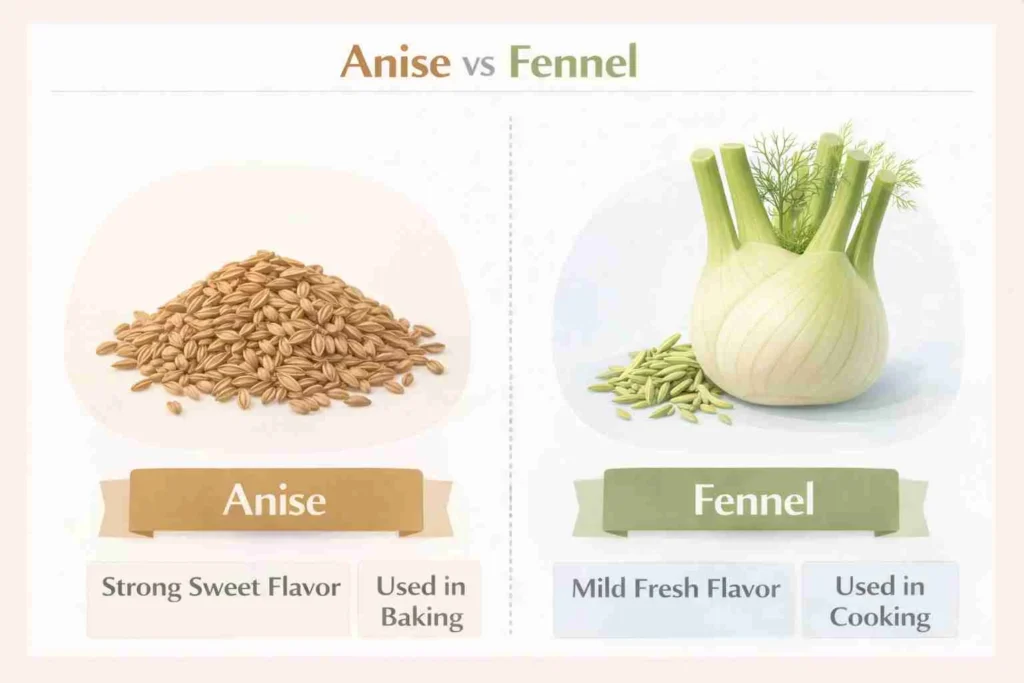
Anise and fennel are two different plants with a similar sweet, licorice like flavor. Anise seeds come from the anise plant and have a stronger, sharper taste, while fennel comes from a larger plant whose seeds, bulb, and leaves are all used in cooking. The main difference lies in flavor strength, plant parts, and culinary uses.
Many people confuse anise vs fennel because both have a similar sweet flavor that reminds them of licorice. At first glance, their seeds even look alike. However, these two plants are quite different in origin, taste, and usage.
Anise is mainly grown for its seeds, which are commonly used in baking and flavoring. In contrast, fennel is a versatile plant. People use its seeds, bulb, and leaves in many types of dishes. This makes fennel more flexible in cooking.
Understanding anise vs fennel is important if you cook, bake, or follow a healthy diet. Choosing the right ingredient can change the taste of your food completely. For example, using anise instead of fennel may result in a stronger flavor than expected.
In this guide, you will learn everything about anise vs fennel in simple language. We will cover taste, uses, nutrition, benefits, differences, examples, mistakes, and more.
Quick Overview
Anise is a plant grown mainly for its seeds
Fennel is a plant used for seeds, bulb, and leaves
Anise has a strong sweet flavor
Fennel has a mild and fresh flavor
Both are used in cooking and herbal remedies
Key Difference Between Anise vs Fennel


The main difference is in taste and plant usage.
Anise seeds have a strong, sweet, and intense flavor.
Fennel has a milder, slightly sweet, and fresh taste.
Also, fennel provides more edible parts compared to anise.
Comparison Table
| Feature | Anise | Fennel |
|---|---|---|
| Plant type | Herb | Vegetable herb |
| Flavor | Strong and sweet | Mild and fresh |
| Parts used | Seeds | Seeds, bulb, leaves |
| Usage | Baking and flavoring | Cooking and salads |
| Appearance | Small seeds | Bulb with green stalks |
What Is Anise
Anise is a flowering plant grown mainly for its seeds. These seeds are small, oval, and brown in color.
People use anise seeds in baking, desserts, and drinks. The flavor is strong and sweet, similar to licorice. Because of this, even a small amount can change the taste of food.
Anise is also used in herbal teas and traditional medicine for digestion.
What Is Fennel
Fennel is a larger plant with many edible parts. It has a white bulb, green stalks, and feathery leaves.
The bulb is used as a vegetable. The seeds are used as a spice. The leaves are used as herbs. This makes fennel very versatile.
Fennel has a mild sweet flavor that works well in salads, soups, and cooked dishes.
Taste and Flavor Differences
Taste is the biggest difference in anise vs fennel.
Anise has a strong and bold flavor. It is sweet but intense.
Fennel has a lighter and fresher taste. It is slightly sweet but not overpowering.
Because of this, chefs use fennel in savory dishes and anise in desserts.
Culinary Uses
Uses of Anise
- Baking cookies and cakes
- Flavoring drinks
- Making herbal teas
- Adding to desserts
Uses of Fennel
- Cooking vegetables
- Adding to salads
- Flavoring soups
- Using seeds in spices
Fennel is more flexible because you can use different parts of the plant.
Nutritional Value
Both anise and fennel provide important nutrients.
Anise Nutrition
- Rich in antioxidants
- Supports digestion
- Contains vitamins and minerals
Fennel Nutrition
- High in fiber
- Good for digestion
- Contains vitamin C and potassium
Both are healthy additions to your diet.
Health Benefits
Benefits of Anise
- Helps digestion
- Reduces bloating
- May improve respiratory health
Benefits of Fennel
- Supports gut health
- Helps reduce inflammation
- Good for heart health
Both are commonly used in natural remedies.
Real World Examples
1 Example: One Cooking
A chef uses fennel bulb in a salad for a fresh taste.
2 Example: Two Baking
A baker uses anise seeds in cookies for a strong flavor.
3 Example: Three Herbal Tea
People use both seeds to make tea for digestion.
Advantages and Disadvantages
Anise Advantages
Strong flavor
Great for desserts
Anise Disadvantages
Too strong if overused
Limited parts used
Fennel Advantages
Versatile plant
Mild flavor
Fennel Disadvantages
Less intense flavor
May not suit all desserts
Common Mistakes
1 Mistake One Thinking They Are the Same
Correction They are different plants
2 Mistake Two Using Anise Instead of Fennel
Correction Anise has a stronger flavor
3 Mistake Three Ignoring Plant Parts
Correction Fennel has bulb, seeds, and leaves
Related Comparisons
Anise vs Star Anise
Different plants but similar flavor
Fennel vs Dill
Both herbs but different taste
Herbs vs Spices
Anise is a spice, fennel is both herb and vegetable
Beginner to Advanced Understanding
Beginner Level
Anise is strong
Fennel is mild
Intermediate Level
Anise is used in baking
Fennel is used in cooking
Advanced Level
Flavor intensity, plant parts, and culinary roles define their usage
Regional and Global Usage
Anise is popular in Middle Eastern and Mediterranean cuisines.
Fennel is widely used in European and Asian cooking.
Both are used worldwide for flavor and health benefits.
Exercises With Answers
1 Question
Which has stronger flavor
Answer Anise
2 Question
Which has a bulb
Answer Fennel
3 Question
Which is used in baking
Answer Anise
4 Question
Which is more versatile
Answer Fennel
5 Question
Do both taste similar
Answer Yes but strength differs
FAQs
Are anise and fennel the same?
No, they are different plants with similar flavors.
Which is stronger anise or fennel?
Anise has a stronger flavor.
Can I replace fennel with anise?
You can, but use less because it is stronger.
Which is better for cooking?
Fennel is better for cooking due to versatility.
Are both healthy?
Yes, both provide health benefits.
Do they taste like licorice?
Yes, both have a licorice like flavor.
Which is used in tea?
Both can be used in herbal tea.
Conclusion
Understanding anise vs fennel helps you choose the right ingredient for your cooking and health needs. Although both share a similar sweet flavor, they are quite different in taste, usage, and plant structure.
Anise offers a strong and bold flavor that works well in desserts and baking. On the other hand, fennel provides a mild and fresh taste, making it suitable for a wide range of dishes.
Both are healthy and beneficial, but your choice depends on your recipe and preference. If you want a strong flavor, choose anise. If you want a versatile ingredient, choose fennel.