
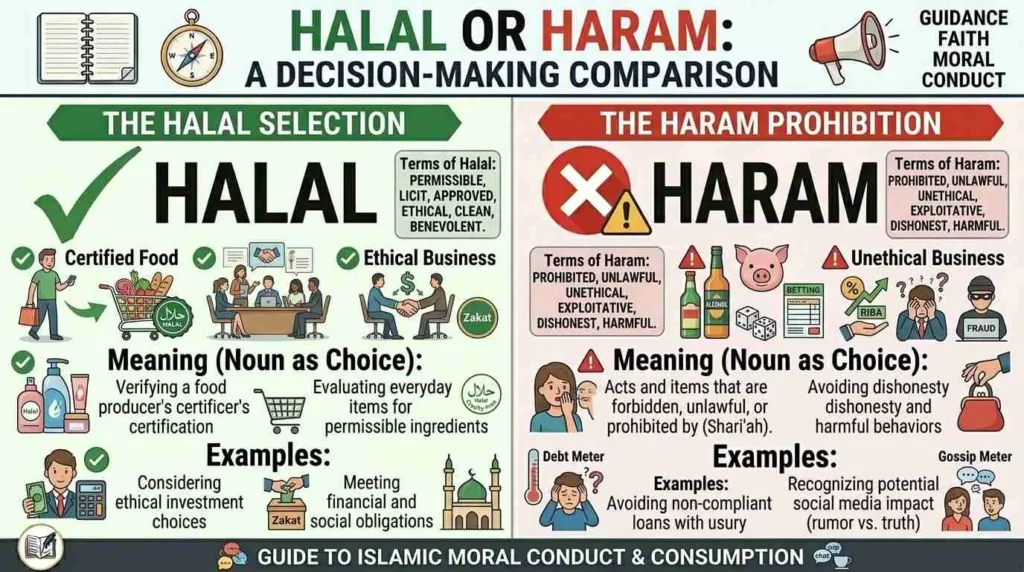

Many people search for halal or haram because these terms appear in food labels, financial services, cosmetics, medicine, travel, and everyday life. Although the words are commonly associated with food, their meaning goes much further. They help Muslims determine whether an action, product, or behavior is acceptable according to Islamic teachings.
The confusion often begins when people see halal certification on products or hear discussions about whether something is halal or haram. Some assume the terms apply only to meat, while others are unsure how these rules affect daily life.
Understanding halal or haram is important for Muslims who want to follow religious guidelines and for non Muslims who want to understand Islamic practices. This guide explains the meanings, differences, examples, benefits, common mistakes, and practical applications of halal and haram in simple language.
Quick Overview
Halal means permissible or allowed.
Haram means forbidden or prohibited.
Halal applies to food, business, finance, behavior, and lifestyle.
Haram includes actions and products prohibited by Islamic teachings.
What Does Halal Mean
Halal is an Arabic word that means permissible, lawful, or allowed.
When something is halal, Muslims are permitted to use it, consume it, practice it, or participate in it according to Islamic teachings.
Examples of halal activities include:
- Eating permitted foods
- Earning income through lawful work
- Speaking truthfully
- Conducting fair business
- Following ethical behavior
Halal encourages responsibility, honesty, and cleanliness.
What Does Haram Mean
Haram is an Arabic word that means forbidden or prohibited.
When something is haram, Muslims are instructed to avoid it.
Examples often include:
- Consuming alcohol
- Gambling
- Theft
- Fraud
- Certain prohibited foods
The purpose of haram rules is to protect individuals and society from harmful actions.
Key Difference Between Halal or Haram


4
The main difference is permission.
| Feature | Halal | Haram |
|---|---|---|
| Meaning | Allowed | Forbidden |
| Islamic Status | Permissible | Prohibited |
| Food Example | Properly prepared meat | Pork |
| Financial Example | Ethical business | Fraud |
| Lifestyle Example | Honest behavior | Theft |
Importance of Halal and Haram in Islam
Halal and haram provide guidance for daily life.
These concepts help Muslims:
- Make ethical decisions
- Follow religious teachings
- Maintain discipline
- Promote fairness
- Protect health and society
Many Islamic scholars explain that understanding halal and haram is essential for responsible living.
Halal Foods Explained
Food is the area where people most commonly hear the term halal.
Halal foods generally include:
- Fruits
- Vegetables
- Grains
- Seafood in many Islamic traditions
- Properly slaughtered animals permitted in Islam
Food preparation is also important. Cleanliness and proper handling are part of halal requirements.
Haram Foods Explained
Certain foods are considered haram.
Common examples include:
- Pork and pork products
- Alcoholic beverages
- Meat from prohibited animals
- Food contaminated with forbidden ingredients
Muslims are expected to avoid these products whenever possible.
Halal Meat and Islamic Slaughter


4
Halal meat comes from animals that are permitted for consumption and slaughtered according to Islamic guidelines.
Key principles include:
- Humane treatment of animals
- Proper slaughter method
- Invocation of God’s name
- Clean processing procedures
These requirements are important for halal certification.
Halal and Haram in Business
The concept extends beyond food.
Halal business practices include:
- Honest transactions
- Fair pricing
- Ethical employment
- Transparent agreements
Haram business practices include:
- Fraud
- Deception
- Theft
- Corruption
Business ethics play a major role in Islamic teachings.
Halal and Haram in Finance
Islamic finance uses halal principles.
Examples of halal financial practices include:
- Ethical investments
- Transparent contracts
- Asset based transactions
Examples of haram financial activities may include:
- Certain forms of exploitative interest
- Fraudulent investments
- Financial deception
Because of this, many financial institutions offer Islamic banking products.
Halal and Haram in Daily Life
Halal and haram influence everyday decisions.
Examples include:
- Choosing food
- Earning income
- Social interactions
- Entertainment choices
- Personal conduct
Many Muslims use these principles as a framework for responsible living.
Real World Examples
Example One
A shopper checks a halal certification label before purchasing food.
Example Two
A business owner avoids deceptive advertising because honesty is encouraged.
Example Three
A traveler searches for halal restaurants while visiting another country.
Example Four
A consumer reviews ingredient lists to ensure products meet halal standards.
Global Growth of the Halal Industry


7
The halal industry has grown significantly worldwide.
Major sectors include:
- Food and beverages
- Cosmetics
- Pharmaceuticals
- Tourism
- Finance
Many companies now seek halal certification to serve global markets.
Advantages of Following Halal Principles
Ethical Guidance
Halal encourages honesty and fairness.
Consumer Confidence
Certification helps consumers make informed choices.
Health Awareness
Many halal standards emphasize cleanliness and quality.
Spiritual Benefits
Following religious guidance strengthens faith and discipline.
Challenges and Limitations
Certification Differences
Standards can vary between regions.
Consumer Confusion
Labels may not always be understood correctly.
Availability
Some products may be difficult to find in certain locations.
Misunderstandings
People sometimes assume halal applies only to food.
Common Mistakes About Halal or Haram
Mistake One
Thinking halal only applies to meat.
Correction:
Halal applies to many aspects of life.
Mistake Two
Assuming all vegetarian food is automatically halal.
Correction:
Ingredients and preparation methods matter.
Mistake Three
Believing halal and haram are only cultural traditions.
Correction:
They are religious concepts with specific guidelines.
Mistake Four
Ignoring product ingredients.
Correction:
Consumers should check labels carefully.
Related Concepts
Halal vs Kosher
Both involve dietary guidelines, but they follow different religious traditions.
Halal Certification
A process used to verify compliance with halal standards.
Islamic Finance
Financial systems designed around halal principles.
Ethical Consumption
Making purchasing choices based on moral and ethical values.
Beginner to Advanced Understanding
Beginner Level
Halal means allowed.
Haram means forbidden.
Intermediate Level
The concepts apply to food, finance, behavior, and lifestyle.
Advanced Level
Islamic scholars analyze products, services, and modern technologies to determine whether they comply with halal standards.
Regional and Global Usage
Halal products are available across many regions.
Countries with large halal markets include:
- Saudi Arabia
- Malaysia
- Indonesia
- Pakistan
- Turkey
Demand is also increasing in Europe and North America.
Exercises With Answers
Question One
What does halal mean?
Answer: Permissible or allowed.
Question Two
What does haram mean?
Answer: Forbidden or prohibited.
Question Three
Is honesty considered halal?
Answer: Yes.
Question Four
Is fraud considered halal?
Answer: No.
Question Five
Do halal rules apply only to food?
Answer: No.
Question Six
Why do products carry halal certification?
Answer: To show compliance with halal standards.
Question Seven
Can halal principles apply to business?
Answer: Yes.
Question Eight
Is alcohol generally considered halal?
Answer: No.
FAQs
Is halal or haram only about food?
No. Halal and haram also apply to finance, behavior, business, and lifestyle choices.
What is the basic difference between halal or haram?
Halal means allowed, while haram means prohibited.
Can a product be halal without certification?
Sometimes, but certification helps verify compliance.
Why is halal certification important?
It provides confidence and transparency for consumers.
Are fruits and vegetables halal?
Generally, yes, unless contamination occurs during processing.
Is every seafood product halal?
Interpretations may vary among scholars and traditions.
Can business activities be halal or haram?
Yes. Ethical business is halal, while fraud is haram.
What is a common example of haram food?
Pork is a commonly cited example.
Why do Muslims follow halal guidelines?
To follow religious teachings and ethical principles.
How can consumers identify halal products?
By checking ingredients and halal certification labels.
Conclusion
Understanding halal or haram is important for anyone who wants to learn about Islamic principles and daily practices. Halal refers to what is permissible and beneficial according to Islamic teachings, while haram refers to what is prohibited and should be avoided. These concepts go far beyond food and influence business, finance, personal behavior, and lifestyle decisions.
Halal principles encourage honesty, fairness, cleanliness, and responsibility. Meanwhile, haram rules help protect individuals and communities from harmful actions and products. As the global halal industry continues to grow, awareness of these concepts becomes increasingly important for consumers, businesses, and researchers.
Whether you are studying religion, shopping for products, or simply expanding your knowledge, understanding the difference between halal and haram provides valuable insight into one of the most important concepts in Islamic life.