

Quick Answer
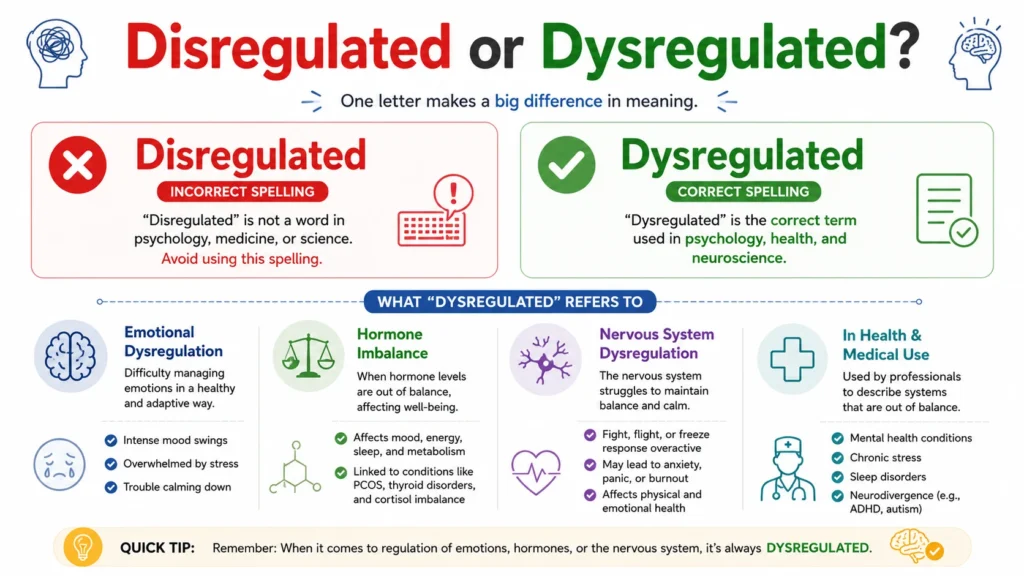
Disregulated and dysregulated are related terms, but dysregulated is the correct and widely accepted spelling in medical, psychological, and scientific writing. The word describes something that is not functioning in a normal or controlled way, especially emotions, hormones, behavior, or body systems.
Many people become confused when they see the words disregulated and dysregulated. Both look similar. Both sound almost the same. However, only one spelling is widely accepted in modern English.
Today, doctors, psychologists, researchers, and professional writers use dysregulated as the standard spelling. The word commonly appears in discussions about emotional regulation, nervous system disorders, mental health, hormones, and behavior.
The confusion happens because English contains many prefixes that change word spellings. Some people assume the prefix dis should be used because it appears in words like disconnect or disorganized. However, the correct scientific and medical prefix here is dys, which means abnormal or impaired.
Understanding disregulated or dysregulated is important for students, writers, healthcare workers, therapists, and anyone studying psychology or medicine. Using the correct spelling improves writing accuracy and professionalism.
Quick Overview
Dysregulated is the correct and accepted spelling.
Disregulated is usually considered incorrect in modern English.
Dysregulated describes abnormal or impaired regulation.
The term commonly appears in psychology and medicine.
Examples include emotional dysregulation, nervous system dysregulation, and hormonal dysregulation.
Key Difference Between Disregulated or Dysregulated


4
The main difference is spelling accuracy and professional acceptance.
Dysregulated is the standard medical and psychological spelling.
Disregulated appears rarely and is usually treated as a misspelling.
The prefix dys means abnormal, impaired, or difficult. Therefore, dysregulated means improperly regulated.
Comparison Table
| Feature | Dysregulated | Disregulated |
|---|---|---|
| Spelling status | Correct | Usually incorrect |
| Professional use | Common | Rare |
| Medical acceptance | Accepted | Not standard |
| Psychology usage | Very common | Uncommon |
| Grammar accuracy | Correct | Usually considered error |
What Does Dysregulated Mean
Dysregulated means something is not functioning in a normal, balanced, or controlled way.
The word is common in:
- Psychology
- Psychiatry
- Medicine
- Neuroscience
- Emotional health
For example:
- Dysregulated emotions
- Dysregulated nervous system
- Dysregulated hormones
- Dysregulated behavior
The term often describes imbalance or impaired control.
Understanding the Prefix Dys
The prefix dys comes from Greek language roots. It means:
- Abnormal
- Difficult
- Impaired
- Badly functioning
This prefix appears in many medical words:
- Dysfunction
- Dyslexia
- Dysphagia
- Dysplasia
Therefore, dysregulated follows established medical language patterns.
Why People Write Disregulated Instead of Dysregulated
Many English words begin with dis. Because of this, people naturally assume disregulated should also use dis.
Examples include:
- Disconnected
- Disorganized
- Disagree
- Disengaged
However, regulation problems in medicine and psychology use the dys prefix because the issue involves abnormal functioning rather than simple separation or removal.
Emotional Dysregulation Explained


4
Emotional dysregulation happens when a person struggles to manage emotional responses.
This may include:
- Intense anger
- Sudden sadness
- Anxiety
- Mood swings
- Difficulty calming down
Emotional dysregulation often appears in mental health conditions such as:
- Anxiety disorders
- ADHD
- PTSD
- Borderline personality disorder
- Depression
Nervous System Dysregulation
The nervous system controls stress responses, heart rate, sleep, and relaxation.
When the system becomes dysregulated, a person may experience:
- Chronic stress
- Fatigue
- Sleep problems
- Panic attacks
- Difficulty relaxing
Many healthcare professionals discuss nervous system dysregulation in trauma recovery and mental health therapy.
Hormonal Dysregulation
Hormones control many body functions.
Hormonal dysregulation can affect:
- Energy
- Mood
- Weight
- Sleep
- Reproduction
Examples include:
- Thyroid hormone imbalance
- Cortisol dysregulation
- Insulin dysregulation
This condition may require medical treatment and lifestyle changes.
Dysregulated Behavior in Psychology
Psychologists often describe certain behaviors as dysregulated.
Examples include:
- Aggressive reactions
- Impulsive decisions
- Emotional outbursts
- Self destructive behavior
Children and adults can both experience behavioral dysregulation.
Signs of Emotional Dysregulation
Common symptoms include:
- Overreacting emotionally
- Trouble calming down
- Frequent frustration
- Emotional instability
- Intense fear or anger
These symptoms may affect relationships, school, and work performance.
Causes of Dysregulation


4
Several factors can contribute to dysregulation.
Psychological Causes
- Trauma
- Anxiety
- Chronic stress
- Depression
Biological Causes
- Hormonal imbalance
- Brain chemistry changes
- Nervous system disorders
Environmental Causes
- Toxic relationships
- Sleep deprivation
- Poor lifestyle habits
Real World Examples of Dysregulated Conditions
Example One Emotional Dysregulation
A student becomes extremely angry after minor criticism and struggles to calm down.
Example Two Hormonal Dysregulation
A patient experiences fatigue and weight changes due to thyroid hormone imbalance.
Example Three Nervous System Dysregulation
A trauma survivor experiences panic attacks and sleep disturbances.
Medical Usage of Dysregulated
Medical professionals use dysregulated frequently.
Common phrases include:
- Dysregulated immune response
- Dysregulated metabolism
- Dysregulated mood
- Dysregulated nervous system
The term helps describe abnormal body function clearly and professionally.
Grammar and Language Rules
In professional writing, dysregulated is grammatically preferred.
Correct Usage
- Dysregulated emotions
- Dysregulated behavior
Incorrect or Rare Usage
- Disregulated emotions
- Disregulated nervous system
Most dictionaries and medical publications recognize dysregulated as standard.
Academic and Scientific Usage
Researchers use dysregulated in:
- Medical journals
- Psychology studies
- Scientific reports
- Mental health articles
Using disregulated in academic work may appear incorrect or unprofessional.
Advantages of Understanding the Correct Spelling
Knowing the correct term helps:
- Improve academic writing
- Increase professional credibility
- Avoid grammar mistakes
- Understand medical information better
Correct spelling also improves SEO and online search accuracy.
Common Mistakes
Mistake One Using Disregulated in Essays
Correction
Use dysregulated in formal writing.
Mistake Two Confusing Dysregulated With Emotional
Correction
Dysregulated can describe hormones, behavior, systems, or emotions.
Mistake Three Assuming Dysregulated Means Broken
Correction
It usually means impaired or abnormal regulation, not total failure.
Mistake Four Ignoring Context
Correction
The term is mostly medical and psychological.
Related Comparisons
Dysregulated vs Dysfunctional
Dysregulated means improperly controlled.
Dysfunctional means not functioning properly at all.
Dysregulated vs Unstable
Unstable is general.
Dysregulated is more scientific and clinical.
Emotional Regulation vs Emotional Dysregulation
Regulation means balanced emotional control.
Dysregulation means impaired emotional control.
Beginner to Advanced Understanding
Beginner Level
Dysregulated means not properly controlled.
Intermediate Level
The term commonly appears in psychology and medicine.
Advanced Level
Dysregulation involves impaired biological or emotional regulatory systems influenced by neurological, hormonal, and environmental factors.
Regional and Global Usage
Dysregulated is accepted globally in:
- American English
- British English
- Medical publications
- Psychological research
Disregulated rarely appears in professional dictionaries or scientific databases.
Dysregulated in Mental Health Discussions
Mental health professionals often discuss emotional dysregulation because it affects daily functioning.
Therapists may help patients learn:
- Emotional awareness
- Stress management
- Coping strategies
- Nervous system regulation
These approaches improve emotional balance and resilience.
Dysregulated Sleep Patterns
Sleep dysregulation affects many people.
Symptoms include:
- Insomnia
- Oversleeping
- Irregular sleep cycles
- Daytime fatigue
Stress and hormonal imbalance often contribute to sleep dysregulation.
Dysregulated Eating Behaviors
Some individuals experience dysregulated eating habits.
Examples include:
- Emotional eating
- Spree eating
- Irregular hunger signals
Psychological and biological factors can both contribute.
How Doctors Diagnose Dysregulation
Diagnosis depends on symptoms and body systems involved.
Doctors may use:
- Blood tests
- Psychological evaluation
- Hormone testing
- Nervous system assessment
It varies depending on the underlying cause.
Treatment and Management Approaches
Treatment often includes:
Therapy
- Cognitive behavioral therapy
- Trauma therapy
- Emotional regulation techniques
Medical Treatment
- Hormone therapy
- Medication
- Lifestyle support
Healthy Habits
- Better sleep
- Stress reduction
- Exercise
- Nutrition
Exercises With Answers
One Question
Which spelling is correct in psychology
Answer Dysregulated
Two Question
What does the prefix dys mean
Answer Abnormal or impaired
Three Question
Is disregulated standard medical spelling
Answer No
Four Question
Can emotions become dysregulated
Answer Yes
Five Question
Which field commonly uses dysregulated
Answer Psychology and medicine
FAQs
Is dysregulated the correct spelling?
Yes, dysregulated is the accepted spelling in medical and psychological writing.
Is disregulated wrong?
In most professional contexts, yes. Dysregulated is preferred.
What does dysregulated mean emotionally?
It means difficulty controlling emotional reactions and responses.
Why do people confuse disregulated and dysregulated?
Because many English words begin with dis, people assume the same pattern applies here.
Is dysregulated a medical term?
Yes, doctors and psychologists use it frequently.
Can hormones become dysregulated?
Yes, hormonal dysregulation affects many body functions.
What causes emotional dysregulation?
Stress, trauma, mental health conditions, and brain chemistry changes can contribute.
Is dysregulated behavior common in children?
Yes, especially during stress or developmental challenges.
Can therapy help dysregulation?
Yes, therapy often improves emotional regulation skills.
Which spelling should students use in essays?
Students should use dysregulated in academic and professional writing.
Conclusion
Understanding disregulated or dysregulated is important for correct writing and accurate communication. Although both spellings may appear online, dysregulated is the accepted and professional term used in medicine, psychology, and scientific research.
The word describes abnormal or impaired regulation in emotions, hormones, behavior, or body systems. Emotional dysregulation, nervous system dysregulation, and hormonal dysregulation are common examples discussed in healthcare and therapy.
Using the correct spelling improves grammar, professionalism, and clarity. It also helps students, writers, and healthcare professionals communicate more effectively.
In modern English, dysregulated is the correct choice for academic, medical, and professional contexts.