
Many English learners struggle with were or was because both words come from the same verb, yet they are used differently. The confusion is common among students, writers, bloggers, professionals, and even native speakers.
English grammar contains many rules that seem simple at first but become more complex when different sentence structures are involved. The words was and were are excellent examples. Sometimes the choice depends on whether the subject is singular or plural. In other cases, it depends on whether the sentence describes a real event or an imaginary situation.
Using the wrong form can make writing appear less professional and may confuse readers. Therefore, understanding were or was is important for academic writing, business communication, content creation, and everyday conversations.
This comprehensive guide explains everything you need to know about were or was. You will learn definitions, grammar rules, examples, comparison tables, common mistakes, real world usage, exercises with answers, and frequently asked questions.
Definition of Was
Was is the singular past tense form of the verb be.
It is typically used with:
- I
- He
- She
- It
- Singular nouns
Examples:
- I was tired yesterday.
- He was late for school.
- The car was parked outside.
- Sarah was excited about the trip.
In each example, the subject is singular, so was is correct.
Definition of Were
Were is the plural past tense form of the verb be.
It is commonly used with:
- We
- You
- They
- Plural nouns
Examples:
- We were happy.
- They were at the park.
- The students were studying.
- You were right.
Here, the subjects are plural or use the special pronoun you, making were the correct choice.
Key Difference Between Were or Was
The primary difference is subject agreement.
Quick Comparison Table
| Feature | Was | Were |
|---|---|---|
| Number | Singular | Plural |
| Common Subjects | I, He, She, It | We, You, They |
| Past Tense | Yes | Yes |
| Used in Imaginary Situations | Rarely | Commonly |
| Formal Grammar | Correct | Correct |
Simple Rule
Use was for singular subjects.
Use were for plural subjects.
Examples:
- The dog was sleeping.
- The dogs were sleeping.
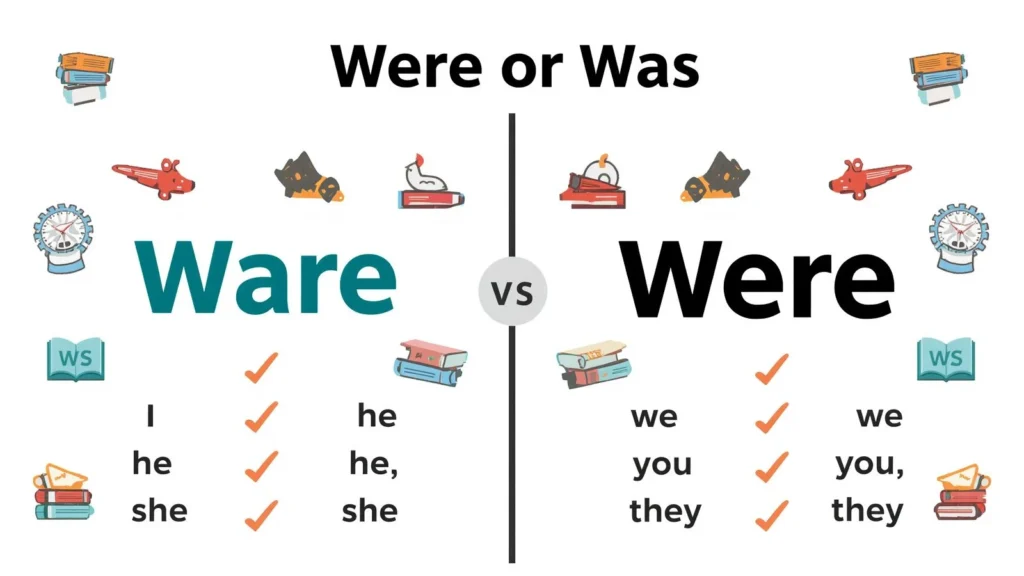
Visual Comparison of Were or Was


5
The comparison highlights how was is generally used for singular subjects, while were is used for plural subjects.
Understanding Subject Verb Agreement
Subject verb agreement is one of the most important grammar concepts behind were or was.
The verb must match the subject.
Singular Subject
- The boy was running.
- My friend was waiting.
- The computer was broken.
Plural Subject
- The boys were running.
- My friends were waiting.
- The computers were broken.
Matching the subject and verb correctly improves clarity and grammar accuracy.
When to Use Was
Was is used in several common situations.
With I
- I was tired after work.
- I was happy yesterday.
With He
- He was at the office.
- He was excited.
With She
- She was reading a book.
- She was busy.
With It
- It was raining.
- It was cold outside.
With Singular Nouns
- The teacher was absent.
- The building was empty.
When to Use Were
Were is used with plural subjects and specific pronouns.
With We
- We were ready.
- We were late.
With They
- They were surprised.
- They were waiting.
With You
- You were correct.
- You were helpful.
With Plural Nouns
- The children were playing.
- The cars were parked.
Special Grammar Rule for Imaginary Situations
One area where many people struggle with were or was involves hypothetical situations.
In formal English, were is used for unreal or imaginary conditions.
Examples:
- If I were a millionaire, I would travel everywhere.
- If she were here, she would help.
- If he were taller, he could reach the shelf.
Even though I, she, and he are singular, were is preferred because the situation is imaginary.
Real Situations Versus Imaginary Situations
Real Situation
- I was sick yesterday.
This actually happened.
Imaginary Situation
- If I were sick, I would stay home.
This describes a possibility, not reality.
This distinction is important in advanced English grammar.
Common Uses of Was in Daily Life
People use was every day.
Examples include:
- School conversations
- Business communication
- Emails
- Academic writing
- Social media posts
Examples:
- The meeting was productive.
- The weather was pleasant.
- The presentation was successful.
Common Uses of Were in Daily Life
Were also appears frequently in everyday communication.
Examples:
- The employees were satisfied.
- The guests were friendly.
- The stores were crowded.
- The roads were busy.
Using the correct form helps maintain professional communication.
Visual Examples in Everyday Grammar


4
These examples show how subject verb agreement determines whether was or were should be used.
Why People Confuse Were or Was
Several factors cause confusion.
Similar Meaning
Both words come from the verb be.
Complex Grammar Rules
The imaginary condition rule can be difficult.
Informal Speech
People often speak casually and ignore formal grammar.
Learning English as a Second Language
Many learners find English verb forms challenging.
Common Mistakes When Using Were or Was
Mistake One
Using were with singular subjects.
Incorrect:
- She were happy.
Correct:
- She was happy.
Mistake Two
Using was with plural subjects.
Incorrect:
- They was excited.
Correct:
- They were excited.
Mistake Three
Ignoring hypothetical rules.
Informal:
- If I was rich, I would travel.
Formal:
- If I were rich, I would travel.
Advantages of Using Correct Grammar
Better Communication
Readers understand your meaning immediately.
Professional Writing
Correct grammar improves credibility.
Academic Success
Students receive better grades.
Improved Confidence
Good grammar increases confidence in writing and speaking.
Disadvantages of Incorrect Usage
Grammar Errors
Incorrect usage creates mistakes.
Reader Confusion
The meaning may become unclear.
Reduced Professionalism
Errors can affect credibility.
Academic Penalties
Teachers may deduct marks.
Real World Examples
Example One
A teacher writes:
- The student was absent.
Because there is one student, was is correct.
Example Two
A teacher writes:
- The students were absent.
Because there are multiple students, were is correct.
Example Three
A business report states:
- The meeting was successful.
Only one meeting occurred.
Example Four
A report states:
- The meetings were successful.
Multiple meetings occurred.
Related Grammar Concepts
Understanding were or was becomes easier when you learn related concepts.
Verb Tenses
Past tense describes actions that happened before now.
Subject Verb Agreement
Verbs must match subjects.
Conditional Sentences
Imaginary situations often use were.
Singular and Plural Nouns
The number of subjects affects verb choice.
Was Versus Were in Questions
Questions follow the same rules.
Examples Using Was
- Was he late?
- Was she ready?
- Was the movie good?
Examples Using Were
- Were they happy?
- Were the students prepared?
- Were you busy?
Was Versus Were in Negative Sentences
Negative forms also follow subject agreement rules.
Was Not
- He was not late.
- She was not ready.
Were Not
- They were not tired.
- We were not worried.
Visual Grammar Reference


Visual references help learners quickly understand when each word should be used.
Regional and Global Usage
The grammar rules for was and were remain the same across English speaking countries.
This includes:
- United States
- United Kingdom
- Canada
- Australia
- New Zealand
Although accents and vocabulary may differ, the grammar rules stay consistent.
Beginner to Advanced Understanding
Beginner Level
Use was for one person or thing.
Use were for more than one person or thing.
Intermediate Level
Remember that you always use were with you.
Examples:
- You were correct.
- You were late.
Advanced Level
Use were in hypothetical situations even when the subject is singular.
Example:
- If I were president, I would improve education.
Practical Writing Tips
To avoid mistakes:
- Identify the subject first.
- Determine whether it is singular or plural.
- Check if the sentence is hypothetical.
- Proofread carefully.
- Use grammar tools when necessary.
These habits greatly improve writing accuracy.
Exercises With Answers
Question One
Choose the correct word.
She ___ happy yesterday.
Answer: Was
Question Two
Choose the correct word.
They ___ excited about the trip.
Answer: Were
Question Three
Choose the correct word.
The dog ___ sleeping.
Answer: Was
Question Four
Choose the correct word.
The dogs ___ sleeping.
Answer: Were
Question Five
Choose the correct word.
If I ___ rich, I would buy a yacht.
Answer: Were
Question Six
Choose the correct word.
The teacher ___ absent.
Answer: Was
Question Seven
Choose the correct word.
The teachers ___ absent.
Answer: Were
Question Eight
Choose the correct word.
You ___ very helpful.
Answer: Were
Question Nine
Choose the correct word.
It ___ raining yesterday.
Answer: Was
Question Ten
Choose the correct word.
We ___ surprised by the results.
Answer: Were
FAQs
Is it were or was?
It depends on the subject and sentence structure.
When should I use was?
Use was with singular subjects such as I, he, she, it, and singular nouns.
When should I use were?
Use were with we, you, they, and plural nouns.
Why do we say if I were?
Because it describes a hypothetical or imaginary situation.
Is if I was wrong grammatically correct?
In informal speech it may appear, but formal grammar often prefers if I were wrong.
Can was and were both be correct?
Yes, depending on the sentence.
Is you was correct?
No. Use you were.
Do native speakers confuse was and were?
Sometimes, especially in casual conversation.
Does subject verb agreement affect was and were?
Yes. It is one of the most important rules.
How can I remember the difference?
Use was for singular subjects and were for plural subjects. Use were for imaginary situations.
Conclusion
Understanding were or was is essential for proper English grammar. Both words are past tense forms of the verb be, but they serve different grammatical purposes. Was is generally used with singular subjects such as I, he, she, it, and singular nouns. Were is used with plural subjects, the pronoun you, and hypothetical situations.
The key to choosing the correct form is identifying the subject and understanding the sentence context. If the subject is singular, was is usually correct. If the subject is plural, were is generally the right choice. Additionally, formal English uses were for imaginary situations, even with singular subjects.
By learning these simple rules and practicing regularly, you can avoid common grammar mistakes, improve your writing, and communicate more effectively in both academic and professional settings.