

Quick Answer
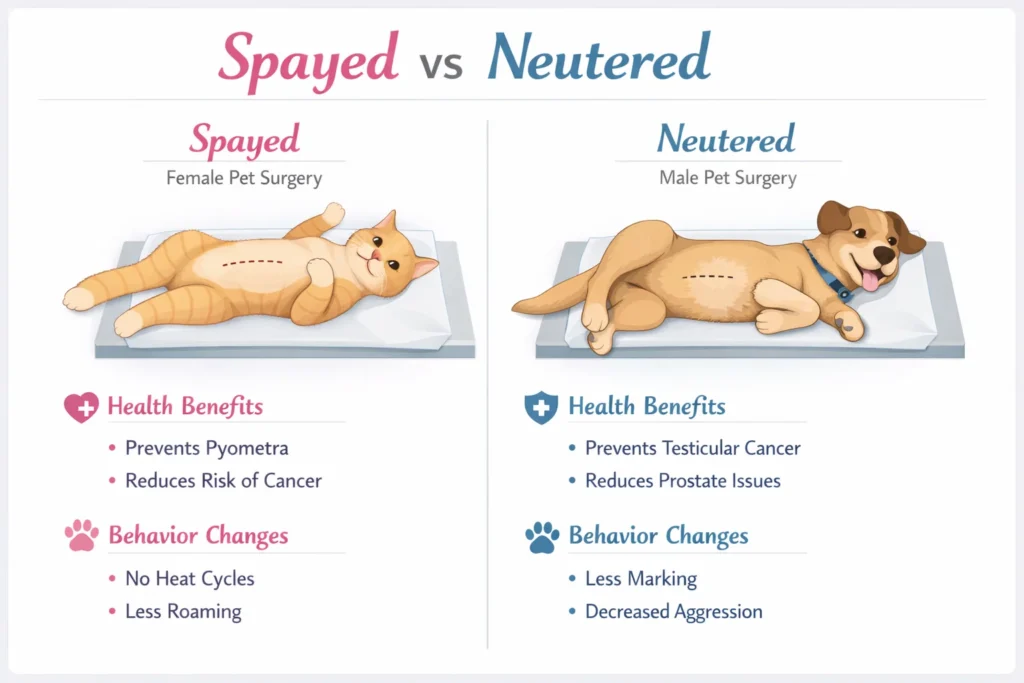
Spayed and neutered both refer to surgical procedures that prevent animals from reproducing. Spayed is used for female animals and involves removing the ovaries and uterus, while neutered is commonly used for male animals and involves removing the testicles. Both procedures help control pet population and improve health and behavior.
Many pet owners hear the terms spayed or neutered but feel confused about their exact meaning. Both procedures are very common in veterinary care, yet they apply to different animals and involve different surgical steps.
Spaying is done on female animals, while neutering is done on male animals. Although both procedures prevent reproduction, they also offer many health and behavioral benefits. For example, pets that are spayed or neutered often live longer, healthier lives. They may also show fewer aggressive or unwanted behaviors.
Understanding spayed or neutered is important for responsible pet ownership. It helps control the number of stray animals and reduces health risks in pets. In addition, veterinarians strongly recommend these procedures for most cats and dogs.
In this complete guide, you will learn everything about spayed or neutered in simple language. We will cover definitions, procedures, benefits, risks, costs, real world examples, mistakes, and expert advice.
Quick Overview
Spayed refers to female animals
Neutered refers to male animals
Both procedures prevent reproduction
Both improve pet health and behavior
Key Difference Between Spayed or Neutered


4
The main difference lies in gender and surgical procedure.
Spaying removes female reproductive organs
Neutering removes male reproductive organs
Comparison Table
| Feature | Spayed | Neutered |
|---|---|---|
| Gender | Female | Male |
| Organs removed | Ovaries and uterus | Testicles |
| Purpose | Prevent pregnancy | Prevent reproduction |
| Behavior impact | Reduces heat cycle | Reduces aggression |
| Health benefit | Prevents uterine diseases | Prevents testicular issues |
What Does Spayed Mean
Spaying is a surgical procedure performed on female animals. During this procedure, the veterinarian removes the ovaries and usually the uterus.
This prevents the animal from becoming pregnant. It also stops heat cycles, which can be stressful for both the pet and the owner.
Spaying is commonly done in dogs and cats, but it can also apply to other animals.
What Does Neutered Mean
Neutering is a surgical procedure performed on male animals. In this procedure, the testicles are removed.
This prevents the male from reproducing. It also reduces behaviors such as aggression, roaming, and marking territory.
Neutering is a quick and common procedure for pets.
How Spaying Works


The veterinarian makes a small incision in the abdomen. Then, the ovaries and uterus are carefully removed. After that, the incision is closed.
Recovery usually takes a few days to a week.
How Neutering Works


The veterinarian removes the testicles through a small incision. The procedure is simple and usually quicker than spaying.
Recovery is fast, and most pets return to normal activity within a few days.
Health Benefits of Spayed or Neutered Pets
Spaying and neutering provide many health benefits.
Benefits of Spaying
- Prevents uterine infections
- Reduces risk of breast tumors
- Eliminates heat cycles
- Improves lifespan
Benefits of Neutering
- Prevents testicular cancer
- Reduces prostate problems
- Decreases aggressive behavior
- Reduces roaming
Both procedures contribute to a healthier life for pets.
Behavioral Changes After Spaying or Neutering
Pets often show positive behavior changes.
- Less aggression
- Reduced marking behavior
- Lower tendency to roam
- More calm and manageable
These changes make pets easier to train and care for.
Environmental and Social Impact
Spaying and neutering help control pet population. Many stray animals suffer due to overpopulation.
By choosing spayed or neutered pets, owners help reduce the number of homeless animals.
Animal shelters strongly promote these procedures.
Cost Comparison
The cost depends on location and animal type.
Spaying usually costs more because it is a more complex surgery.
Neutering is generally less expensive and quicker.
Many clinics offer low cost programs to encourage responsible pet care.
Risks and Considerations
Although these procedures are safe, some risks exist.
- Temporary discomfort
- Minor surgical risks
- Need for proper aftercare
However, the benefits usually outweigh the risks.
Real World Examples
A pet owner spays their female dog to prevent unwanted puppies.
Another owner neuters their male cat to reduce aggressive behavior.
Animal shelters spay or neuter pets before adoption to control population.
Common Mistakes
1 Mistake One Thinking It Is Only About Population
Correction It also improves health and behavior
2 Mistake Two Delaying the Procedure
Correction Early surgery is often recommended
3 Mistake Three Believing It Changes Personality
Correction It improves behavior without removing personality
Related Comparisons
Adoption vs buying pets
Vaccination vs sterilization
Pet care vs pet training
Beginner to Advanced Understanding
Beginner Level
Spayed is for females
Neutered is for males
Intermediate Level
Both prevent reproduction and improve health
Advanced Level
They reduce disease risk, improve behavior, and support population control
Regional and Global Usage
Spaying and neutering are common worldwide.
Many countries promote these procedures through animal welfare programs.
Exercises With Answers
One Question
What does spayed mean
Answer Female sterilization
Two Question
What does neutered mean
Answer Male sterilization
Three Question
Which is more complex
Answer Spaying
Four Question
Which reduces aggression
Answer Neutering
Five Question
Why are these procedures important
Answer To control population and improve health
FAQs
What is the difference between spayed or neutered?
Spayed refers to females, while neutered refers to males.
Is it safe to spay or neuter pets?
Yes, it is a safe and common procedure.
At what age should pets be spayed or neutered?
Usually at a young age, depending on the veterinarian advice.
Do these procedures change personality?
No, they improve behavior but keep personality.
Is neutering cheaper than spaying?
Yes, neutering is usually less expensive.
Can older pets be spayed or neutered?
Yes, but a vet should evaluate health first.
Do all pets need these procedures?
Most pets benefit from them.
How long is recovery time?
Usually a few days to a week.
Conclusion
Understanding spayed or neutered is essential for responsible pet ownership. Spaying applies to female animals and involves removing reproductive organs. Neutering applies to male animals and involves removing testicles.
Both procedures prevent reproduction, improve health, and reduce unwanted behaviors. They also help control pet overpopulation and reduce the number of stray animals.
Although there are minor risks, the benefits are significant. Veterinarians strongly recommend spaying and neutering for most pets. By choosing these procedures, pet owners ensure a healthier and safer life for their animals.