
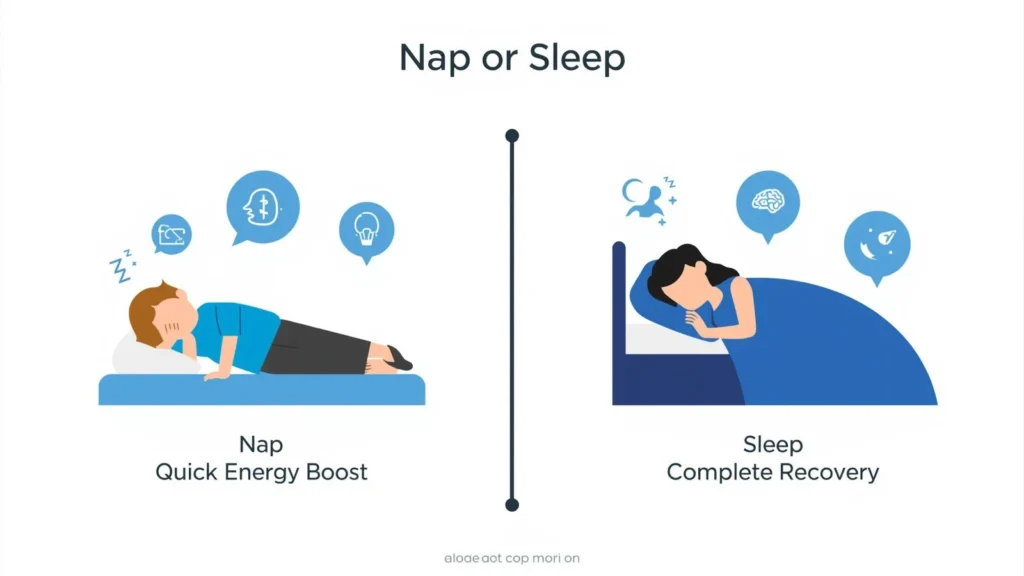

Many people wonder whether a nap or sleep is better for improving energy, focus, and health. Both help reduce tiredness, but they are not the same. A nap is usually a short rest taken during the day, while sleep is a longer and more complete recovery process that happens mainly at night.
Modern lifestyles often leave people feeling tired. Busy work schedules, school responsibilities, stress, and screen time can affect sleep quality. As a result, many individuals rely on daytime naps to stay alert and productive. However, a nap cannot always replace proper sleep.
Understanding the difference between nap or sleep is important for students, workers, athletes, parents, and anyone looking to improve their health. The right balance between daytime rest and nighttime sleep can improve concentration, mood, memory, and physical performance.
This guide explains nap or sleep in simple language. You will learn definitions, benefits, drawbacks, real world examples, health effects, common mistakes, and practical recommendations to help you make better decisions about rest and recovery.
Quick Overview
A nap is a short period of rest during the day.
Sleep is a longer recovery process that usually happens at night.
Naps can boost energy and focus.
Sleep is essential for overall health and survival.
Both are beneficial when used correctly.
Definition of a Nap
A nap is a short period of sleep taken during the day.
Most naps last between 10 and 90 minutes. People often take naps when they feel tired, sleepy, or mentally exhausted.
Common reasons for taking a nap include:
- Improving alertness
- Reducing fatigue
- Enhancing mood
- Increasing productivity
- Recovering from poor nighttime sleep
A nap provides a quick energy boost without requiring a full night of rest.
Definition of Sleep
Sleep is a natural state of rest that allows the body and brain to recover.
Most adults need between seven and nine hours of sleep each night. During sleep, the body repairs tissues, strengthens the immune system, processes memories, and regulates hormones.
Sleep consists of multiple stages, including:
- Light sleep
- Deep sleep
- Rapid eye movement sleep
Each stage plays a unique role in maintaining health and performance.
Key Difference Between Nap or Sleep
The biggest difference between nap or sleep is duration and purpose.
A nap is short and provides temporary refreshment.
Sleep is longer and supports complete physical and mental recovery.
Quick Comparison Table
| Feature | Nap | Sleep |
|---|---|---|
| Duration | 10 to 90 minutes | 7 to 9 hours |
| Time | Usually daytime | Usually nighttime |
| Purpose | Quick refreshment | Full recovery |
| Energy Boost | Yes | Yes |
| Essential for Survival | No | Yes |
| Memory Support | Moderate | Strong |
| Physical Recovery | Limited | Complete |
Understanding How Naps Work
A nap allows the brain to rest and recover from mental fatigue.
Short naps are especially effective because they refresh the mind without causing grogginess.
Types of Naps
Power Nap
Lasts about 10 to 20 minutes.
Benefits include:
- Improved alertness
- Better concentration
- Increased energy
Recovery Nap
Taken after poor nighttime sleep.
Helps reduce sleep debt.
Long Nap
Lasts 60 to 90 minutes.
May improve memory and creativity.
Understanding How Sleep Works
Sleep is a complex biological process.
During sleep, the body cycles through different stages that support physical and mental health.
Light Sleep
The body begins relaxing.
Heart rate slows down.
Deep Sleep
The body repairs tissues.
Muscles recover.
The immune system strengthens.
Rapid Eye Movement Sleep
Dreaming commonly occurs.
The brain processes information and memories.
Visual Comparison of Nap or Sleep


6
This comparison shows how naps provide short term recovery while sleep supports complete mental and physical restoration.
Benefits of Taking a Nap
Naps offer many advantages when used correctly.
Improved Alertness
A short nap can quickly increase attention and focus.
Better Mood
Napping may reduce stress and irritability.
Increased Productivity
Workers often perform better after a brief nap.
Enhanced Learning
Students may retain information more effectively after napping.
Reduced Fatigue
A nap can restore energy levels during a busy day.
Benefits of Getting Proper Sleep
Sleep provides benefits that a nap cannot fully replace.
Brain Health
Sleep improves learning and memory.
Physical Recovery
The body repairs muscles and tissues.
Immune Support
Sleep strengthens the immune system.
Hormone Regulation
Important hormones are balanced during sleep.
Emotional Well Being
Good sleep improves mood and emotional stability.
Advantages and Disadvantages of Naps
Advantages
- Quick energy boost
- Better concentration
- Easy to fit into a schedule
- Helpful after poor sleep
Disadvantages
- May cause grogginess if too long
- Can interfere with nighttime sleep
- Not a replacement for sleep
Advantages and Disadvantages of Sleep
Advantages
- Complete recovery
- Better health outcomes
- Stronger memory formation
- Improved immune function
Disadvantages
- Requires more time
- Poor quality sleep reduces benefits
Real World Examples
Example One
A college student studies for exams and takes a 20 minute nap to improve focus.
Example Two
An office worker feels tired after lunch and uses a short nap to increase productivity.
Example Three
An athlete prioritizes eight hours of sleep to improve recovery and performance.
Example Four
A parent who sleeps poorly at night takes a short daytime nap to reduce fatigue.
Second Visual Comparison Section


5
These examples demonstrate how naps and sleep support different lifestyles and recovery needs.
Nap or Sleep for Students
Students often face demanding schedules.
Benefits of Naps for Students
- Improved attention
- Better memory retention
- Increased alertness
Benefits of Sleep for Students
- Long term learning support
- Stronger memory formation
- Better academic performance
Sleep remains the most important factor for educational success.
Nap or Sleep for Workers
Employees often use naps to stay productive.
A short nap during a break can improve focus and reduce mistakes.
However, consistent nighttime sleep remains essential for long term performance.
Nap or Sleep for Athletes
Athletes require high quality recovery.
Naps may help reduce fatigue after training sessions.
Nevertheless, full sleep is critical for muscle growth, hormone balance, and recovery.
Health Effects of Poor Sleep
Lack of sleep can lead to:
- Fatigue
- Poor concentration
- Mood changes
- Reduced immunity
- Increased health risks
A nap may provide temporary relief, but it cannot fully replace sleep.
Common Mistakes When Choosing Nap or Sleep
Mistake One
Using naps instead of proper sleep.
Correction:
Naps should supplement sleep, not replace it.
Mistake Two
Taking very long naps.
Correction:
Keep naps between 10 and 30 minutes for quick refreshment.
Mistake Three
Napping too late in the day.
Correction:
Early afternoon is usually the best time.
Mistake Four
Ignoring sleep schedules.
Correction:
Maintain a consistent bedtime.
Related Concepts and Comparisons
Nap vs Rest
Rest does not always involve sleeping.
A nap includes actual sleep.
Sleep vs Insomnia
Sleep is healthy recovery.
Insomnia is difficulty sleeping.
Power Nap vs Long Nap
Power naps improve alertness.
Long naps may support memory but can cause grogginess.
Third Visual Comparison Section


6
Healthy sleep habits combined with strategic naps can improve performance and well being.
Regional and Global Usage
Napping habits vary around the world.
In some countries, afternoon naps are common and culturally accepted.
Other regions emphasize uninterrupted nighttime sleep.
Despite cultural differences, sleep remains universally essential for health.
Beginner to Advanced Understanding
Beginner Level
A nap is short.
Sleep is long.
Intermediate Level
Naps improve alertness.
Sleep supports complete recovery.
Advanced Level
Sleep cycles, hormone regulation, memory consolidation, and physical repair make sleep irreplaceable for long term health.
Exercises With Answers
Question One
Which is longer, a nap or sleep?
Answer: Sleep.
Question Two
Can a nap improve alertness?
Answer: Yes.
Question Three
Is a nap a complete replacement for sleep?
Answer: No.
Question Four
What is a power nap?
Answer: A short nap lasting around 10 to 20 minutes.
Question Five
Which supports complete body recovery?
Answer: Sleep.
Question Six
When is the best time for a nap?
Answer: Early afternoon.
Question Seven
Can sleep improve memory?
Answer: Yes.
Question Eight
Do athletes need proper sleep?
Answer: Yes.
FAQs
Is a nap better than sleep?
No. A nap can help temporarily, but sleep is essential for complete recovery.
How long should a nap be?
Most experts recommend 10 to 30 minutes for a quick energy boost.
Can naps replace nighttime sleep?
No. Naps supplement sleep but cannot fully replace it.
Is a power nap effective?
Yes. Power naps can improve focus and alertness.
How much sleep do adults need?
Most adults need seven to nine hours each night.
Can too many naps be harmful?
Excessive napping may interfere with nighttime sleep.
Do students benefit from naps?
Yes. Short naps may improve learning and concentration.
Is sleep important for memory?
Yes. Sleep helps process and store information.
Should athletes take naps?
Many athletes use naps as part of their recovery routine.
What is the biggest difference between nap or sleep?
A nap provides short term refreshment, while sleep provides complete recovery and health benefits.
Conclusion
Understanding nap or sleep helps people make better decisions about rest and recovery. A nap is a short period of sleep that can improve alertness, focus, mood, and productivity. It is especially useful during busy days or after poor nighttime sleep. However, a nap is only a supplement and not a substitute for proper sleep.
Sleep is a fundamental biological process that supports physical recovery, brain function, memory formation, hormone balance, and immune health. Without adequate sleep, long term health and performance can suffer.