

Quick Answer:
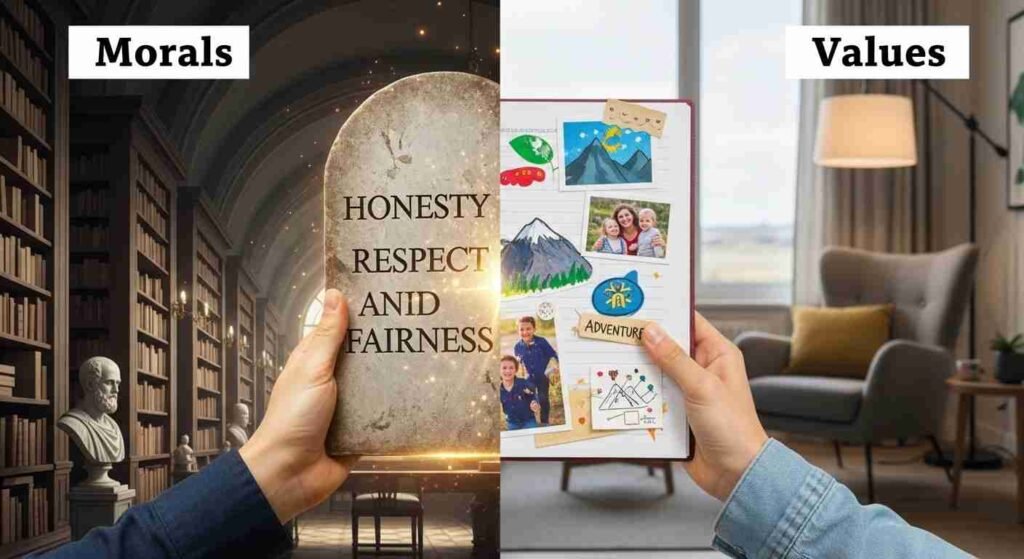
Morals are principles that define what is right and wrong behavior based on ethical standards and social rules. Values are personal beliefs about what matters most in life and guide priorities, goals, and daily decisions. While morals influence how we act, values influence why and what we prioritize in life.
Many people confuse morals and values because both shape behavior, decisions, and character. They are connected but not the same. Understanding morals vs values is important for personal growth, education, leadership, and building meaningful relationships.
Morals define right and wrong. They are often shaped by culture, religion, family, and society. Values reflect what we consider important, such as honesty, success, family, or kindness. For example, a person may value wealth, but their morals may prevent them from achieving it dishonestly. This shows how morals and values interact but remain different.
This guide explains morals vs values in simple, clear language. You will learn definitions, differences, advantages, real-world examples, common mistakes, exercises with answers, related comparisons, global perspectives, and professional insights. It is suitable for beginners and advanced learners alike.
Quick Answer or Overview
Morals vs values can be understood with one basic idea:
Morals are rules about right and wrong behavior.
Values are beliefs about what is important in life.
Morals guide actions and ethical decisions.
Values guide priorities, goals, and personal choices.
Quick Comparison Table
| Feature | Morals | Values |
|---|---|---|
| Meaning | Rules about right and wrong | Beliefs about what is important |
| Source | Society, culture, religion | Personal experience and choice |
| Focus | Ethical behavior | Personal priorities |
| Stability | Usually stable | Can change over time |
| Example | Do not lie | Value honesty or success |
Definition and Explanation of Morals vs Values
What Are Morals
Morals are principles that help people determine what is right and wrong. They guide ethical behavior and social responsibility. Morals are influenced by family teachings, cultural norms, societal rules, and religion. Following morals ensures fairness, trust, and harmony in society.
Common examples of morals include:
- Telling the truth
- Keeping promises
- Helping others
- Not stealing
- Respecting elders
Morals create a framework for proper conduct and help maintain order in communities.
What Are Values
Values are personal beliefs about what is important in life. They guide priorities, influence choices, and shape life goals. Values can vary among individuals based on upbringing, experiences, education, and culture.
Examples of values include:
- Honesty
- Family
- Success
- Education
- Kindness
- Freedom
Values help people determine what to focus on and motivate them to act according to personal priorities.
Understanding the Difference Between Morals and Values
Morals and values are closely connected but differ in function:
- Morals: Tell you what is right or wrong.
- Values: Tell you what is important.
Simple Analogy
Think of morals as traffic rules—they tell you what you must or must not do.
Think of values as your destination—they guide where you want to go.
Both are necessary for a meaningful and balanced life.
Advantages and Importance
Advantages of Morals
- Encourage ethical behavior
- Build strong character
- Promote fairness and trust in society
- Prevent harmful or illegal actions
Advantages of Values
- Guide personal decisions and priorities
- Help define life goals
- Reflect individual identity
- Motivate positive actions
When morals and values align, people are more likely to act ethically while pursuing meaningful goals.
Real World Examples of Morals vs Values
Example One: Workplace
A person values career success but their morals prevent them from lying or cheating. They work hard and achieve success honestly.
Example Two: Family Life
Someone values family. Their moral belief tells them to respect elders and care for children. Both morals and values guide daily decisions.
Example Three: Business Ethics
A company values profit but follows moral standards to treat employees fairly and communicate honestly with customers.
These examples demonstrate how morals and values work together in practical scenarios.
Cultural and Global Perspectives
Morals are often universal, such as honesty, respect, and fairness. Values vary widely between individuals and cultures. Understanding morals vs values allows people to communicate ethically and respect cultural differences.
- Developed regions: Greater focus on aligning personal values with universal morals.
- Developing regions: Moral education may be more culturally influenced, while values vary among individuals.
- Global society: Ethics, morals, and values are key for cross-cultural understanding and professional integrity.
Common Mistakes When Comparing Morals vs Values
- Mistake One: Thinking they are the same.
Correction: Morals guide right/wrong, values guide what is important. - Mistake Two: Believing values are always moral.
Correction: A person may value power or wealth, which may not align with morals. - Mistake Three: Ignoring cultural influence.
Correction: Morals are often culturally shaped, while values are more personal. - Mistake Four: Assuming values never change.
Correction: Values can change over time due to experience or reflection.
Related Concepts and Comparisons
- Ethics vs Morals: Ethics are formalized rules, morals are personal beliefs.
- Principles vs Values: Principles guide behavior; values guide priorities.
- Personal vs Social Values: Personal values reflect individual priorities; social values reflect shared beliefs.
Beginner to Advanced Understanding
Beginner Level
Morals tell you what is right and wrong.
Values tell you what is important in life.
Intermediate Level
Morals guide behavior and maintain societal order.
Values influence decisions, goals, and priorities.
Advanced Level
Psychological studies show values shape personality, while moral reasoning develops as people mature. Understanding both helps balance personal goals with ethical behavior.
Exercises With Answers
- Question: What do morals define?
Answer: Right and wrong behavior. - Question: What do values guide?
Answer: Personal priorities and life goals. - Question: Can values change over time?
Answer: Yes, with experiences and personal growth. - Question: Are morals influenced by society?
Answer: Yes, they are shaped by culture, religion, and social norms. - Question: Can someone value success but follow moral honesty?
Answer: Yes, morals and values can work together in balanced decisions.
Practical Applications
- Education: Teach morals to encourage ethical behavior, teach values to guide priorities.
- Leadership: Combine morals and values to make fair, responsible decisions.
- Personal Growth: Align values with morals to strengthen character and integrity.
FAQs
Is morals vs values the same thing?
No, morals focus on right and wrong, values focus on what is important.
Can someone have good values but weak morals?
Yes, one may value success but ignore moral honesty.
Do morals come only from religion?
No, they also come from culture, family, and society.
Are values personal or social?
Values are personal but influenced by social environment.
Which is more important, morals or values?
Both are important. Morals guide actions; values guide priorities.
Can morals change over time?
Morals are usually stable but understanding can evolve.
How do morals affect society?
They create trust, fairness, and cooperation.
How do values affect career choices?
They influence priorities and what goals a person pursues.
Conclusion
Understanding morals vs values is essential for personal growth and ethical decision making. Morals define right and wrong behavior, while values define what is important in life.
Morals guide actions, values guide priorities. When aligned, they foster integrity, responsible behavior, and meaningful life goals.
Reflecting on both helps individuals make balanced decisions, strengthen character, and positively influence society.