

Quick Answer:
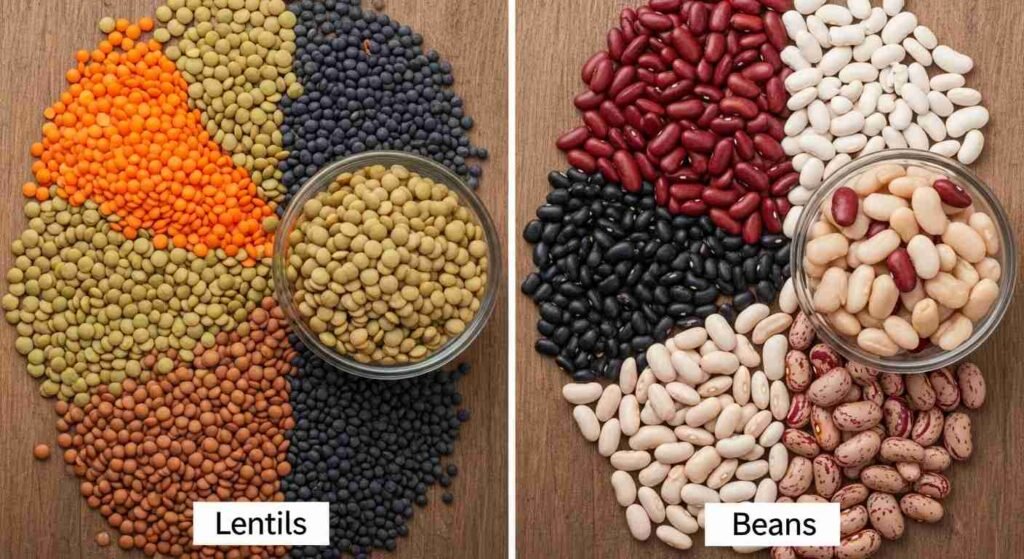
Lentils and beans are both nutritious legumes, but they differ in size, cooking time, and nutritional profile. Lentils are smaller, cook faster, and often contain slightly more protein and fiber per serving. Beans are larger, come in many varieties, and usually require longer soaking and cooking times.
Many people often confuse lentils and beans. Both belong to the legume family and appear in many healthy diets around the world. They are rich in protein, fiber, vitamins, and minerals. Because of these similarities, people sometimes assume they are the same food.
However, lentils and beans have clear differences. They differ in size, shape, cooking methods, taste, and nutritional content. Understanding the difference between lentils vs beans can help you choose the right ingredient for your recipes and diet goals.
For example, lentils cook faster and work well in soups and curries. Beans, on the other hand, are larger and are often used in chili, salads, and stews.
In this guide, we will explain lentils vs beans in simple terms. You will learn their meanings, key differences, advantages, disadvantages, cooking uses, and common mistakes people make when using them.
What Are Lentils?
Lentils are small, lens-shaped legumes. They grow in pods and are harvested as dried seeds. Lentils are one of the oldest cultivated foods in human history.
They are popular because they cook quickly and do not require soaking before cooking.
Common types of lentils include:
- Brown lentils
- Green lentils
- Red lentils
- Black lentils
- Yellow lentils
Nutritional Benefits of Lentils
Lentils are considered a superfood because they contain many nutrients.
Key nutrients include:
- Plant-based protein
- Dietary fiber
- Iron
- Folate
- Magnesium
- Potassium
They are also low in fat and support heart health.
What Are Beans?
Beans are also legumes but are usually larger than lentils. They grow in pods and are commonly dried before being cooked.
Beans often require soaking before cooking to soften them and reduce cooking time.
There are many varieties of beans used in cuisines around the world.
Common types include:
- Kidney beans
- Black beans
- Pinto beans
- Navy beans
- Cannellini beans
- Lima beans
Beans are commonly used in dishes like chili, burritos, salads, and soups.
Key Differences Between Lentils vs Beans


Although both are legumes, lentils and beans differ in several important ways.
Comparison Table
| Feature | Lentils | Beans |
|---|---|---|
| Size | Small and flat | Larger and round |
| Cooking Time | 15–30 minutes | 45–90 minutes |
| Soaking Required | Usually no | Often yes |
| Texture | Soft and smooth | Creamy or firm |
| Variety | Fewer types | Many varieties |
| Popular Dishes | Soups, dals, curries | Chili, salads, burritos |
In simple terms, lentils cook faster and are easier for quick meals. Beans offer more variety and richer texture.
Nutritional Comparison
Both lentils and beans are excellent sources of plant-based nutrition. However, their nutrient levels vary slightly.
Lentils Nutrition (per cooked cup)
- Protein: about 18 grams
- Fiber: about 15 grams
- Calories: about 230
- Fat: very low
Beans Nutrition (per cooked cup)
- Protein: about 15 grams
- Fiber: about 13 grams
- Calories: about 240
- Fat: low
Overall, lentils usually contain slightly more protein and fiber than many bean varieties.
Advantages of Lentils
Lentils offer many benefits, especially for quick meals and healthy diets.
Key advantages include:
- Cook quickly without soaking
- High protein content
- High fiber for digestion
- Affordable and widely available
- Easy to digest compared to some beans
Because of these benefits, lentils are popular in vegetarian and vegan diets.
Advantages of Beans
Beans also provide many health benefits.
Some major advantages include:
- Many varieties to choose from
- Rich creamy texture in dishes
- High protein and fiber
- Excellent for heart health
- Good source of antioxidants
Beans are often used in traditional dishes around the world.
Disadvantages of Lentils
Although lentils are healthy, they also have some limitations.
Possible disadvantages include:
- Fewer varieties compared to beans
- Can become mushy if overcooked
- Some people experience digestive discomfort
However, proper cooking usually reduces these issues.
Disadvantages of Beans
Beans also have some drawbacks.
Common disadvantages include:
- Longer cooking time
- Often require soaking
- Can cause gas or bloating
- Slightly heavier texture
Soaking and rinsing beans before cooking can help reduce digestive issues.
Real World Cooking Examples
Understanding lentils vs beans becomes easier with cooking examples.
Lentils Used In
- Indian dal
- Lentil soup
- Mediterranean salads
- Vegan meat substitutes
Beans Used In
- Mexican chili
- Burritos and tacos
- Bean salads
- Baked beans
Each legume works best in certain dishes based on texture and cooking time.
Global and Regional Usage
Different cultures use lentils and beans in different ways.
Lentils Around the World
- India uses lentils in dal dishes
- Middle Eastern cuisine uses lentil soups
- Mediterranean diets include lentil salads
Beans Around the World
- Mexico uses black and pinto beans
- Italy uses cannellini beans
- United States uses baked beans and chili
Both foods play an important role in global cuisines.
Common Mistakes People Make
Many beginners make mistakes when cooking lentils or beans.
Here are some common ones:
Not Soaking Beans
Beans often need soaking before cooking. Skipping this step can increase cooking time.
Overcooking Lentils
Lentils cook quickly. If you cook them too long, they become mushy.
Using the Wrong Legume for a Recipe
Some recipes require a firm texture. Beans may work better than lentils in those cases.
Exercises to Practice
Try these simple exercises to test your understanding.
Exercise 1
Which legume cooks faster?
Answer: Lentils.
Exercise 2
Which legume usually requires soaking before cooking?
Answer: Beans.
Exercise 3
Which legume typically contains slightly more protein?
Answer: Lentils.
Related Comparisons
People often compare lentils vs beans with other legumes.
Common related comparisons include:
- Chickpeas vs lentils
- Beans vs peas
- Soybeans vs lentils
- Edamame vs soybeans
All these foods belong to the legume family and provide similar nutritional benefits.
FAQs
What is the main difference between lentils vs beans?
The main difference between lentils vs beans is size and cooking time. Lentils are smaller and cook faster, while beans are larger and usually require soaking.
Are lentils healthier than beans?
Both lentils and beans are very healthy. Lentils often contain slightly more protein and fiber, but beans also provide important nutrients.
Do lentils need soaking like beans?
No, lentils usually do not need soaking. Beans often require soaking before cooking to reduce cooking time.
Can lentils replace beans in recipes?
Yes, lentils can replace beans in many recipes. However, the texture may be softer.
Which cooks faster, lentils or beans?
Lentils cook much faster. Most lentils cook within 15 to 30 minutes.
Are lentils and beans both legumes?
Yes, both lentils and beans belong to the legume family.
Which has more protein, lentils or beans?
Lentils generally contain slightly more protein than many bean varieties.
Are lentils easier to digest than beans?
Many people find lentils easier to digest because they contain different fiber structures.
Can lentils and beans be eaten together?
Yes, many recipes combine lentils and beans to create balanced meals.
Conclusion
Lentils and beans are both highly nutritious legumes that support healthy diets. They provide plant-based protein, fiber, vitamins, and essential minerals.
The key difference between lentils vs beans lies in their size, cooking time, and texture. Lentils are smaller, cook faster, and often contain slightly more protein. Beans are larger, available in many varieties, and add a rich texture to meals.
Choosing between lentils and beans depends on your recipe and cooking time. Lentils work well for quick soups and curries. Beans are excellent for hearty dishes like chili and salads.