

Quick Answer
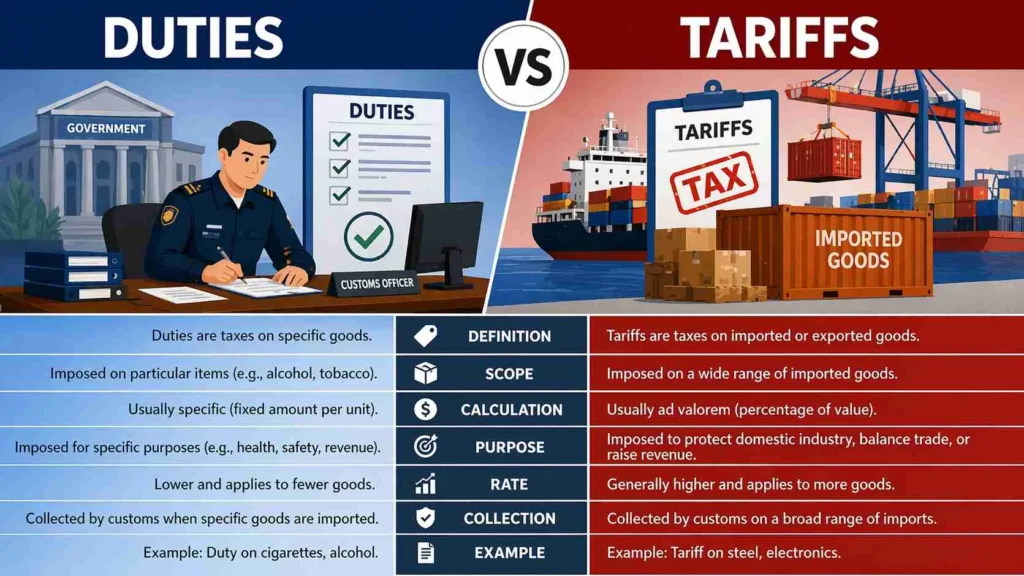
Duties and tariffs both refer to taxes on goods, especially in international trade. However, duties is a broader term that includes different types of taxes on imports and exports, while tariffs usually refer specifically to taxes placed on imported goods. In simple terms, all tariffs are duties, but not all duties are tariffs.
Many people feel confused about duties vs tariffs because both terms relate to taxes in trade. They often appear in news, business reports, and import export discussions. Although they seem similar, they are not exactly the same.
Governments use these taxes to control trade, protect local industries, and generate revenue. For example, when goods enter a country, the government may charge a tax. This tax can be called a duty or a tariff depending on the situation.
Understanding duties vs tariffs is important for students, business owners, and anyone involved in global trade. It helps you understand pricing, customs rules, and international economics.
In this guide, you will learn clear definitions, types, examples, advantages, disadvantages, and real world usage in simple language.
Quick Overview
Duties are taxes on imports and exports.
Tariffs are taxes mainly on imported goods.
Duties include different types of charges.
Tariffs are a specific type of duty.
Key Difference Between Duties vs Tariffs
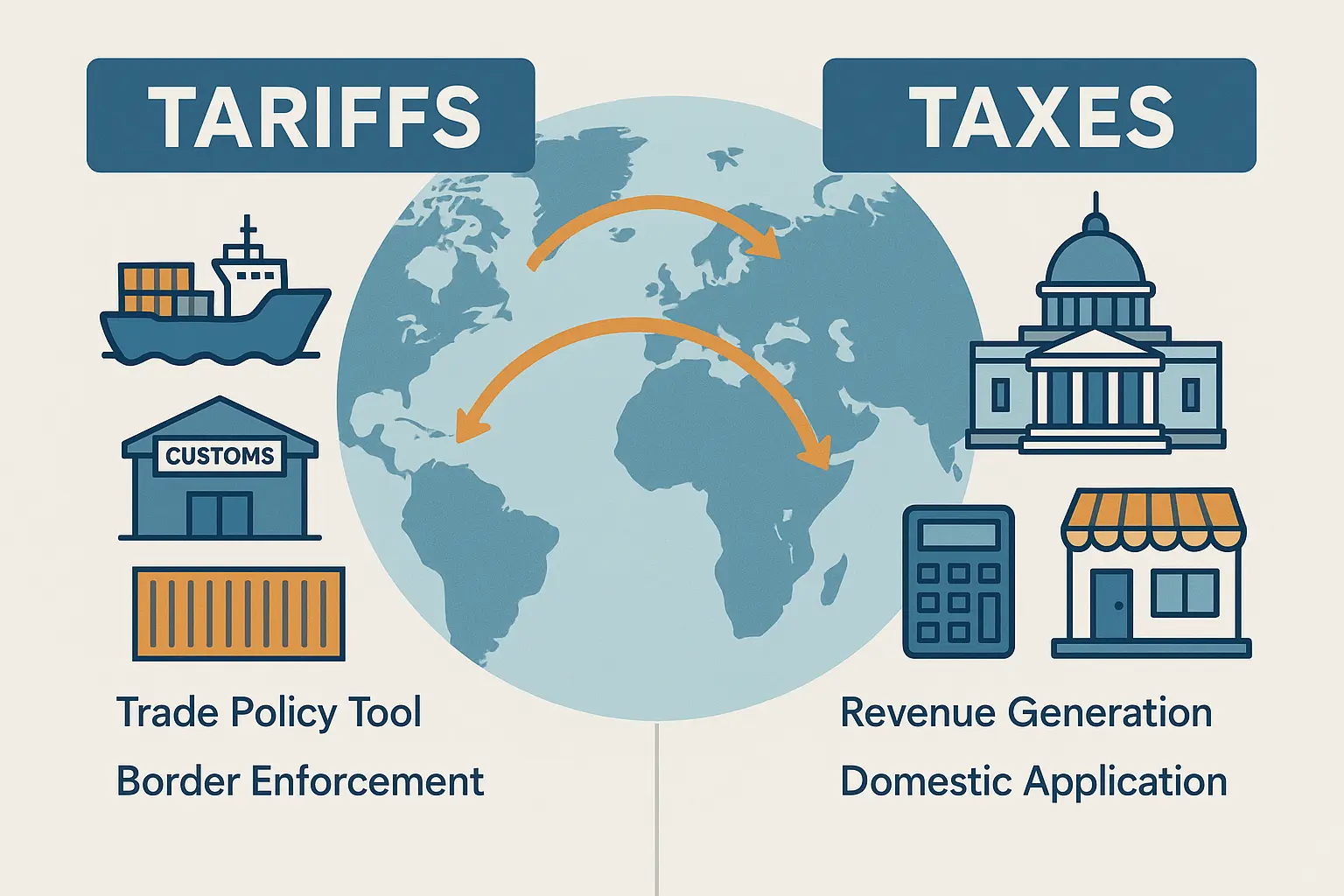

The main difference is scope and usage.
Duties is a broad term used for many types of taxes.
Tariffs specifically refer to taxes on imports.
Comparison Table
| Feature | Duties | Tariffs |
|---|---|---|
| Meaning | General tax on goods | Tax on imports |
| Scope | Broad | Specific |
| Usage | Imports and exports | Mainly imports |
| Purpose | Revenue and control | Protect local industries |
What Are Duties
Duties are taxes imposed by a government on goods moving across borders. These taxes apply to both imports and exports.
There are different types of duties, such as customs duty, excise duty, and export duty. Governments use duties to control trade and generate income.
What Are Tariffs
Tariffs are a type of duty applied specifically to imported goods. Governments use tariffs to make imported goods more expensive. As a result, local products become more competitive.
Tariffs are a key tool in international trade policy.
Types of Duties
There are several types of duties used in trade.
- Import duty
- Export duty
- Excise duty
- Anti dumping duty
Each type serves a different purpose in regulating trade.
Types of Tariffs
Tariffs can also be divided into categories.
- Specific tariff based on quantity
- Ad valorem tariff based on value
- Protective tariff to support local industry
Real World Examples

Example One
A country charges duty on imported electronics.
Example Two
A tariff increases the price of imported cars.
Example Three
Export duty is applied on natural resources.
Advantages and Disadvantages
Advantages
- Protect local industries
- Generate government revenue
- Control imports and exports
Disadvantages
- Increase product prices
- Reduce trade efficiency
- May cause trade conflicts
Economic Impact
Duties and tariffs affect economies in many ways.
They increase government income.
They protect local businesses.
However, they can also raise prices for consumers.
Therefore, governments must balance their use carefully.
Global and Regional Usage
Duties and tariffs are used worldwide.
Developed countries use them for trade balance.
Developing countries use them to protect local industries.
Trade agreements often reduce tariffs between countries.
Common Mistakes
Mistake One Thinking Both Are Exactly the Same
Correction Tariffs are a type of duty
Mistake Two Ignoring Export Duties
Correction Duties can apply to exports as well
Mistake Three Confusing Trade Terms
Correction Learn proper definitions
Related Comparisons
Tax vs Duty
Duty vs Customs
Tariff vs Quota
Beginner to Advanced Understanding
Beginner Level
Duties are general taxes
Tariffs are import taxes
Intermediate Level
Tariffs are part of duties
Advanced Level
Trade policies use duties and tariffs to manage economic growth and international relations
Exercises With Answers
Question One
Are tariffs a type of duty
Answer Yes
Question Two
Which applies to imports only
Answer Tariffs
Question Three
Which is broader
Answer Duties
Question Four
Why are tariffs used
Answer To protect local industry
Question Five
Do duties apply to exports
Answer Yes
FAQs
What is the main difference between duties vs tariffs?
Duties are general taxes, while tariffs are specific taxes on imports.
Are all tariffs duties?
Yes, tariffs are a type of duty.
Do duties apply to exports?
Yes, some duties apply to exports.
Why do governments use tariffs?
To protect local industries and control imports.
Do tariffs increase prices?
Yes, they make imported goods more expensive.
Are duties used worldwide?
Yes, all countries use them in trade.
What is an example of duty?
Import duty on electronics.
What is an example of tariff?
Tax on imported cars.
Conclusion
Understanding duties vs tariffs is important for anyone interested in trade and economics. Duties are a broad category of taxes on goods moving across borders, while tariffs are a specific type of duty applied mainly to imports.
Both tools help governments control trade, protect industries, and generate revenue. However, they can also increase prices and affect global trade relations.
By learning the difference, you can better understand how international trade works and how governments influence the market.