

Quick Answer:
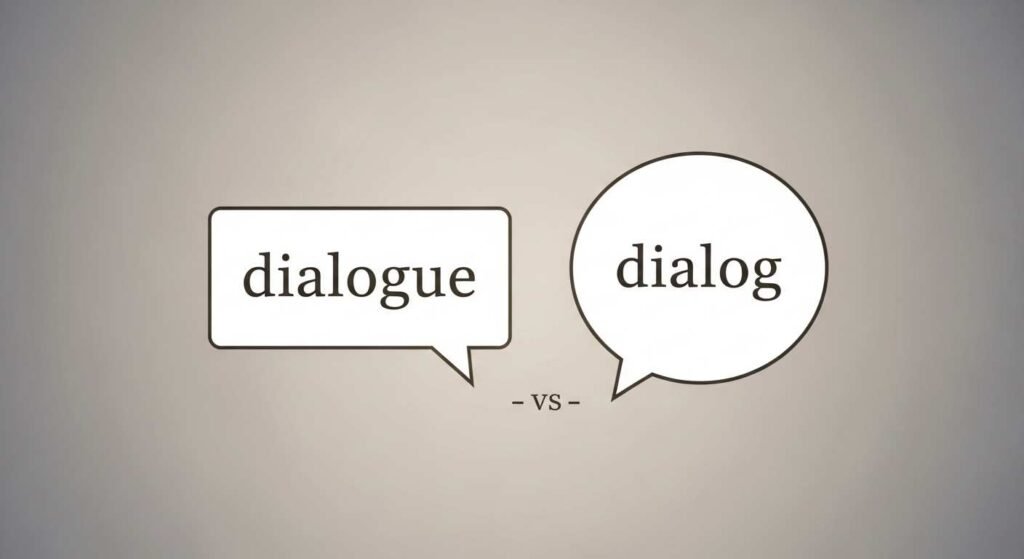
Dialogue and dialog mean the same thing. Both refer to a conversation between two or more people. However, dialogue is the preferred spelling in British English and academic writing, while dialog is commonly used in American English and in computing terms such as dialog box.
Many people feel confused about dialogue vs dialog. The words look almost the same. They sound exactly the same. Still, writers use different spellings in books, essays, and software.
So which spelling should you use?
The answer depends on context and audience. Dialogue is more common in literature, education, and formal writing. In contrast, dialog often appears in technology and programming. Understanding this small spelling difference helps you write correctly and stay consistent.
If you are a student, blogger, novelist, or developer, this guide will make everything clear. You will learn definitions, spelling rules, real examples, common mistakes, exercises with answers, and professional writing tips.
Quick Overview
Dialogue is standard in British English and formal writing.
Dialog appears more in American English and software terminology.
Both words have the same meaning.
What Is Dialogue
Dialogue refers to a conversation between two or more people. Writers use dialogue in stories, plays, and films to show interaction between characters.
For example:
She said, “I understand.”
He replied, “Thank you.”
In addition, dialogue can mean discussion between groups, such as political dialogue or cultural dialogue.
Most style guides recommend dialogue in academic and creative writing.
What Is Dialog
Dialog has the same meaning as dialogue. However, this spelling appears more often in American English and technical language.
In computing, dialog usually refers to a small window on a screen. For example:
Click OK in the dialog box.
Software documentation commonly uses dialog for interface elements.
Key Difference Between Dialogue vs Dialog


The difference is mainly spelling preference and usage context.
Dialogue is common in:
- Books
- Essays
- Academic writing
- Journalism
Dialog is common in:
- Software development
- Programming
- Technical manuals
- Interface labels
Comparison Table
| Feature | Dialogue | Dialog |
|---|---|---|
| Meaning | Conversation | Conversation |
| Pronunciation | Same | Same |
| British English | Preferred | Rare |
| American English | Common | Accepted |
| Technology Context | Less common | Very common |
Although both spellings are correct, dialogue is safer in formal contexts.
Why Two Spellings Exist
The word comes from Greek dialogos. Later, French influenced English spelling and added the ue ending. British English kept the longer form dialogue. Meanwhile, American English simplified many words. As a result, dialog became acceptable in some contexts.
Therefore, dialogue vs dialog reflects the natural evolution of English spelling.
Real World Examples
Example One Academic Essay
A student writes about cultural dialogue between countries. Dialogue is correct here.
Example Two Novel Writing
An author adds dialogue to reveal character emotions.
Example Three Software Guide
A manual explains how to close a dialog box.
Example Four Programming
A developer designs a login dialog window.
These examples show that context decides the spelling.
Advantages and Disadvantages
Advantages of Dialogue
- Widely accepted globally
- Preferred in formal writing
- Looks traditional and academic
Disadvantages
- Slightly longer spelling
Advantages of Dialog
- Shorter spelling
- Standard in technical writing
- Fits user interface labels
Disadvantages
- May appear incorrect in essays
Common Mistakes
Mistake One Mixing Spellings
Writers sometimes use dialogue and dialog in the same article.
Correction
Choose one spelling and stay consistent.
Mistake Two Using Dialog in Academic Papers
Some students use dialog in essays.
Correction
Most teachers expect dialogue.
Mistake Three Confusing Dialogue with Monologue
Dialogue involves two or more speakers. Monologue involves one speaker.
Mistake Four Forgetting Quotation Rules
Dialogue in stories must follow punctuation rules.
Beginner to Advanced Understanding
Beginner Level
Dialogue and dialog mean conversation. Dialogue is more common.
Intermediate Level
Dialogue is standard in writing. Dialog appears in computing.
Advanced Level
Professional style guides recommend dialogue in literary and academic work. Technical documentation may standardize dialog for clarity and consistency.
Related Comparisons
Dialogue vs Monologue
Dialogue involves multiple speakers. Monologue involves one speaker.
Dialogue vs Conversation
Conversation is general speech. Dialogue is structured conversation in writing.
British vs American Spelling
Examples include colour vs color, centre vs center, dialogue vs dialog.
Exercises With Answers
Question One
Which spelling is preferred in academic writing
Answer Dialogue
Question Two
Which spelling is common in software terminology
Answer Dialog
Question Three
Do dialogue and dialog have different meanings
Answer No both mean conversation
Question Four
Which version does British English prefer
Answer Dialogue
Question Five
Should you mix both spellings in one document
Answer No choose one and remain consistent
FAQs
Is dialogue vs dialog the same word?
Yes both spellings mean conversation between two or more people.
Which spelling is correct dialogue or dialog?
Both are correct, but dialogue is preferred in formal writing.
Is dialog wrong in English?
No it is correct, especially in American English and computing.
Why do computer programs use dialog instead of dialogue?
Because American English often simplifies spelling in technical language.
Should I use dialogue in essays?
Yes dialogue is recommended for academic writing.
Is there a pronunciation difference between dialogue vs dialog?
No both words are pronounced the same way.
Can I use dialog in a novel?
You can, but most publishers prefer dialogue.
Is dialog box correct?
Yes dialog box is standard in software terminology.
Conclusion
Understanding dialogue vs dialog helps you avoid spelling confusion. Both words share the same meaning. However, usage depends on context. Dialogue dominates in academic, literary, and formal writing. Meanwhile, dialog appears more often in American English and technical documentation.
If you write essays, books, or blog posts, choose dialogue for safety. If you work in programming or software, dialog may fit better. In the end, consistency matters more than preference. Select the spelling that matches your audience and use it throughout your content.