

Quick Answer
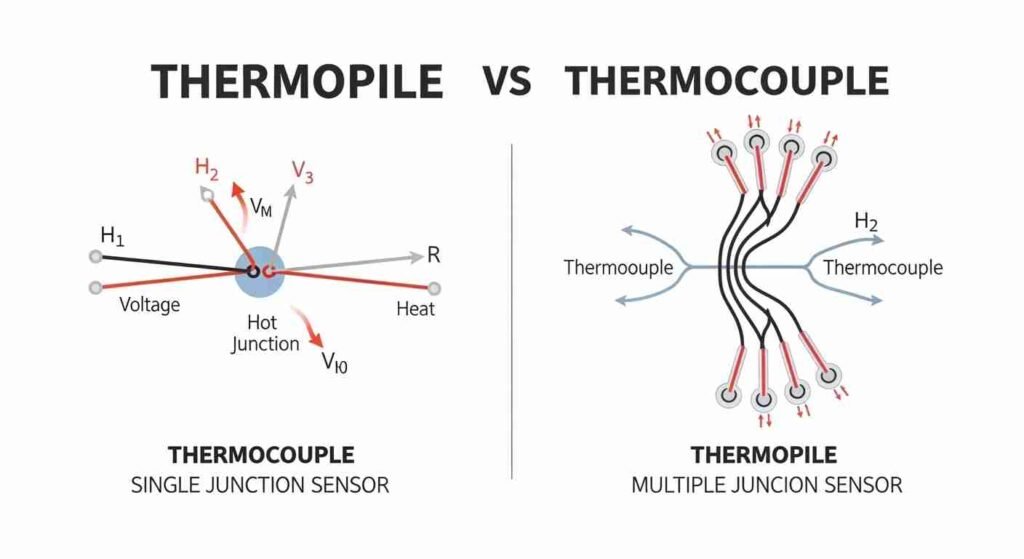
Thermopile and thermocouple are both temperature sensing devices that generate electricity from heat. A thermocouple uses two different metals joined together to measure temperature at one point. A thermopile connects multiple thermocouples together to produce a stronger electrical signal and more accurate heat detection.
Many people confuse thermopile vs thermocouple because both devices measure temperature using heat energy. They also work on a similar scientific principle. However, their design, output signal, and practical applications are different.
A thermocouple is one of the most common temperature sensors used in industries. It measures temperature by producing a small voltage when two different metals experience heat differences. Thermopiles use the same idea but combine many thermocouples together to increase sensitivity and output voltage.
Understanding thermopile vs thermocouple is important for engineers, technicians, students, and anyone working with temperature measurement systems. These devices are widely used in heating systems, gas appliances, infrared sensors, and industrial monitoring equipment.
In this guide, you will learn definitions, working principles, advantages, disadvantages, real world examples, common mistakes, related comparisons, exercises with answers, and frequently asked questions.
Quick Overview
Thermopile vs thermocouple can be understood with one basic concept.
A thermocouple uses two metal wires joined at a junction to measure temperature difference.
A thermopile connects multiple thermocouples together to produce a stronger voltage output.
Because of this design difference, thermopiles are more sensitive to small temperature changes.
Key Difference Between Thermopile vs Thermocouple

The primary difference lies in structure and electrical output.
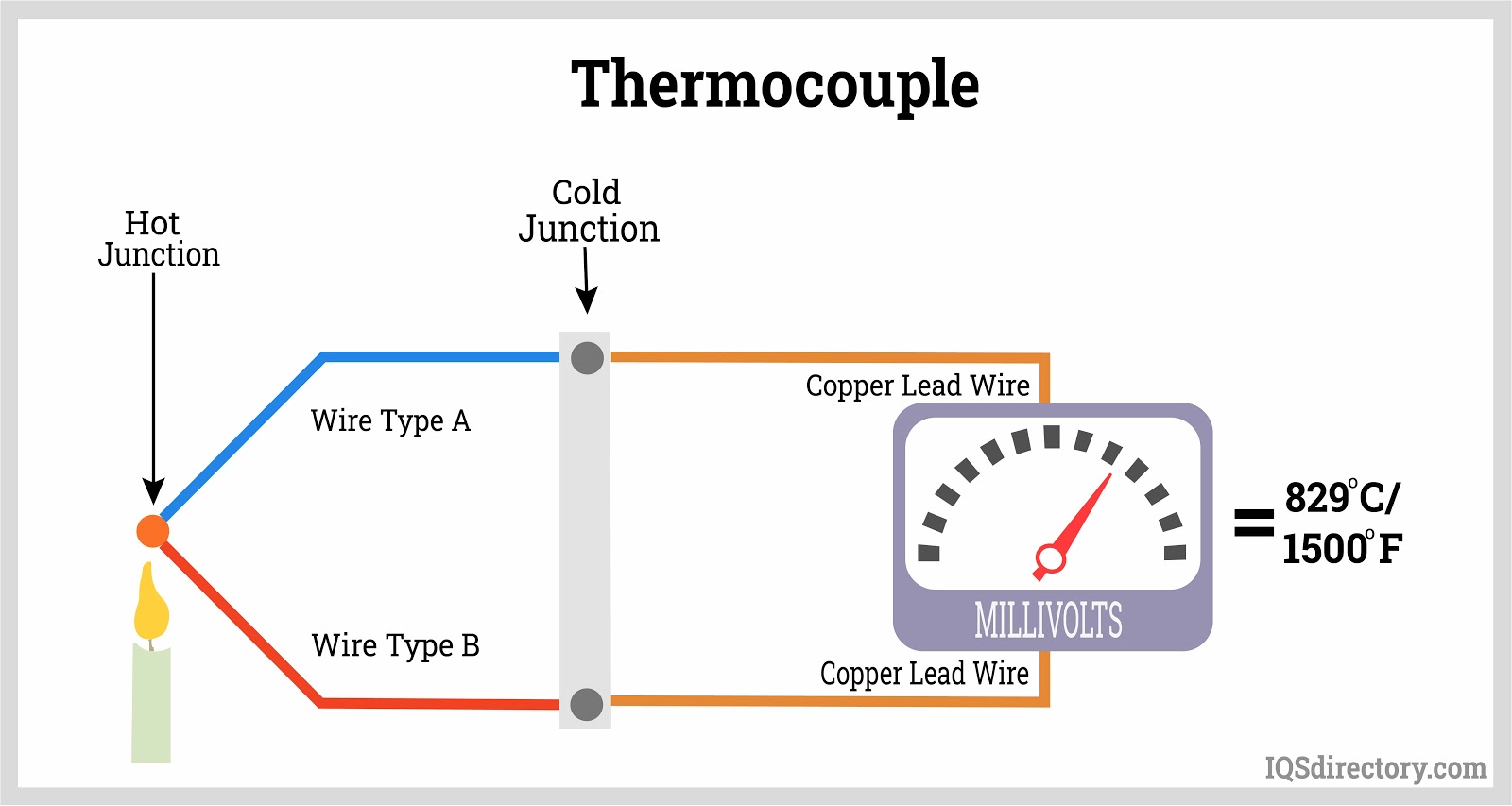
A thermocouple consists of two dissimilar metals joined at one junction. When heat is applied, the junction produces a small voltage.
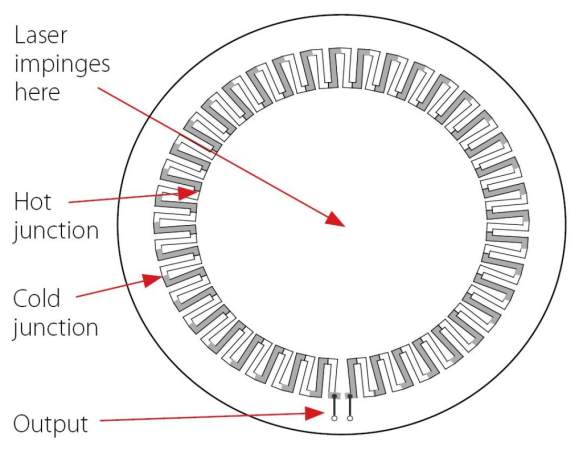
A thermopile contains several thermocouples connected in series. Because of this design, the voltage produced becomes stronger and easier to measure.
Comparison Table
| Feature | Thermocouple | Thermopile |
|---|---|---|
| Structure | Two metal wires joined | Multiple thermocouples connected |
| Voltage output | Small | Higher |
| Sensitivity | Moderate | High |
| Applications | Industrial temperature sensing | Infrared sensors and gas appliances |
| Complexity | Simple design | More complex |
Definition and Explanation
What Is a Thermocouple
A thermocouple is a temperature sensor made from two different metals joined together at one end. When the junction experiences heat, it generates a small electrical voltage.
This phenomenon occurs due to the Seebeck effect. The voltage produced changes depending on the temperature difference between the hot junction and the reference junction.
Thermocouples are widely used because they are durable, inexpensive, and capable of measuring very high temperatures.
Common applications include:
- Industrial furnaces
- Gas heaters
- Power plants
- Automotive sensors
What Is a Thermopile
A thermopile is a device made by connecting multiple thermocouples in series or parallel. Each thermocouple contributes a small voltage, and the combined voltage becomes much larger.
This design increases sensitivity and allows thermopiles to detect very small temperature differences.
Thermopiles are often used in:
- Infrared thermometers
- Gas fireplace safety systems
- Motion sensors
- Satellite temperature monitoring
Working Principle
Both thermopile and thermocouple operate based on the Seebeck effect.
The Seebeck effect occurs when two different metals produce electrical voltage due to temperature differences.
Thermocouple Working Principle
- Two dissimilar metals form a junction.
- Heat creates a temperature difference.
- The junction generates a small voltage.
- Measuring this voltage reveals the temperature.
Thermopile Working Principle
- Multiple thermocouples connect together.
- Each produces a small voltage.
- The voltages combine to create a stronger signal.
- The device detects tiny heat changes more accurately.
Advantages and Disadvantages
Advantages of Thermocouple
- Simple construction
- Low cost
- Wide temperature range
- Fast response time
Disadvantages of Thermocouple
- Very small output voltage
- Less sensitivity for small heat differences
- Requires signal amplification
Advantages of Thermopile
- Higher output voltage
- Greater sensitivity
- Can detect infrared radiation
- Suitable for precise measurements
Disadvantages of Thermopile
- More complex structure
- Higher manufacturing cost
- Slower response compared to some sensors
Real World Examples
Example One Gas Furnace Safety System
Many gas furnaces use thermocouples to detect whether the pilot flame is burning. If the flame goes out, the thermocouple stops generating voltage and the gas supply shuts off.
Example Two Infrared Thermometer
Thermopiles detect infrared radiation from objects. This allows non contact thermometers to measure body temperature quickly.
Example Three Industrial Temperature Monitoring
Factories use thermocouples in ovens and furnaces because they can withstand extremely high temperatures.
Example Four Motion Detection Sensors
Some infrared motion sensors use thermopiles to detect heat changes from moving people.
Regional and Global Usage
Thermocouples are widely used in industrial environments worldwide because they are reliable and inexpensive.
Thermopiles are more common in specialized applications such as infrared sensing, gas appliances, and advanced scientific instruments.
In modern smart home devices, thermopiles often appear in temperature monitoring and safety systems.
Common Mistakes When Comparing Thermopile vs Thermocouple
Mistake One Thinking They Are Completely Different Devices
Correction
Both work on the same Seebeck effect principle.
Mistake Two Assuming Thermopiles Measure Higher Temperatures
Correction
Thermopiles measure small heat differences better, not necessarily higher temperatures.
Mistake Three Believing Thermocouples Are Always More Accurate
Correction
Thermopiles can provide stronger signals and improved sensitivity.
Mistake Four Confusing Thermopile With Thermistor
Correction
Thermistors are resistance based sensors, not thermoelectric devices.
Related Concepts and Comparisons
Thermocouple vs Thermistor
Thermocouples measure temperature through voltage generation, while thermistors measure resistance changes.
Thermopile vs Infrared Sensor
Many infrared sensors actually use thermopiles internally to detect heat radiation.
Thermocouple vs RTD
RTD sensors provide higher accuracy but are more expensive than thermocouples.
Exercises With Answers
Question One
What scientific principle allows thermocouples to generate voltage
Answer
The Seebeck effect
Question Two
Which device uses multiple thermocouples connected together
Answer
Thermopile
Question Three
Which sensor is commonly used in gas furnace safety systems
Answer
Thermocouple
Question Four
Which device produces a stronger electrical output
Answer
Thermopile
Question Five
Which sensor is common in infrared thermometers
Answer
Thermopile
FAQs
What is the main difference between thermopile vs thermocouple?
A thermocouple uses two metals to generate voltage, while a thermopile combines multiple thermocouples to increase output signal.
Which is more sensitive thermopile or thermocouple?
Thermopiles are generally more sensitive because they combine several thermocouples.
Are thermopiles used in infrared thermometers?
Yes many non contact thermometers use thermopile sensors to detect heat radiation.
Do thermocouples need external power?
No thermocouples generate voltage directly from heat differences.
Can thermopiles measure temperature directly?
Yes but they are usually used for detecting heat radiation or small temperature differences.
Which sensor is cheaper thermocouple or thermopile?
Thermocouples are typically cheaper because they have simpler construction.
Are thermocouples used in industrial systems?
Yes they are widely used in furnaces, boilers, and manufacturing equipment.
Why are thermopiles more powerful?
They combine voltage from multiple thermocouples to produce a stronger signal.
Conclusion
Understanding thermopile vs thermocouple helps engineers and technicians choose the right temperature sensing device. Both sensors rely on the Seebeck effect to generate voltage from heat differences. However, their structure and performance differ significantly.
Thermocouples are simple, inexpensive, and widely used in industrial temperature measurement systems. They can measure extremely high temperatures and respond quickly to changes.
Thermopiles combine multiple thermocouples to produce stronger electrical signals. This design improves sensitivity and allows detection of small temperature differences or infrared radiation.
In practical applications, thermocouples work best for direct temperature measurement in industrial equipment, while thermopiles excel in infrared sensors, safety devices, and precision detection systems.
Choosing between thermopile and thermocouple depends on the required sensitivity, accuracy, and application environment.