

Quick Answer
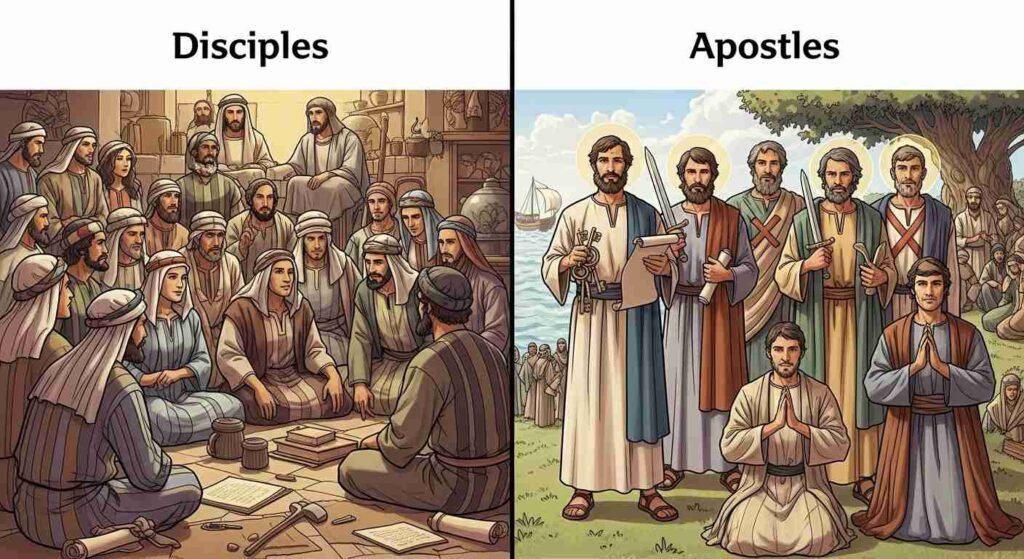
Apostles and disciples are related terms but not the same. Disciples are followers or students who learn from a teacher, while apostles are chosen messengers sent out to spread teachings. All apostles are disciples, but not all disciples are apostles.
Many people feel confused about apostles vs disciples. The words appear often in religious discussions, especially in Christianity. They seem similar because both refer to followers of a teacher. However, they have different meanings and roles.
A disciple is someone who learns from a teacher. In a religious context, disciples followed and learned teachings. On the other hand, an apostle is someone chosen and sent out with a mission. Apostles have a specific responsibility to spread teachings to others.
Understanding apostles vs disciples is important for students, readers of religious texts, and anyone interested in history or theology. It helps clarify roles, responsibilities, and meanings found in religious writings.
This guide explains apostles vs disciples in simple language. You will learn definitions, differences, roles, real world examples, common mistakes, exercises with answers, and more.
Quick Overview
Disciples are followers or learners.
Apostles are messengers sent on a mission.
All apostles are disciples.
Not all disciples become apostles.
The key difference is learning versus being sent.
Key Difference Between Apostles vs Disciples


The main difference is their role.
Disciples focus on learning and following teachings.
Apostles focus on spreading those teachings to others.
Comparison Table
| Feature | Disciples | Apostles |
|---|---|---|
| Meaning | Learners or followers | Messengers or representatives |
| Role | Learn and follow | Teach and spread message |
| Selection | Many followers | Chosen group |
| Responsibility | Personal growth | Public mission |
| Example | Followers of a teacher | Selected leaders |
Definition and Explanation
What Are Disciples
Disciples are students or followers who learn from a teacher. They listen, observe, and try to follow teachings in daily life.
In a religious sense, disciples follow spiritual teachings and try to live according to them.
Examples of disciples include:
- Students learning from a mentor
- Followers of a philosophy
- People practicing spiritual teachings
Disciples focus on learning and personal development.
What Are Apostles
Apostles are chosen individuals sent with a mission. Their role is to spread teachings, guide others, and represent their teacher.
Apostles often have leadership responsibilities. They carry messages to new places and teach others.
Examples of apostles include:
- Religious messengers
- Leaders sent to spread beliefs
- Representatives of a movement
Apostles focus on action and communication.
Understanding the Difference Clearly
Think of it like a classroom.
Disciples are students learning from the teacher.
Apostles are students who graduate and are sent out to teach others.
This simple idea helps explain apostles vs disciples easily.
Roles and Responsibilities
Role of Disciples
- Learn teachings
- Follow guidance
- Practice lessons
- Grow personally
Role of Apostles
- Spread teachings
- Guide communities
- Lead others
- Represent the message
Real World Examples
Example One Education
A student learns from a teacher. That student is like a disciple. Later, if the student becomes a teacher, they act like an apostle.
Example Two Workplace
An employee learns skills from a manager. Later, they train others and represent the company.
Example Three Community Leadership
A person learns values from a mentor. Later, they share those values with a group.
Historical and Religious Context
In religious history, disciples were followers who learned directly from a teacher. Among them, a smaller group was chosen as apostles. These apostles were given the task of spreading teachings to wider communities.
This shows that apostles have a special role compared to general disciples.
Advantages of Understanding the Difference
- Improves understanding of religious texts
- Clarifies roles in teaching and leadership
- Helps in education and communication
- Reduces confusion in terminology
Common Mistakes
Mistake One Thinking They Are the Same
Correction Disciples learn, apostles are sent to teach
Mistake Two Believing All Disciples Are Apostles
Correction Only a selected group becomes apostles
Mistake Three Ignoring the Mission Role
Correction Apostles have a clear mission and responsibility
Related Comparisons
Teacher vs Student
Teacher spreads knowledge, student learns
Leader vs Follower
Leader guides others, follower learns
Mentor vs Learner
Mentor teaches, learner receives knowledge
Beginner to Advanced Understanding
Beginner Level
Disciples learn. Apostles teach.
Intermediate Level
Disciples follow teachings. Apostles spread teachings to others.
Advanced Level
The distinction reflects stages of learning and leadership. Disciples represent followers, while apostles represent authority and mission.
Exercises With Answers
Question One
Who learns from a teacher
Answer Disciples
Question Two
Who spreads teachings
Answer Apostles
Question Three
Are all disciples apostles
Answer No
Question Four
Which role involves mission
Answer Apostles
Question Five
Which role focuses on learning
Answer Disciples
FAQs
Are apostles and disciples the same?
No, disciples learn while apostles are sent to teach others.
Can a disciple become an apostle?
Yes, a disciple can be chosen to become an apostle.
What is the main difference in apostles vs disciples?
The main difference is learning versus mission.
Are there more disciples than apostles?
Yes, disciples are many while apostles are fewer.
Why are apostles important?
They spread teachings and guide communities.
Do disciples have leadership roles?
Usually not, they focus on learning.
Is the term used only in religion?
Mostly, but it can also apply to general learning and leadership.
What is a simple way to remember the difference?
Disciples learn, apostles lead and teach.
Conclusion
Understanding apostles vs disciples helps clarify important roles in learning and leadership. Disciples are followers who learn and grow from teachings. Apostles are chosen individuals who spread those teachings and guide others.
Although all apostles start as disciples, not all disciples become apostles. The key difference lies in responsibility. Disciples focus on learning, while apostles focus on sharing and leading.
This distinction is useful not only in religious studies but also in everyday life. It reflects the journey from learning to teaching, from follower to leader.